Gold Investment Outlook: Analyzing the Pros, Cons, and Methods of Investing in Gold
3 min read · · Korean original
Hello, this is Bitpunk. Today, we'll look at the pros and cons of investing in gold, how to invest in it, and its outlook. As geopolitical tensions between the United States and China rise, concerns about slowing economic growth have surfaced, and gold, a long-standing investment product, is drawing fresh attention.
From May 14 to June 20, 2019, starting the day after the S&P 500 index fell 2.4%, an additional USD 4.3 billion flowed into gold ETFs, and the Bloomberg Gold Index rebounded more than 8% over the same period.
So what are the pros and cons of investing in gold, and how should you go about it?

The Gold Industry and Investment Cases
Gold can be called an asset as old as civilization itself. From the Bronze Age, when people began using metals, to the present day, demand for gold has continued from central banks, investors, jewelers, and others. Scientists have reportedly even developed a way to carry out artificial photosynthesis using gold particles.
Even so, the price of gold is still driven by investment demand. According to data from the World Gold Council, 59% of gold demand was for commercial use, 26% was for investment purposes, and 15% came from central banks.
3 Reasons to Consider Holding Gold
Here are three key reasons to consider holding gold in your portfolio.
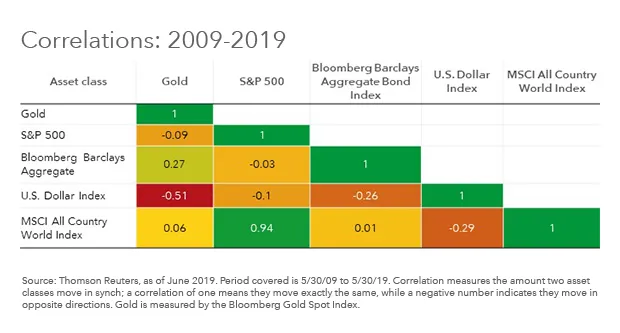
- Historically, gold has served as an alternative that diversifies traditional stock and bond portfolios. The matrix below shows the correlation of monthly returns between gold and other assets, and you can see that gold has a low or negative correlation with other major assets.
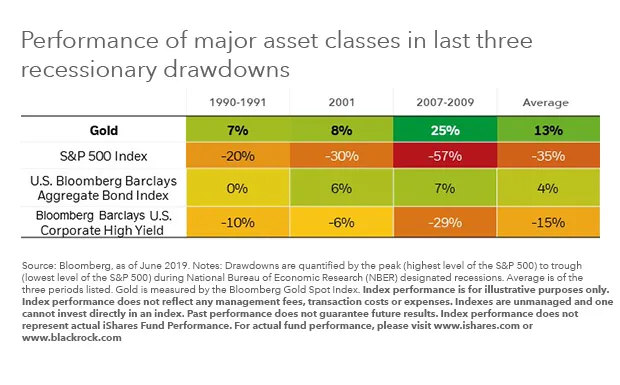
- Gold delivers strong returns during recessions. During the last three economic downturns, gold outperformed every other asset. Investors flock to safer assets. In other words, if a recession is expected, holding gold can offer a variety of benefits.
- A potential inflation hedge: Although the current market inflation rate isn't particularly high, investors who want a hedge against potential inflation should consider gold. This is because the level of real interest rates (interest rates after inflation) is directly tied to gold's returns.
Risk Factors to Consider When Investing in Gold
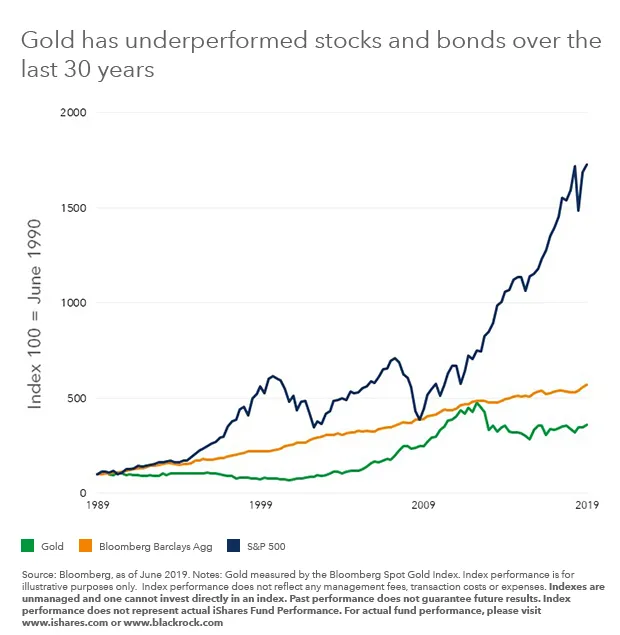
However, there are also risk factors to consider when investing in gold. Investing in gold often ties up cash, may not generate any income, and comes with storage costs for the physical metal. These are the reasons gold has long underperformed traditional stocks and bonds. The table below shows that while gold is perceived as a relatively safe asset, its long-term investment returns are not especially high.
In addition, as a commodity, gold's price is heavily influenced by physical supply and demand. Central banks, investors, and consumers have generated relatively stable demand for gold, but this can change quickly, and on the supply side, increased mining output could become an obstacle to rising gold prices.
In the short term, gold could also face headwinds. If inflation stays low and the market continues to rise, gold will become relatively less attractive as an investment.
Conclusion
Whenever geopolitical volatility, as exemplified by the clash between China and the United States, comes to the fore, gold tends to draw fresh attention. Allocating a certain share of your investments to gold for portfolio diversification can be a reasonable choice.
However, investors should adjust their gold holdings appropriately, keeping in mind that long-term returns may be low and preparing for cases where inflation falls short of expectations.