Wonyotti Update and Complete Summary of His Trading Method AMA (KRW 6 Million → KRW 300 Billion)
34 min read · · Korean original
Contents 7
Wonyotti is a living legend of margin trading who started with KRW 6 million and earned an extraordinary profit of KRW 300 billion. He is still active today and appears on the BitMEX leaderboard under the ID 'aoa'. On Binance, he trades under the name 'NewJeans'. Let's look at what Wonyotti has been up to lately, along with his trading method.
Wonyotti's Profit Verification
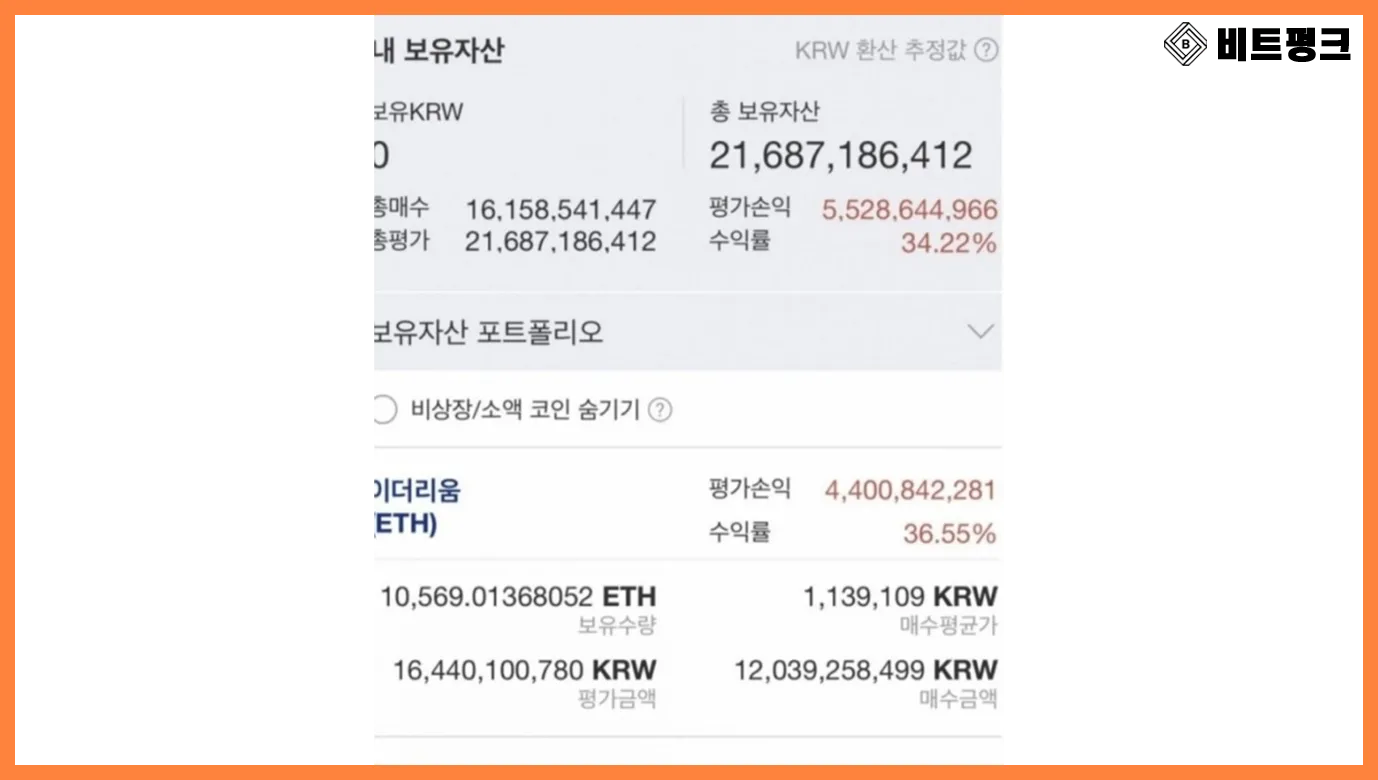
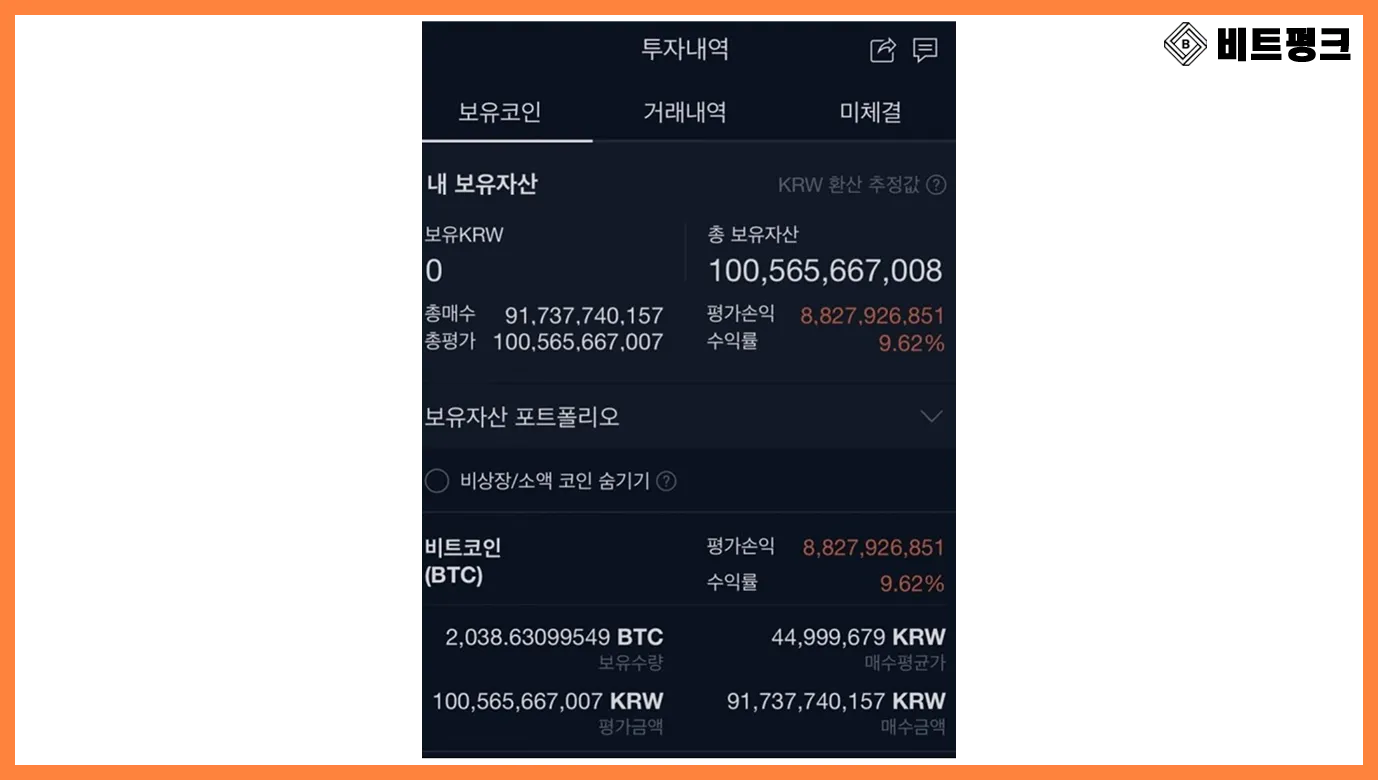
In 2021, he made headlines by revealing KRW 300 billion in assets on 'Chart Gallery'. In February 2023, a verification post appeared that seemed to show more than KRW 1 trillion, but it turned out to be fabricated. To date, the officially verified amount is KRW 300 billion.
The 2,550 BTC Buy Wall Incident
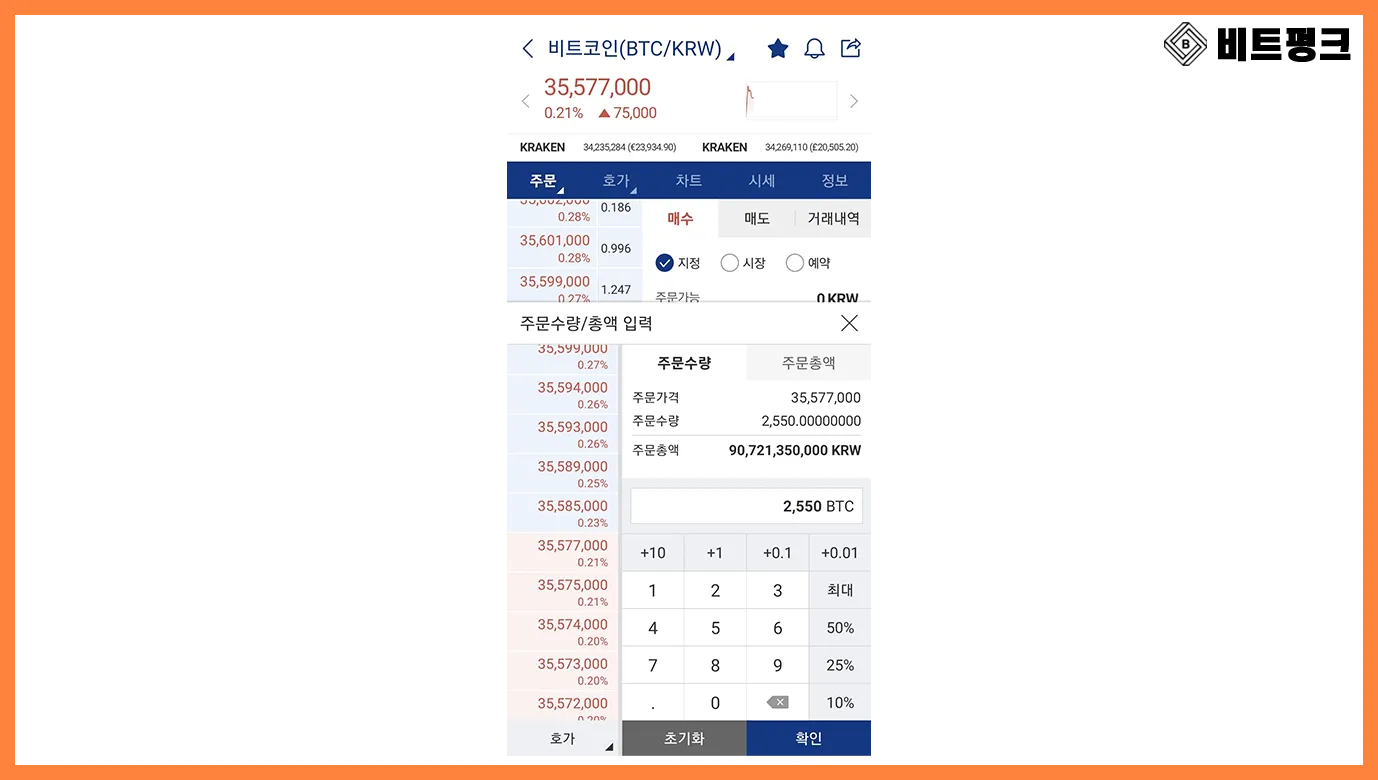
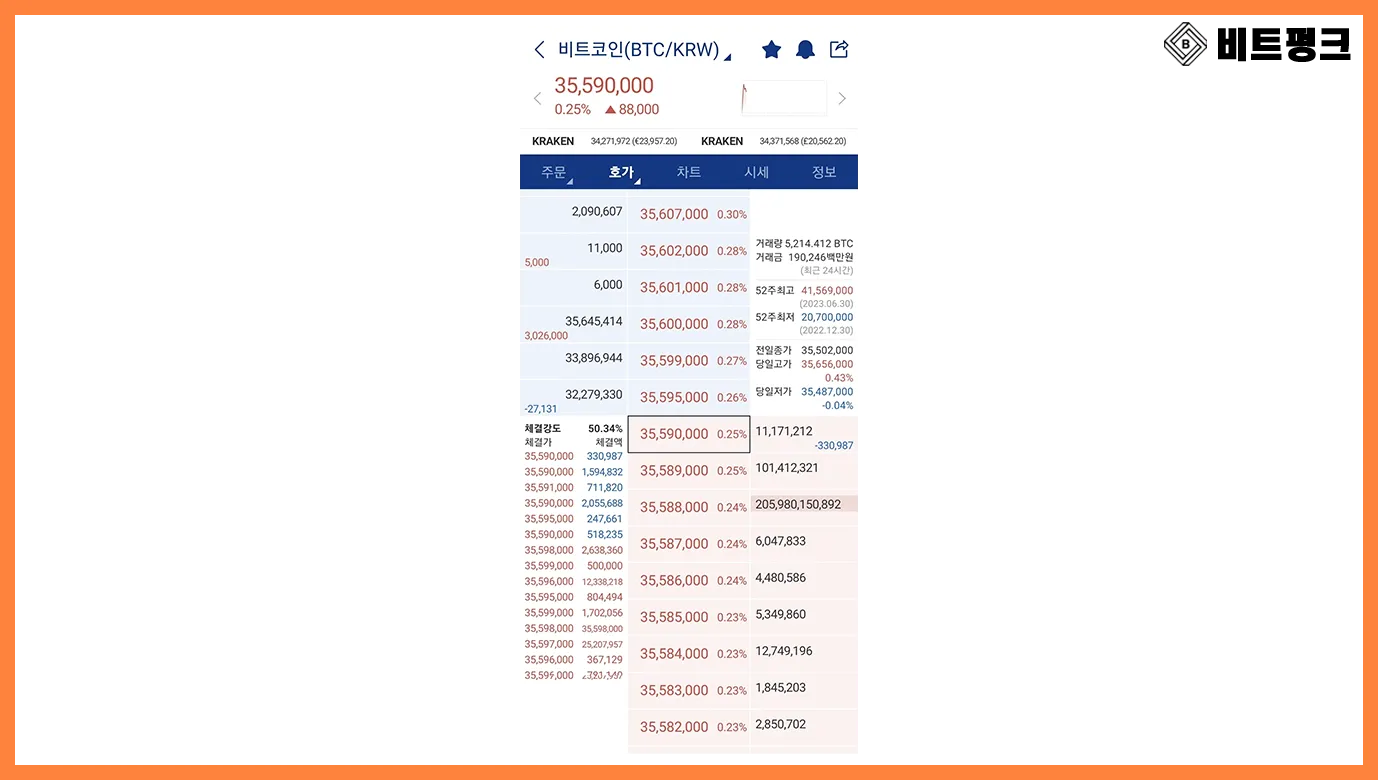
In September 2023, a buy wall of 2,550 bitcoins appeared on Upbit. The community buzzed with speculation, asking "Could it be Wonyotti?" Afterward, Wonyotti posted proof that it was indeed him, which drew a lot of attention.
Is Wonyotti a Real Person?
Because his profits seemed so unrealistic, some people suggested Wonyotti might be a fictional character. However, his activity history on BitMEX since 2018 and his ranking on the Binance leaderboard have proven that he is a real person.
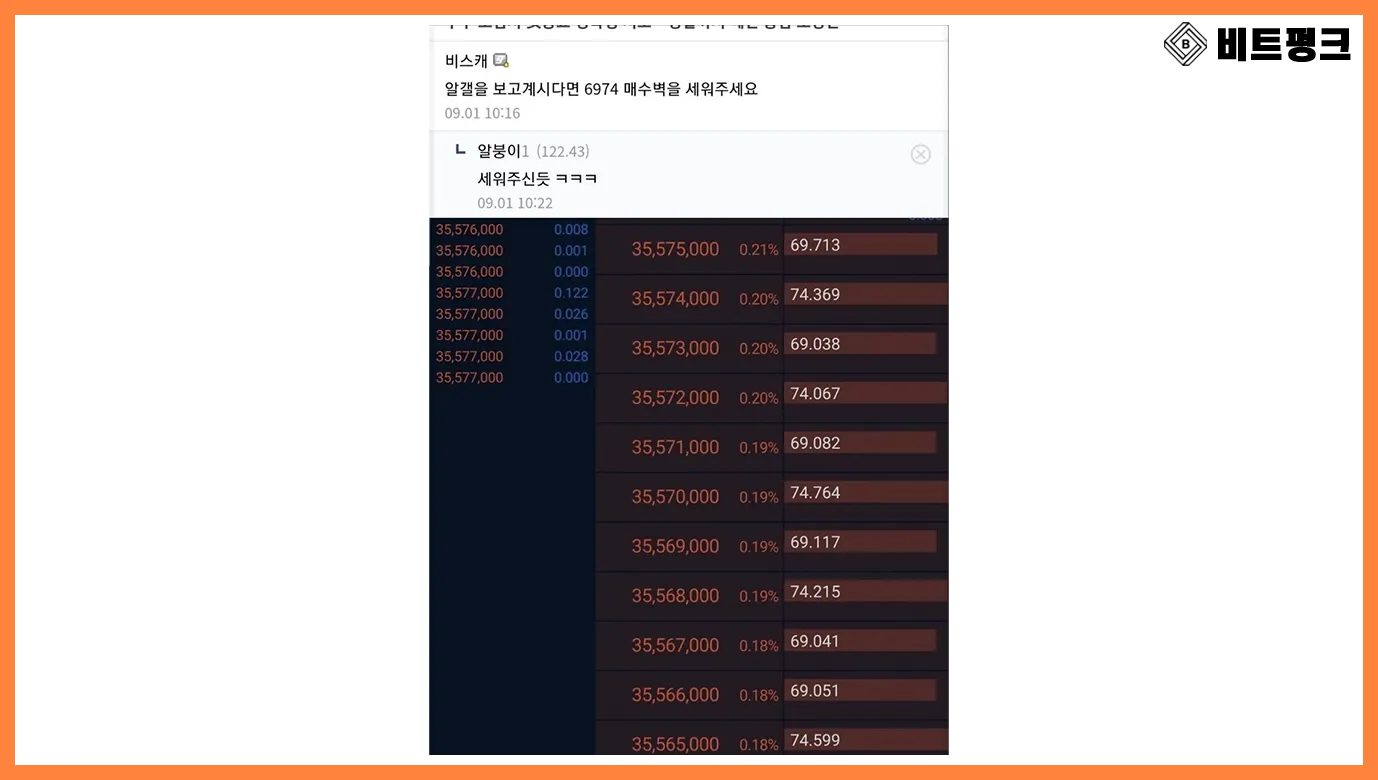
Recently, someone on DC Inside jokingly asked him to put up a 6974 buy wall on Upbit, and a person believed to be Wonyotti actually put up a 69,74 buy wall on Upbit.
Key Points of Wonyotti's Trading Method
Wonyotti started with a small capital of KRW 6 million and achieved an enormous profit of KRW 300 billion. So how does Wonyotti trade?
- Unstructured trading: Wonyotti doesn't keep a separate trading journal, and he remembers his reasons for entries and exits only in his head.
- Doesn't blindly trust chart patterns: Because common patterns are hard to apply, he builds his feel by trading each asset directly.
- Open interest and funding rates for reference only: He doesn't rely on them heavily, but he does take them into account to some extent.
- Use of moving averages: He uses them, but doesn't consider them very important.
As we saw in the key points of Wonyotti's trading method, he looks quite different from what people usually think of as a trader. So how exactly does he trade? We've compiled all 77 Q&As about his trading method that Wonyotti shared himself on DC Inside.
Complete Summary of Wonyotti's DC Inside Q&A (Q.1~Q.77)
Q1. How did you practice trading?
A. I built experience through live trading. I've accumulated experience by managing risk and staying in the market continuously.
Q2. What is the purpose of checking the satoshi chart?
A. To judge whether an altcoin is moving with the overall market flow, or whether it's rising more strongly than other coins.
Q3. When your seed was small, which did you consider more important, risk-reward ratio or win rate?
A. I traded with win rate as the priority. If you want a big risk-reward ratio, you end up hoping for luck, and that's not my style.
Q4. Do you still check the charts frequently every day?
A. Yes, I always keep the charts open and keep checking them.
Q5. What is the highest leverage you've used in futures trading?
A. I used 25x leverage back when I had KRW 30 million. But I only used 25x briefly; I recognized the high risk and reduced it.
Q6. Do you refer to chart experts' opinions? Do you think spot trading becomes difficult when your seed is large?
A. It's hard to find chart experts I trust, so I don't refer to them. Because of volume limits in the spot market, I use the futures market to respond.
Q7. How do you manage your chart when it gets cluttered with lots of markings?
A. I don't add any lines or drawings, so it always stays clean.
Q8. Which was more effective: scaling in and out, or entering and exiting all at once?
A. Scaling in and out was more effective. In the big picture, holding 40% of my seed in bitcoin helped a lot in preventing FOMO and FUD. There are two cases where I split: when I unavoidably couldn't fill the whole position due to insufficient volume, and for risk management when volatility is excessively high.
Q9. Have you ever been stuck at a certain asset level? How did you overcome it?
A. I've felt resistance quite a few times. I had difficulty when trying to break out of the KRW 30 million range, the KRW 5 billion range, and the KRW 9 billion range. When I tried too hard to break out, it only got harder. So I think it's important to just act as usual.
Q10. I heard you used a strategy of splitting your full seed into 10 parts and opening positions at 10~15x leverage. Do you still follow that strategy?
A. Now my positions have grown, so I use 3x leverage split into 3 parts. As my assets grow, I keep reducing leverage.
Q11. (Question deleted)
A. I think altcoins have fewer market participants, so their charts are relatively less reliable. I mainly trade large-cap altcoins when they're coupled with bitcoin. I don't trade based solely on moving averages.
Q12. You said you only look at candles and volume when analyzing charts. How are you able to analyze that way?
A. After analyzing charts for a long time, past experience lets you gauge what conclusions can be drawn from the current pattern. If you still can't get a feel for it after consistently analyzing for half a year, I recommend boldly giving up trading. I think only 10% in coin futures and 20% in spot make real profits, and most people are likely to waste their time or lose money.
Q13. I'm curious whether beating the market through trading is something that can be learned.
A. I think it's possible to some extent through learning. Most market participants trade without clear criteria, so if you have enough experience and clear criteria, you have a competitive edge. However, there's no guarantee you'll profit, and if you invest a great deal of time and effort and still don't get a feel for it at all, I think it's best to quit right away.
Q14. What is your ratio between chart analysis and factors outside the chart (panic selling, institutional accumulation, good and bad news)?
A. I analyze with a ratio of 9 for chart analysis and 1 for external factors.
Q15. When analyzing volume, which timeframes do you mainly refer to?
A. I mainly refer to the 1, 5, and 15-minute candles, the 1 and 4-hour candles, and the daily candles.
Q16. You said you consider current indicators important. How far back does that go?
A. I mainly refer to the bitcoin chart from 2017 onward.
Q17. Do you keep regular sleeping and eating hours?
A. When volatility is high, I put off sleep, so my sleeping and eating patterns are irregular. I usually don't set price alerts, but sometimes I do.
Q18. How many monitors do you use?
A. I use 1 monitor.
Q19. Did you also refer to the bitcoin chart when trading altcoins?
A. Both in the past and now, I've always referred to the bitcoin chart when trading altcoins.
Q20. When you got liquidated several times, did you ever lose everything?
A. For risk management, I used isolated margin, so I usually only had 20~30% of my seed liquidated. My biggest loss was on September 21, 2018, when I lost 50% of my seed because of XRP.
Q21. As of late September 2021, if you had KRW 10 million in seed money, how would you invest it?
A. I think I'd put KRW 4 million to work on a futures exchange, using KRW 1.5 million of it at 10x, and do the rest on a spot exchange.
Q22. For growing your seed steadily, the trading method matters, but I think risk management matters even more than the trading method. What do you think?
A. I agree.
Q23. I'm curious whether, after looking at charts for a long time, you ever feel certainty rather than probability about how far the price will go up or down in a certain range.
A. Of course I do. But as soon as things start deviating from the movement I expected, I immediately start adjusting my position size.
Q24. I'm curious whether you calculate the risk-reward ratio in your head every time you enter.
A. Rather than a complex calculation, sometimes I just make a simple rough estimate.
Q25. I'm curious what you think is the most important thing when studying trading.
A. I think it's important to survive for a long time, even if you trade small amounts, and go through all kinds of ups and downs yourself.
Q26. In the beginning, there must have been times when you were satisfied earning just KRW 100,000 a day. How do you become bolder and trade bigger?
A. In most cases, people trade small because they lack confidence in their skills or are caught up in the risk of losing their principal. First gain a lot of experience, and if you become convinced that your win rate has been high over several months, even when viewed objectively, it will naturally increase.
Q27. Not when you profit by riding a trend, but when you make short trades in normal times, what percentage returns do you make when it goes well and when it doesn't?
A. When my assets were under KRW 100 million, I think I did a lot of scalping in 0.5% increments, after that 1%, and recently, because of slippage, I think in terms of about 3~4%. But that's just the average I have in mind; I don't calculate it for every trade, and the variance is very large, so all I can say is that as assets grow, you're more or less forced to look at a bigger picture.
Q28. Do you think stop hunting can be predicted too?
A. When looking at candles, you can sometimes see where a lot of stop losses are likely to be triggered, but it's not very reliable.
Q29. I'm curious how you managed your mental state when you hit a slump or closed with a loss while trading.
A. When I take a big loss, if there's still enough volatility and volume, I immediately go into recovery trading. If there isn't enough volatility and volume, I rest until it comes back. When my assets were small, I traded several times a day, but recently my assets have become so bloated that a short-term trade takes 2~3 days, and if I'm determined to hold, about 3 weeks.
Q30. Could you briefly explain the entry process of one of your recent actual trades?
A. Recently, I bought bitcoin at 33K, held it for 3 weeks, and reduced my position at 52K. Then I opened a short at 48K, took profit at 41K, bought again with 70% of my position size, and took profit at 44K.
Q31. Is there a mindset you always keep when trading or doing margin?? And what do you think about when you've made a certain amount of money? For example, how you'll use it later? Or do you have a set goal, like continuing to grow your bitcoin count?
A. What comes to mind right away is: don't be overly sensitive to good or bad news, and get out if something feels off. I think there's a limit to how much I can spend in my lifetime, so I plan to donate. But if I donate too large an amount, there's a risk of being identified, so for now I'm only donating at a level that won't get noticed.
Q32. Like many investors, you probably have trading principles. I'm curious what they are.
A. Always leave enough seed to recover, even if you lose big. Even if only a small seed is left for recovery, avoid making additional deposits and recover somehow with the remaining amount.
Q33. You said before that you mainly look at the chart and volume. Is there anything else you mainly look at? (For example, trends, support and resistance, volume profile, etc.)
A. The trends, support and resistance, and so on you mentioned are already fully shown just by looking at the candles, so it's ambiguous whether I should answer that I look at them or not. The same goes for everything else, so it's ambiguous.
Q34. How does it feel when your cumulative profit's leading digit changes, like going from KRW 9.9 billion to 10 billion, or from KRW 99.9 billion to 100 billion?
A. Ironically, I think I felt best when I made KRW 10 million. After that, as expected, I felt good in the order KRW 100 million > 1 billion > 10 billion > 100 billion, and the feeling seems to gradually change from fantasy -> fulfillment.
Q35. What do you do when you're mentally shaken?
A. When my mental state starts to waver, if there's enough volatility and volume to recover, I immediately go into recovery trading, and if not, I rest until it appears.
Q36. Regarding things like natural disasters, such as the COVID dump, the Buddha dump, the ladder dump, and the Evergrande dump, do you think the market is wrong? If so, do you judge it as abnormal and switch right away, or do you watch the situation?
A. If the market mood is good, any bad news tends to have no effect or the price even rises as the bad news is "priced in." I only go as far as gauging the market mood through chart analysis.
Q37. Even if not necessarily for use in trading, have you ever looked into factors outside the chart, the kind that fall under fundamental analysis?
A. I did look into it, but in the end, trading on good news is something only people who know the information first can do, and I'm not one of those people, so I gave up.
Q38. I saw a post saying you got liquidated early on. What made you get back into crypto at that time?
A. I had always managed risk with isolated margin, so even when I got liquidated, I only lost about 30% of my total seed each time. I believed my seed would trend upward despite the ups and downs, so even when the shock was big, I just thought "this will take a while" and kept going.
Q39. Do you also use trendlines when trading? If so, I'm curious whether you focus more on breakouts or support.
A. I don't draw lines on charts. That's because the price almost never fits a line exactly. I mainly look at support.
Q40. You said you trade by looking at chart patterns. Is your main basis for judgment the appearance of the chart itself (candle shapes, etc.)? Or is it reading the psychology of market participants, with the chart simply a means to that end?
A. Reading the psychology of market participants is the main thing, and the chart is the means for that.
Q41. I've heard that pattern analysis using candles and volume used to be very powerful in the past. Do you think it still is?
A. The reliability of volume has dropped compared to before, but candles are still reliable.
Q42. If there are any books or courses you referred to, please recommend them
A. There are no books or courses I would particularly recommend.
Q43. Do you predict future direction with volume? Or do you predict direction through candles or trends and only refer to volume as a measure of reliability?
A. The method I use mainly predicts direction through candles and trends, and I use volume as reference material to increase the reliability of that prediction.
Q44. Among the many auxiliary indicators, which ones do you mainly use? Do you use auxiliary indicators a lot in general?
A. I mainly use basic indicators and don't use any separate auxiliary indicators. I prefer a simple approach and focus more on price patterns than on auxiliary indicators.
Q45. When your seed is KRW 30 million or less, what leverage would you recommend? Also, do you always scale in and scale out?
A. I recommend using about 20% of your seed with up to 10x leverage. Whether to scale in and out is decided differently depending on the situation.
Q46. Do you calculate complex patterns like harmonic patterns one by one to enter and exit? And do you trade by calculating all of Elliott's sub-waves?
A. I don't use complex patterns like harmonic patterns or Elliott's sub-waves. I trade focusing on simpler, clearer patterns and trends.
Q47. Do you memorize candle & volume patterns in your head? Or do you record them separately through videos, screenshots, or notes?
A. I memorize candle and volume patterns in my head and don't record them separately.
Q48. When writing a trading journal, do you record anything besides your reasons for entry and exit?
A. When I write a trading journal, I mainly record my reasons for entry and exit, and I don't record anything else.
Q49. How important, out of 10, do you think basic concepts like chart patterns and trendlines are in trading?
A. I consider basic concepts like chart patterns and trendlines important. I think it's important to build a trading strategy using these concepts.
Q50. Do you refer to open interest or funding fees? If so, I'm curious how you use them
A. I refer to information like open interest and funding, but it doesn't have a big impact on my decisions. I mainly trade with more focus on price patterns and trends.
Q51. I'm curious how you respond when candles with fairly long upper wicks appear.
A. Usually I see it similarly to what you wrote, but on very small timeframes (like the 1-minute candle) there are a lot of whipsaws, so I try not to pay attention to them
Q52. When you look at charts, do you only watch the charts without doing anything else (YouTube, Netflix, etc.)?
A. A. I keep the chart open and run things like YouTube or games in windowed mode. But in important situations, I turn everything else off and focus on the chart.
Q53. I know you also look at moving averages. I'm curious which ones you use and how you use them in trading
A. I mainly use basic moving averages. I use them to gauge trends or catch reversal signals.
Q54. In futures, during volatile markets like September 7~9, dip-buying and breakouts (in both directions) worked well and it was easy, but in the range-bound trading afterward, I'm getting ground down. Of course, since it's a market that doesn't suit me, I'm resting and keeping my seed intact, but it's frustrating. I think the reason I can't trade the range is that, although I can picture the candle movements within the range, I'm afraid the range could break at any moment, so I can't enter and take profit according to the expected candle picture. Also, even when I make a little, I inevitably start entering as if it were a trending market and give back my profits. Do you have any advice on this? Building more experience is probably most important, but if you have any insights, please share.
A. The basics of range trading are to have a cheap price and an expensive price in mind, then buy at the cheap price and sell at the expensive price. New trends are hard to identify, so I recommend starting by trading the way you normally trade a range. And to prepare for a trending market, in places where you're not sure, I recommend holding only about 30% in spot to prevent FOMO or FUD.
Q55. Do you have criteria for cutting losses? How do you take care of your mental state when you're in a loss?
A. My stop-loss criterion is when things don't match the scenario I set in advance. When I'm in a loss, I try to make judgments by recalling the scenario I prepared beforehand. But if, no matter how I look at it, it's deviating from the scenario, or my mental state starts to waver too much, I cut the loss,
Q56. I've always been amazed at your monthly return relative to your full seed, but when I look at what you occasionally post, sometimes there are big minuses. For example, recently dropping from KRW 240 billion to KRW 210 billion, and in the past dropping to KRW 140 billion during the Buddha dump and then recovering right away (not sure). So there are times you take really big losses like this. In the end, the result is upward. But I think trading with your full seed itself must be an enormous burden. I'm curious how you think and feel about this kind of risk, and whether you'd consider reducing your position size challenge-style, like in July~August during the competition, when you put in about KRW 4~5 billion and made about KRW 25 billion in profit.
A. As my assets have become bloated, full-seed trading is becoming increasingly burdensome. Rather than reducing the absolute size, I plan to reduce the investment ratio relative to my assets. Going forward, accumulating spot will become even harder, so rather than buying everything in the spot market, I think I'll be using futures exchanges more often
Q57. Is there a way to expand my capacity?
A. Not being able to expand your capacity means you're managing risk well, so I don't recommend forcing it. However, if you're hesitating to enter positions at all, I recommend steadily participating in trading with a small portion of your assets to build your skills. If you do that, you'll start to see entry points with relatively high probabilities, and you'll be able to enter with a bit more confidence.
Q58. Win rate per trade (win/loss based on profit or loss)
A. I haven't measured it properly, but it feels like around 60~70% per trade.
Q59. How has your win rate changed compared to when you first started trading?
A. I think my win rate was around 30~40% when I first started. But by gaining experience and improving my analytical skills, I now maintain a win rate of over 60%.
Q60. What is the average return on positions you take profit on?
A. In the past it was around 0.5%~1%, and these days I seem to be getting an average return of about 3%.
Q61. Do you use hedging?
A. I often hedge my bitcoin holdings on futures exchanges. But buying on Upbit and then hedging on a futures exchange is something I only consider when the spot exchange's volume is insufficient or the reverse premium is severe.
Q62. How long should one spend building experience by looking at charts and candles?
A. It varies from person to person, so it's hard to give an exact period. But you can say "my experience has grown" when you start to see entry points you didn't notice before, and the win rate at those points stays consistently high. It's important not to become overconfident after just a couple of successes and to have consistent results.
Q63. Do you average down while growing your seed money? Even with such a high win rate?
A. In my case, I almost never average down at a fixed ratio with a large seed. I try to enter and close at a single price whenever possible, and only in specific situations, such as when volatility is excessively high, the direction is completely unclear, or volume is insufficient, do I split into about 3 parts. I think part of the reason big seeds and averaging down are known as an invincible combo is that people have watched some crypto streamers who clearly only show timid, near-martingale averaging-down trades, yet whose assets explode every month. But in those cases, it's not explosive trading profit; it's explosive referral income. You can never get a high average return with 10~20-part averaging down
Q64. I'm curious how you interpret volume patterns. Could you give just one example?
A. The reason I prefer large-cap coins is that they have many market participants. Volume is also related to the number of market participants, so the higher the volume, the more reliable the chart. Therefore, coins with low volume over a certain period can show unpredictable movements. And I mainly prefer altcoins whose volume stays at a certain level, and I take this into account when analyzing volume patterns as well.
Q65. Do you open a position in a sideways market and not take profit until a big move?
A. I don't only open positions in sideways markets, and I can take profit even if no big move happens.
Q66. If you miss the entry point you wanted, do you not enter even if a big move comes?
A. Even if a big move comes, if you've already missed the entry point and judge that it's the tail end of the trend, it's wise not to bother entering.
Q67. I have a high win rate, but when I take one loss, my win rate drops significantly. I'm curious how to deal with this.
A. To deal with this situation, you need to analyze in what cases you take losses and what judgments you made. Then, by using that experience to improve your judgment and reduce mistakes, you'll be able to raise your win rate.
Q68. What is your opinion on the importance of replaying past charts?
A. Analyzing past charts is important too, but the experience you gain while actually trading is more important. The intuition and judgment gained through experience can surpass past chart analysis.
Q69. When replaying past charts, should I replay them across various timeframes?
A. Checking past charts across various timeframes is useful too, but in actual trading, I tend to rely on patterns and situations I've experienced firsthand over a long period.
Q70. How did you study?
A. I have a habit of thinking long and deeply in situations where I judge I especially need to be rational, and a habit of deeply mulling over what the most rational judgment would be, or would have been, whenever I judge that I or someone else failed to make a rational judgment (or seems likely to fail) in hypothetical situations, past situations, or current social issues. This habit has helped me a lot in trading too, but since I don't really know how other people are, I find it hard to say how much
Q71. When replaying past charts, should I replay them across various timeframes?
A. Replaying past charts across various timeframes is important too, but in actual trading, I tend to rely on patterns and situations I've experienced firsthand over a long period.
Q72. Do you consider yourself rational rather than impulsive by nature? What is your sex drive like?
A. Average.
Q73. How important do you consider trendlines?
A. Personally, I don't put much trust in trendlines.
Q74. In how many parts do you enter?
A. I prefer to enter all at once whenever possible, but as my assets have grown, in some situations I unavoidably enter in about 2 parts.
Q75. When entering in parts, how do you allocate the weights?
A. I usually split my entry 50:50.
Q76. I'm curious whether you still trade only bitcoin.
A. My trading frequency is roughly 7 for bitcoin, 2 for ether, and 1 for other altcoins.
Q77. Do you read chart patterns based on what you've learned yourself? Or do you use standardized patterns from books on the market or other people?
A. I tend to read charts based on patterns I've learned myself. Rather than patterns from books on the market or other people, I tend to make judgments centered on intuition gained from real experience.
Closing Thoughts
That wraps up our look at Wonyotti, the living legend of the crypto world, and his trading methods. In conclusion, Wonyotti says it's more important to build skill and feel by trading yourself than to follow someone else's words or teachings. He also proves that with a win rate of close to 60% and good risk management, you can steadily grow your assets.
Wonyotti BitMEX AMA Collection (Added)
Recently, Wonyotti held an impromptu AMA through the BitMEX chat. The AMA took place on September 17, 2025, and Wonyotti personally answered a variety of questions from users. We've compiled the material shared in the community.
(1) Taxes, Assets, and Risk Management
Q. How do you pay your taxes? How does it compare between when you had KRW 1 billion in assets and KRW 100 billion?
A. I handle it through a tax accountant. There are just too many things to keep track of to decide everything on my own.
Q. Now that BitMEX volume has dropped a lot, how are you allocating your assets? I'm curious how you manage the risk across the ratio of BitMEX (on the sidelines = full spot buy) : Binance : spot.
A. On exchanges with relatively low volume, I mainly hold long-term positions, and on exchanges with high volume, I mainly hold short-term positions.
Q. I'd like to know how you generally manage leverage relative to your assets when opening positions.
A. Recently, I don't think I go over 1x relative to my total assets. My assets have become so large that the average-price slippage from the market absorbing them is too big.
Q. Do you consider liquidation maps (heatmaps) important?
A. I don't consider them particularly important, but since I put a lot of weight on volume, if you think of them as the points where volume explodes, I think they amount to the same thing.
Q. These days people overseas use things like liquidation price trackers. Do you use any trading tools (programs)?
A. I trade manually.
Q. In a past Q&A, you said you manage with isolated margin so that even if you get liquidated, you only lose about 25%. In practice, what percentage of risk (stop loss) do you set when entering a single trade?
A. I usually set about 20% of the assets on that exchange as the forced stop-loss point. That's because if losses continue beyond that, it becomes hard to recover.
Q. No matter how big your seed is, there must be a temptation to use high leverage. When did you overcome it?
A. I gave in to the temptation a few times, took big losses, and realized it instinctively. High leverage should only be done with money you can afford to lose. Even early on, my leverage looked high, but relative to my total assets it was at most 2~3x.
Q. (Appears to be a question about position size)
A. I adjust it flexibly depending on my state of mind at the time. Some days my mind is unstable and even small losses are hard to bear, and on those days I set it even tighter.
Q. (Question not found)
A. For maximum allowable loss, when my seed was small I set it at -20% per trade, and these days about -10%, and to avoid exceeding that limit, I've made the process of making additional deposits very inconvenient for myself. When you're stuck in a losing position, the first thing that comes to mind is depositing more to average down, but that's truly the shortcut to ruin, so I block that route myself.
A. Of course I don't trade at a fixed ratio; the higher the volatility, the smaller the position I enter, taking expected losses into account. There's no specific calculation process; if my gut says 'this is going to move a lot,' I adjust my position size accordingly.
A. There's always a risk of a big loss from an unexpected event, so as a baseline I manage risk by, for example, never going above a certain leverage at any time.
Q. Risk management is emphasized in every post. Why do you keep emphasizing it so much?
Honestly, everyone has had the experience of making a profit, even briefly. But without risk management, you inevitably converge to zero.
(2) Trading Style and Strategy
Q. AOA, do you still trade mainly based on volume and charts?
A. Yes, that's right.
Q. Do you still do fractal trading? What share does it take?
A. I use fractals occasionally, but it's not my main method. Hmm, I'd say it makes up about 5% of my overall trading.
Q. Which do you do more: averaging down or pyramiding (adding to winners)?
A. I average down far more than I pyramid.
Q. Which strategies worked in the past but don't now, and which are still valid? I feel the 2021 market and the current market are very different. Has your trading style changed?
A. In the past, with my reaction speed, I could do things like catching wicks during sudden moves, but now there are so many bots that it's become much harder to do at human reaction speed. My candle and volume-based trading style doesn't seem to have changed much.
Q. I'm curious whether you refer to funding rates.
A. I do. When the funding rate is negative, rather than it necessarily signaling 'long' or 'short,' I think it's roughly right to view it as an important inflection point.
Q. Which timeframes do you mainly look at when trading?
A. I consider the 1-minute, 5-minute, 15-minute, 1-hour, 4-hour, and daily candles all important. Normally I keep the 1-minute candle open.
A. I tend to average down when the price has dropped a bit below my average entry but I still think the direction I expected is right.
A. If you enter when volume is low, the volume can't absorb your order, so you inevitably take a big hit on your average price. That's why I've cut the number of entries itself a lot compared to before.
A. When trading, I always use only one monitor.
A. Yes, the reliability of volume has decreased compared to before, but I still think it's quite important. Even though volume reliability has dropped, I still refer to it a lot.
A. I think a good hybrid of programs and manual trading would be the most advantageous. I don't know how to work with programs yet, so I only trade manually.
(3) Market Outlook and Experience
Q. How do you see the crypto market from now until the end of the year? Bullish, sideways, bearish, focusing on major coins.
A. I think the big-cycle bull market will continue, with one- or two-month bear markets coming in between. I expect a year-long bear market won't come until around 2027.
Q. Last weekend, around Saturday (the 13th), it was clearly a long setup, so what did you see that made you go short... I'm curious why you shorted. Was it because everyone predicted a long on the rate cut, so the whales had to wipe out the longs, and you rode the short? Do you consider human psychology important? I really want to know what you saw that made you start the short play!
A. No matter how I looked at it, it was a short, so I opened one and got stuck. I'm wrong sometimes too.
Q. AOA, do you think it's not too late to start crypto now?
A. I'm thinking it'll feel like a big secular bull market mixed with two-month bear markets.
Q. What's your plan for the 25bp rate cut?
A. I suspect money isn't flowing into risk assets because people are nervous ahead of the rate decision. I could be wrong, of course, but I had that expectation and the chart looked good, so I bought. When volatility hits at the rate announcement, I plan to 'buy the dip long.'
A. Last August I opened a long and was happily hanging out with friends, but then it crashed, and I couldn't focus on having fun and was trembling.
(4) Personal Experience and Philosophy
Q. When you first started trading, did you start with a desperate mindset of "It's fine if I lose, my life can't fall any lower than this anyway"? Or did you start with a relaxed, stable mindset, like "Shall I try it like a game?"
A. Neither. I felt it suited my aptitude to some degree and thought I could earn steadily, so I started. I'm not sure I'd say I handle stress well, since my head heats up too when I'm stuck in a losing position, but I do seem to control my emotions a bit better. I think it came naturally because I always try to look at things as a ratio relative to my seed rather than the amount itself.
Q. What mindset should I have when starting again after losing 70% of my seed?
A. If you think about recovering big all at once, you'll definitely lose more. It's important to think about recovering slowly over a year. I've never caught a coin that jumps 5x or 10x in a single day either. You should think of coins like that as not meant for you and not get jealous.
A. If anything, the difficulty goes up as your seed grows. Many people envy having seed to average down with, but I mainly traded by going in all at once and getting out all at once, and only ended up averaging down unavoidably because my seed got too big. My returns were also much better when I went in all at once and got out all at once. However, if you really want to follow this approach, you can follow it by adjusting ratios relative to your seed. If you set your entry ratio and averaging-down ratio exactly the same as mine, there's absolutely no reason to think a bigger seed gives an advantage in trading.
A. I mainly review my trades when I miss out on bigger profits or get the direction completely wrong. I try to coolly analyze whether my choice was right but the outcome was wrong, or whether the choice itself was wrong.
A. I don't have any particular routine or habits. I guess the closest thing to a habit is turning on the charts as soon as I wake up.
A. I've actually kept setting goals, KRW 100 million, 300 million, 1 billion, and so on, and kept reaching them, so these days rather than 'I'll quit after hitting a certain amount,' I think I'll probably do this for life.
A. When I say I doubt the market, I mean I trade on the premise that any plan I've come up with can fall apart at any time and can collapse at any moment.
A. Both talent and effort matter a lot in trading, but I think talent matters more. However, without the effort of risk management, even with talent, the end is liquidation.
A. Never lose big. If you lose big even once, it takes 3 or 4 times the effort to recover.
A. I think as long as you keep your wits about you, you can survive with appropriate strategies even when the market changes. I've had that thought since 2018 too, and even as the market meta changes a lot, I think you can keep making profits as long as you don't stubbornly stick to old trading methods.
(5) Other Questions
A. I'm not in any group chats.
A. The deep state theory sounds like a joke, and the fictional-person theory seems to have died down a lot compared to before, but there are so many scammers in crypto that I think if you don't know much, assuming I'm fictional will at least get you scammed less.
A. I don't believe stories like prices rising around the halving or going up in certain cycles. I think rules are always bound to be broken.
A. I first got into crypto in December 2017, and I started on BitMEX in March 2018. I think about 70% of my total profit came from BitMEX.
A. It's a shame he went the referral route, but he does have skill, so I'd say he's better than a referral guy with no skill (regarding Wedom)
A. I used to watch the charts 10 hours every day, but these days I only watch 7~8 hours on important days and spend the rest living my 'real life.'
A. For an average person, I recommend starting futures with a first seed of about KRW 300,000. I think it's a good starting point to test your early skills, while still being enough that you'll feel the pain deeply if you lose it all.
A. I have a girlfriend. She's really pretty 🙂
A. It's true that even if I stopped now, I'd have more assets than I could spend in a lifetime, but I'm doing it as a kind of self-actualization. I'm also curious myself how far I can go.
A. Outside of trading hours, I mostly meet friends, see my girlfriend, or play games on Steam.
A. I didn't teach them how to trade; they somehow did well on their own, and I found it amazing, so I shared the story. The story is about an acquaintance of mine who turned KRW 5,000 into KRW 100 million, and, well... since it's a story that people especially often call fake, I'll take this opportunity to say, betting my entire fortune, that it's a true story.
A. If anything, my relatives were very worried, and my parents, surprisingly, didn't interfere and trusted me from the moment I first started trading crypto. Later I got curious and asked them, and they said they didn't interfere because they knew I wouldn't go down the wrong path, whether investing or anything else.
A. When I was still making money even after getting hit by the November 2018 bear market, my skills jumped, and I became confident that I could keep doing this.
A. There are no particular books I referred to for trading.
A. I'm an atheist.
A. As my assets grew, I think I inevitably had to start paying attention to exchange rates. My response is to force myself to convert some to cash when Tether looks very expensive.
A. Usually, when I want to stay on the sidelines, I put on about a 0.5x short. If something feels off, I put on about a 1x short.
A. Recently, I think I've kept a range of my own in mind and repeatedly bought when it seemed cheap and sold when it seemed expensive.
A. If you're going to trade futures, I recommend starting with bitcoin only, no exceptions. If you're trading with KRW 300,000, I'd recommend even up to 20x leverage, but the higher the leverage, the shorter you should hold your positions.
A. I like ILLIT's group concept itself, and I don't have a favorite member yet.
A. I keep 20% in the bank, 60% on spot exchanges, and 20% on futures exchanges.
A. When I trade, I have "Oseon's US Stock Market Live" on. He has a nice voice.
A. I made it public as a sort of showing off my skills? Verification? And I also thought it might help me improve my skills a little.
A. I don't know ICT theory in detail. As for paid membership rooms, if they just relay news quickly, maybe, but if they're the kind that gives trade calls, I recommend never joining.
A. If I were the type to go around socializing a lot with strangers, maybe, but I'm not, so I don't think I know more information than others. If anything, I feel that people who trade for a living generally know much more information than I do. I don't think I've ever profited from any particular piece of information.
A. I think it'll help if you accurately understand what I'm saying in this AMA and the Q&As so far and use it as a reference. However, I've seen that most people add their own interpretations or end up going off to chase the dopamine of high-leverage altcoins, which is a bit sad.
A. I've never actually met any famous trader.