Trump Drops a Tariff Bombshell: What's Next for the Bitcoin Market
4 min read · · Korean original
Contents 7
Bitcoin prices have been on a steady decline lately. Behind this is former U.S. President Trump's announcement of his "tariff policy." On the 2nd, Trump declared that he would impose a baseline 10% tariff on all imports and raise duties on certain countries by as much as 49%.
This extreme move by Trump sent shockwaves through the entire crypto asset market. Bitcoin and Ethereum prices in particular plunged, and mining-related company stocks fell one after another.
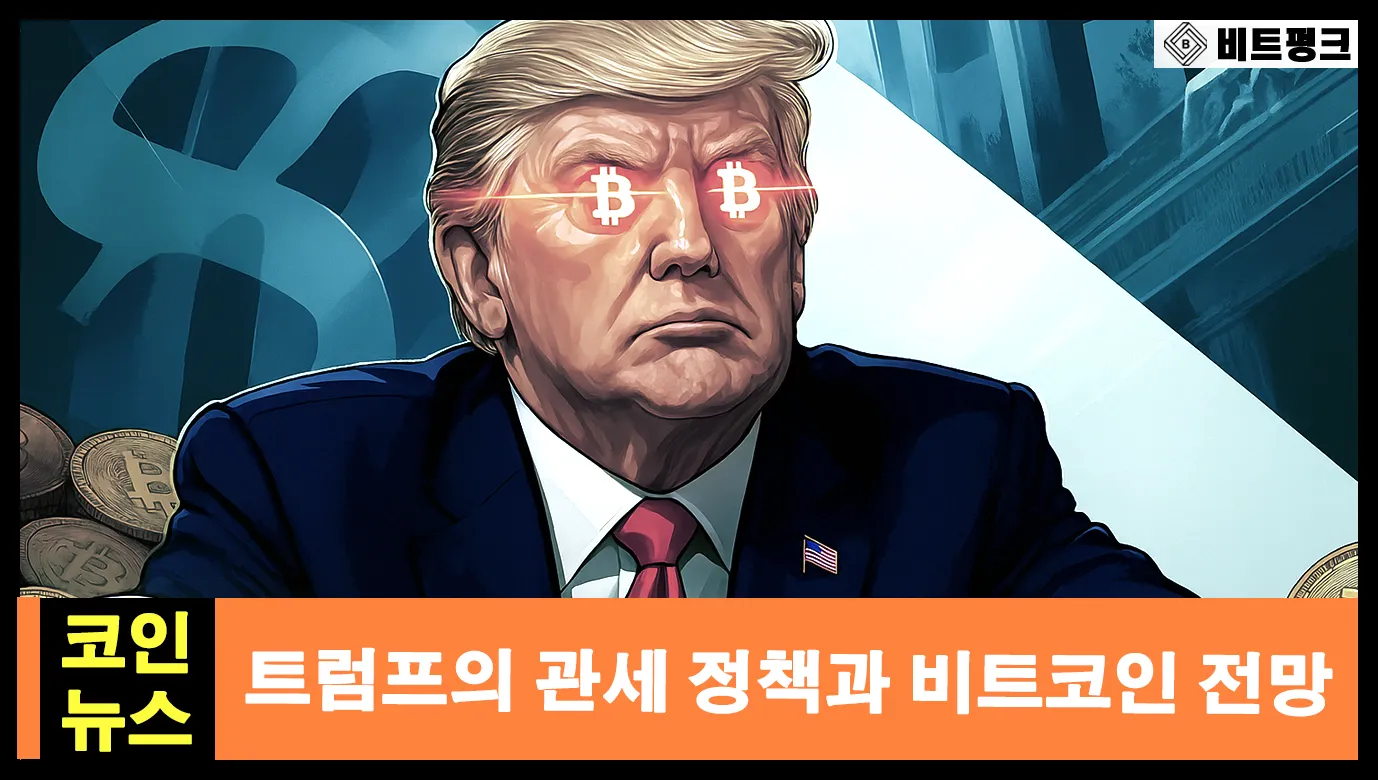
In this post, we'll take a detailed look at why Trump's tariff announcement directly affected the crypto asset market, and what trends we should be watching going forward.
Trump's Tariff Policy: What's Changing?
First, let's briefly summarize the key points of the tariff policy Trump announced.
| Baseline tariff | 10% on all imports (USMCA countries excluded) |
| Country-specific higher tariffs | Can be applied at different rates, up to 49% |
| Foreign car tariff | 25% on all foreign-made automobiles |
| Effective date | April 5, 2025 (baseline), April 9 (automobiles) |
This policy is essentially a signal that the U.S. intends to strengthen America-first protectionism. The problem, however, is that this kind of move can shrink global trade, and the ripple effects spread to the crypto asset market as well.
Why Did the Bitcoin Price Fall?
Right after Trump's announcement, Bitcoin dropped from $88,000 to $82,600. Ethereum fell below $1,800, and Solana slid a whopping 6.5%.
| Bitcoin | $88,000 | $82,600 | -3% |
| Ethereum | $1,910 | $1,790 | -6.2% |
| Solana | $126 | $118 | -6.5% |
(1) Market anxiety
Stronger protectionism increases uncertainty in the global economy. Investors tend to sell off risk assets (= crypto assets) first.
(2) Concerns over rising costs in the mining industry
Most companies mining Bitcoin in the U.S. use Chinese-made equipment. If tariffs are added on top of that, equipment prices jump sharply and mining profitability drops.
(3) Growing policy uncertainty
Investors are sensitive to changes in government and policy. Especially when an unpredictable figure like Trump shows signs of a comeback, the whole market can be shaken.
Is the U.S. Mining Industry Taking a Direct Hit?
This tariff policy could hit the U.S. mining industry especially hard. The reason is simple: most mining equipment is made in China.
| Rising equipment prices | If tariffs are placed on mining equipment such as ASIC chips, price increases are unavoidable |
| Worsening profitability | Equipment costs + higher electricity bills → lower profitability |
| Small and mid-sized miners pushed out | The smaller the company, the harder it is to hold on |
How Did the Stock Market Actually React?
Right after Trump's announcement, shares of U.S. mining companies reacted immediately. In particular, most mining-related stocks plunged in after-hours trading.
| Core Scientific | -8.5% |
| Marathon Digital (MARA) | -7.0% |
| Riot Platforms | -5.6% |
| Hive Digital | -5.6% |
Trump Wants to Buy Bitcoin?
What's interesting is that, some time ago, while announcing his tariff policy, Trump said the U.S. "might acquire Bitcoin in a budget-neutral way."
What does that mean? It leaves open the possibility of using tax revenue earned from tariffs to buy Bitcoin. Could all of this have been part of Trump's big picture?
What Strategy Does the Crypto Asset Market Need?
This tariff issue isn't just a trade matter. It also raises several important questions for crypto asset investors. If America's protectionist stance continues for a long time, can the current mining-centered structure really be sustained?
There is also growing discussion about whether Bitcoin can regain its role as "digital gold," and which direction the market will head if the U.S. government actually starts buying Bitcoin.
Amid this uncertainty, the survival strategies investors can consider can be summed up in three points.
- Rather than concentrating your assets in a specific coin or a specific country, it's important to reduce risk through diversification.
- Keep a close eye on the gradual shift away from mining-centered structures toward staking- and DeFi-based structures.
- Policy changes in the U.S. and other major countries, especially regulations such as tariffs and taxes, should be monitored continuously.
Tariffs Are Just the Beginning, and the Market Has Already Reacted
Trump's announcement wasn't just a "trade policy." It was an economic signal affecting the entire crypto asset market, and a turning point that showed investors a new trend.
Bitcoin's price wobbled temporarily, but the fact that the possibility of government-level purchases was mentioned may actually leave room for long-term expectations. What matters, though, is that the market is currently reacting very sensitively.
How U.S. tariff policy unfolds from here, and which direction the crypto asset ecosystem will move in, are things we'll need to keep watching closely.