
What Is a Bull Market? | The Bull Market Concept | Uptrends Explained
5 min read · · Korean original
Contents 7
Hello, this is Bitpunk. Today we'll look at the concept of a bull market, also known as a rising market. In Korea, some people use the term "bul-jang" (불장) in the sense of a market that's "on fire," since "bul" also means fire in Korean. Originally, though, the term refers to a bull market. In this post, we'll cover what a bull market is, its characteristics, how it compares to a bear market, and some basic investment strategies that follow from it.
The Concept of a Bull Market
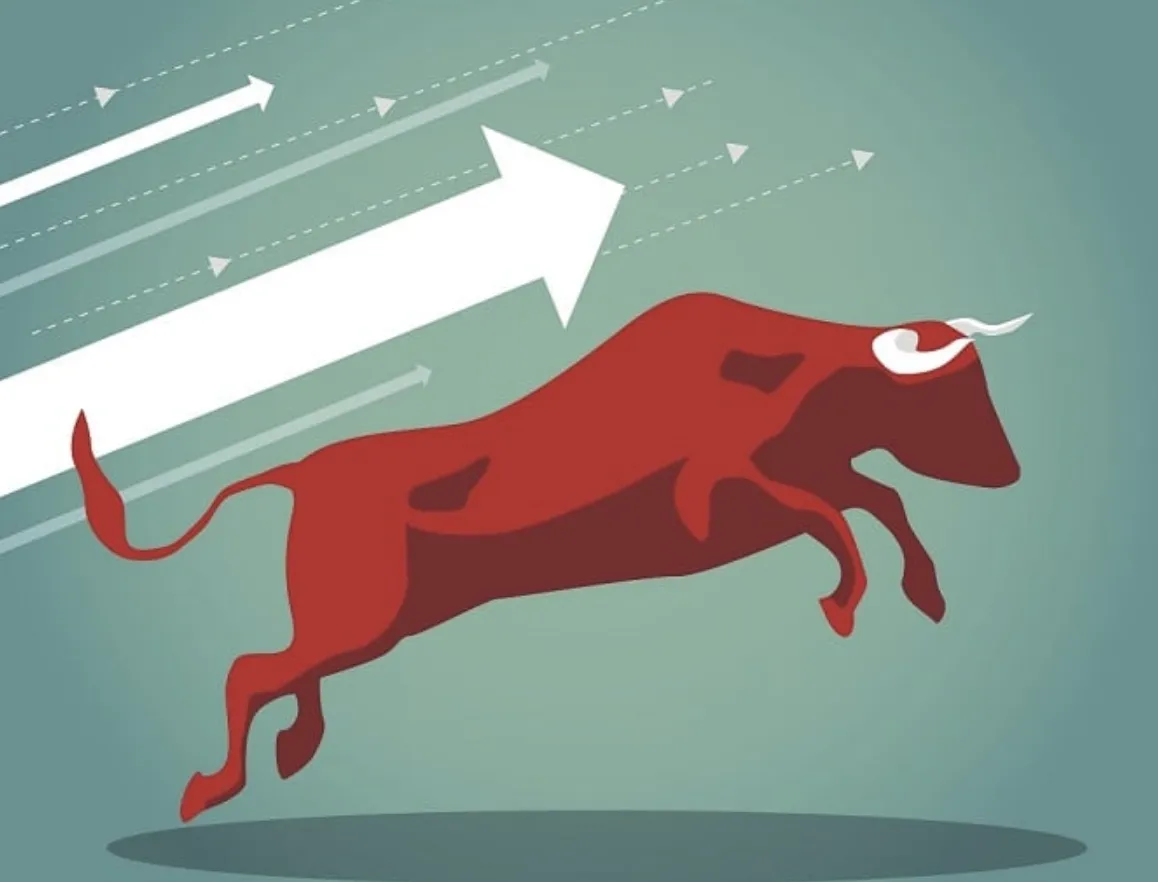
The term "bull market" is most commonly used in the stock market, but it can apply to any kind of trading, including bonds, real estate, currencies, and commodities. Because security prices constantly rise and fall during trading, the term usually refers to an upward price trend from a longer-term perspective, one that tends to last for several months or even years.
Understanding Bull Markets [Rising Markets]
A bull market is only possible when optimism comes together with investor confidence and expectations. There's no specific figure that precisely defines a bull market, but it's generally described as a situation where, after a drop of about 20%, prices rise 20% before falling another 20%.
Unfortunately, bull markets are hard to predict, so even many experts only recognize one after it has already begun. In the US market, a notable bull run took place between 2003 and 2007. During this period, the S&P 500 index rose sharply after a decline. Of course, it then fell sharply again during the 2008 financial crisis.
Characteristics of Bull Markets [Rising Markets]
In securities markets, bull markets usually occur when the economy is doing well. They tend to happen alongside rising GDP and falling unemployment, and can also occur when corporate earnings are improving.
In these conditions, investor expectations also rise, which tends to accelerate the bull market even further. In other words, one driver of the rise triggers another.
During such a bull market [rising market], more investment money flows in than before, which makes the market more active and leads to higher prices.
Bull Market vs. Falling Market (Bull vs. Bear Market)
The opposite of a bull market is a falling market. In English-speaking countries, this is called a bear market. In a falling market [bear market], prices naturally go down, and the market and investors tend to take a pessimistic rather than optimistic attitude.
These terms are said to come from the way each animal attacks its enemies. A bull thrusts its horns up into the air, while a bear swipes its paws downward. Comparing these motions to the market is where the terms "bull market" and "bear market" come from.
Bull and falling markets usually line up with the economic cycle, which consists of four stages: expansion, peak, contraction, and trough. A bull market can be seen as a key indicator of the expansion phase heading toward a peak.
Positive economic conditions, along with optimistic investor sentiment about them, tend to drive stock prices up. Likewise, when the economy heads into contraction and toward a trough, a bear market forms. Taking the US as an example, the market has tended to enter a decline several months before GDP falls.
Bull Market [Rising Market] Investment Strategies
The best investment strategy in a bull market is to buy early, before prices reach their peak. It's usually hard to predict bottoms and tops, but in a bull market, even when prices drop, the losses are often small or temporary.
1. Buy and Hold
This is what people call "HODLing." The most basic investment strategy in a bull market is to buy and keep holding. This strategy is based on the investor's trust and confidence in the bull market. If you didn't expect prices to rise, there would be no reason to hold the investment. You then sell it when you think the price has reached its peak.
2. Pyramiding (Buying Into Strength)
Pyramiding is similar to HODLing, but it's also a riskier strategy. It involves expecting prices to keep rising and increasing your position at prices that have already gone up. Pyramiding is generally a strategy of buying an additional fixed amount when the price reaches a level you had anticipated.
3. Averaging Down (Buying the Dip)
Even in a rising market, prices won't go up forever. Averaging down is a strategy of adding to your position when a small correction occurs. The difference is that pyramiding means buying more when the price reaches a certain higher level, while averaging down means increasing your position when the price drops. This strategy is based on the expectation that the rising market [bull market] will resume after a slight correction.
4. Full Swing Trading
This is the most active and aggressive investment approach in a bull market. To generate maximum profit in a strong market, investors can keep making short-term swing trades.
A History of Bull Markets
In the US market, the most vigorous bull market began in 1982 at the end of the stagflation era and lasted until the dot-com bubble burst in 2000. During that bull market, the Dow Jones delivered an average annual return of 16.8%.
The Nasdaq index, which tracks the tech-heavy exchange, grew more than fivefold between 1995 and 2000, from 1,000 to over 5,000. Then, from 2000 to 2009, the market gradually began to decline, falling an average of -6.2% per year. After that, from 2009 onward, a sustained bull market has continued for 10 years.
Bull Market [Rising Market] Key Takeaways
- A bull market [rising market, Bull Market] refers to market conditions in which prices rise steadily.
- Generally, a bull market refers to a market where, after a 20% drop, prices rise 20% before falling another 20%.
- Investors can take various strategies, and the best-known common ones are buy-and-hold and averaging down.
I hope you all make big profits in the bull market. If you found this post helpful, please tap the heart below. This has been Bitpunk.