John Bogle and the Vanguard S&P 500 Index Fund Revolution
2 min read · · Korean original
Contents 5
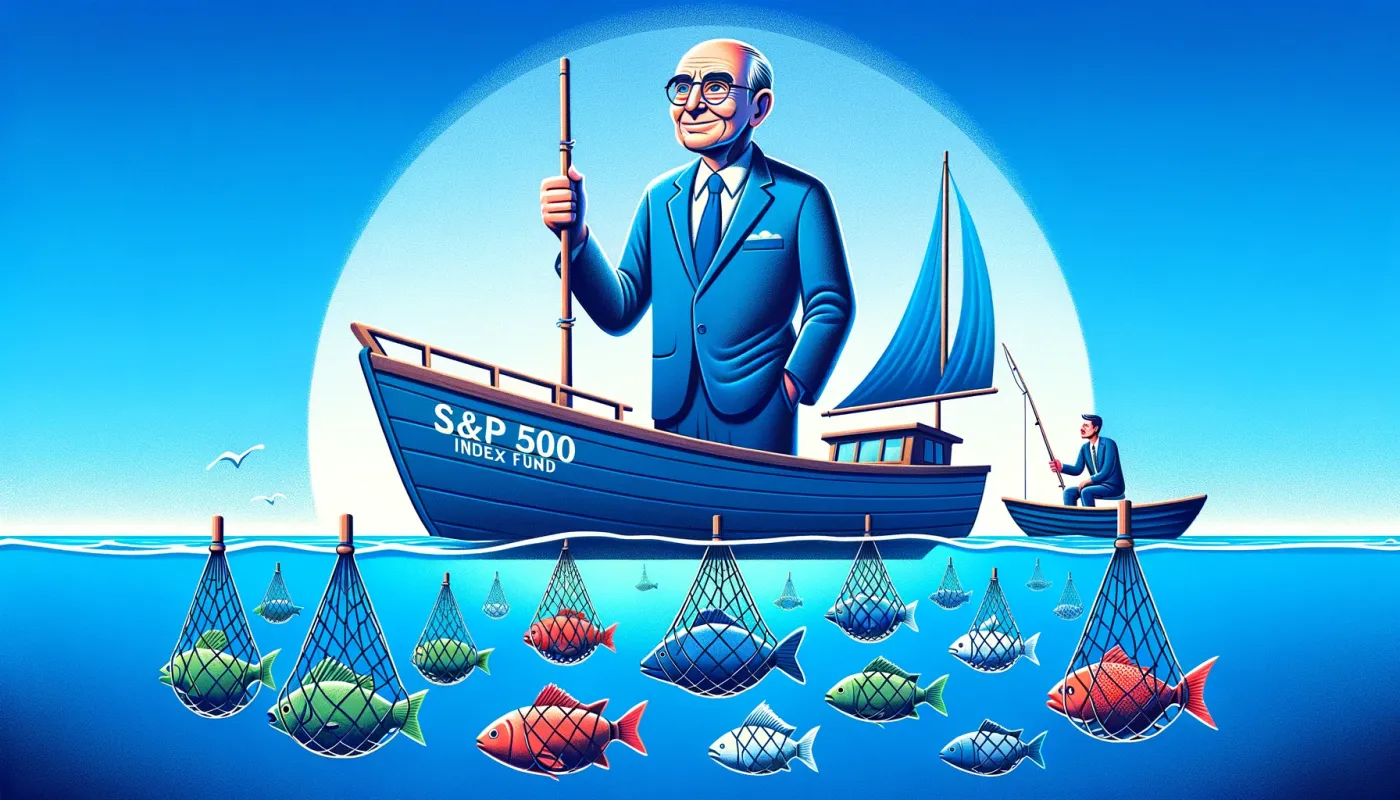
The world of investing is like a vast ocean. Catching that rare fish called a "good stock" in that ocean is far from easy. But John Bogle showed that casting a wide net and catching plenty of decent fish is better than landing a single rare one.
John Bogle and the Vanguard 500
In the mid-1970s, John Bogle created the Vanguard 500, an entirely new kind of investment fund that tracks the U.S. S&P 500 index. His goal was simple: earn the market's average return while investing at the lowest possible cost.
Bogle's idea came as a refreshing shock to many investors. With an average annual return of 10% and a cumulative return of 7,000%, the Vanguard 500 established itself as the frontrunner among index funds.
A New Direction for Investing: Passive Investing
At the heart of Bogle's idea was passive investing. Passive investing means following the overall movement of the market, in other words, an index. Bogle believed this approach would deliver more stable and higher returns over the long run, and he was proven right.
The key difference is this: whereas active investing picks individual stocks, passive investing invests in the market as a whole and earns returns in line with the growth of the entire market.
Index Funds and Their Impact
The Vanguard 500 holds the stocks of 500 leading U.S. companies. This means investors can easily invest in the most representative companies in the U.S. stock market through a single Vanguard 500 fund.
As a result, investors can take part in the overall growth of the U.S. stock market without having to agonize over individual stocks. This proved hugely appealing to many investors and went on to make index funds mainstream.
Pros and Cons of Index Funds
The biggest advantages of investing in index funds are simplicity and cost efficiency. However, every investment carries risk, and if the market as a whole falls, index funds are affected too. Even so, from a long-term perspective, index funds often show steady growth.
Wrapping Up
John Bogle's index investing philosophy pointed investing in a new direction. Rather than focusing on individual stocks, his approach centers on looking at the market as a whole.
This perspective laid the foundation for today's index fund ecosystem, and thanks to it, many investors can now invest in the broader market in an efficient and simple way.