What Is the Gig Economy?
3 min read · · Korean original
Contents 3
The gig economy refers to a situation in which markets and companies hire workers on a temporary, as-needed basis instead of employing them full-time. The gig economy is challenging the traditional idea of the full-time worker who focuses on building a stable career.
- The gig economy is made up of flexible, temporary, or freelance work arrangements, and often involves connecting clients and customers through online platforms.
- The gig economy connects workers, businesses, and consumers when they need each other, and it has the advantage of creating a more flexible working environment.
- At the same time, however, the gig economy disrupts traditional relationships between companies, businesses, and clients, and workers can end up in a blind spot when it comes to welfare and benefits.
What the Gig Economy Is and Where the Term Comes From
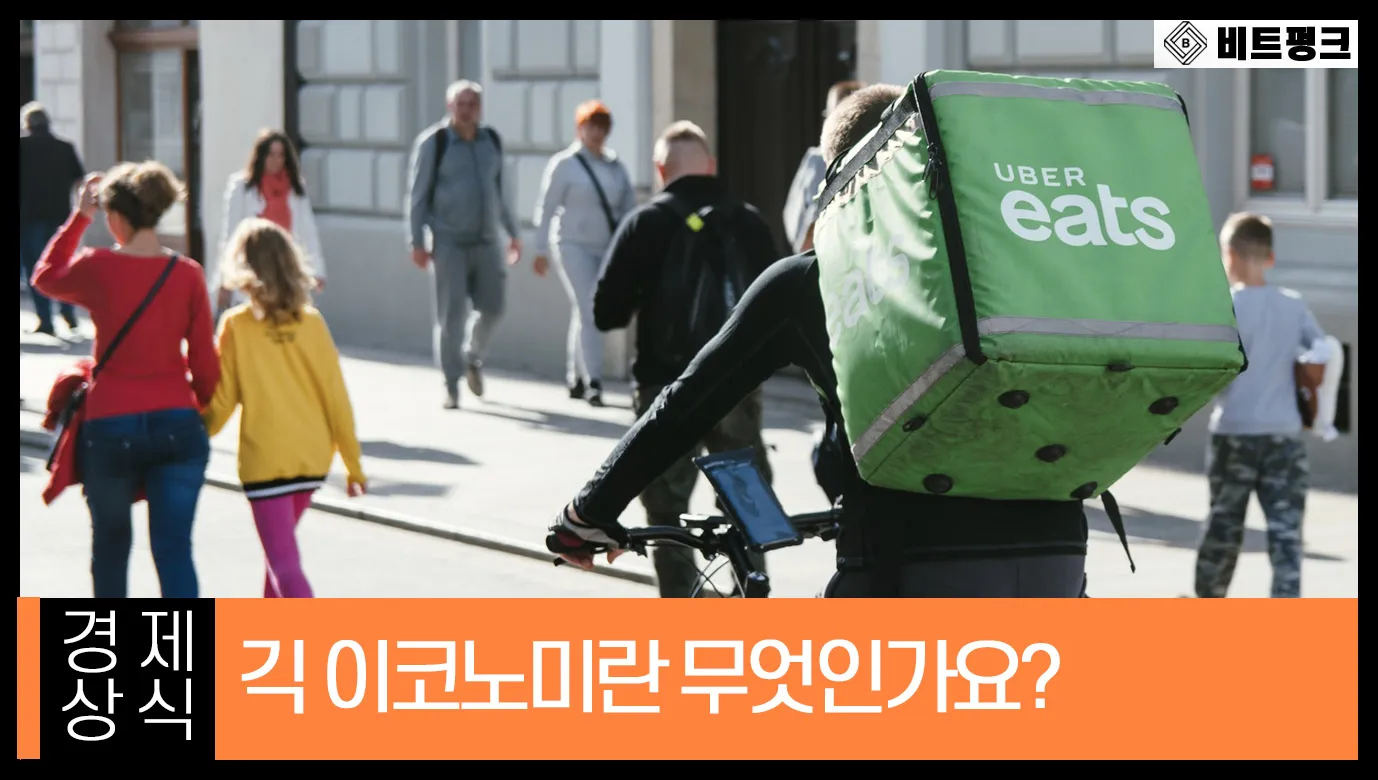
In the gig economy, many workers work part-time, temporarily, or on contract. Examples of the gig economy can be found in Uber, Airbnb, Baemin, Coupang Man, and others, and through these models companies can offer consumers cheaper and more efficient services.
The word "gig" comes from 1920s American jazz venues, which hired musicians temporarily as needed. In other words, the employers who ran these venues would often hire musicians only on weekends or holidays when crowds came in, and today the term is used for situations in which companies hire workers as needed.
Facts About the Gig Economy
The gig economy is very active in the United States, where roughly one-third of the population already works in some form of gig work. Experts expect this trend to keep growing.
Companies that find it hard to hire full-time workers can manage their costs more efficiently through the gig economy, hiring gig workers during busy periods or for specific projects.
For workers, the short-term nature of gig work means they constantly have to look for new jobs. As a result, it is very common for gig workers to change careers.
After the outbreak of the coronavirus in 2020, the gig economy became even more active.
Criticisms and Drawbacks of the Gig Economy
Despite these advantages, the gig economy has its drawbacks. In the gig economy, it is hard to work as a full-time employee, which makes it difficult for workers to develop their careers.
In addition, the quality of jobs themselves can keep declining, because companies no longer need to care about workers' long-term careers or regular benefits. As a result, competition among workers who prefer stable jobs is growing even fiercer in certain fields.
Some workers suffer greatly from the lifestyle that comes with gig economy work arrangements. Their work-life balance breaks down, their sleep patterns are disrupted, and they lose their vitality. The "flexibility" of the gig economy actually means that workers must stay "on alert," always on standby according to the needs of companies rather than their own. Since the outbreak of the coronavirus, competition within the gig economy has become even more intense.
In some ways, the gig economy may seem to give workers more freedom, but on the other hand it also means that things like stable jobs, monthly salaries, and benefits have now become a thing of the past.
The gig economy is eroding elements such as trust, closeness, and cooperative relationships that once grew out of the relationships between workers, employers, customers, and intermediaries, and it is making everyone reluctant to invest in each other for the long term.
Because the gig economy is centered online, it also has the drawback that people who cannot use the internet are easily excluded from it.
<Gig Economy>, Investopedia