Why It's Risky to Hold Leveraged ETFs for the Long Term in Stock Investing
3 min read · · Korean original
Contents 4
Hello, folks. This is Bitpunk. Today, let's take a close look at leveraged ETFs, investment products that Koreans love but that are genuinely risky to hold for the long term.
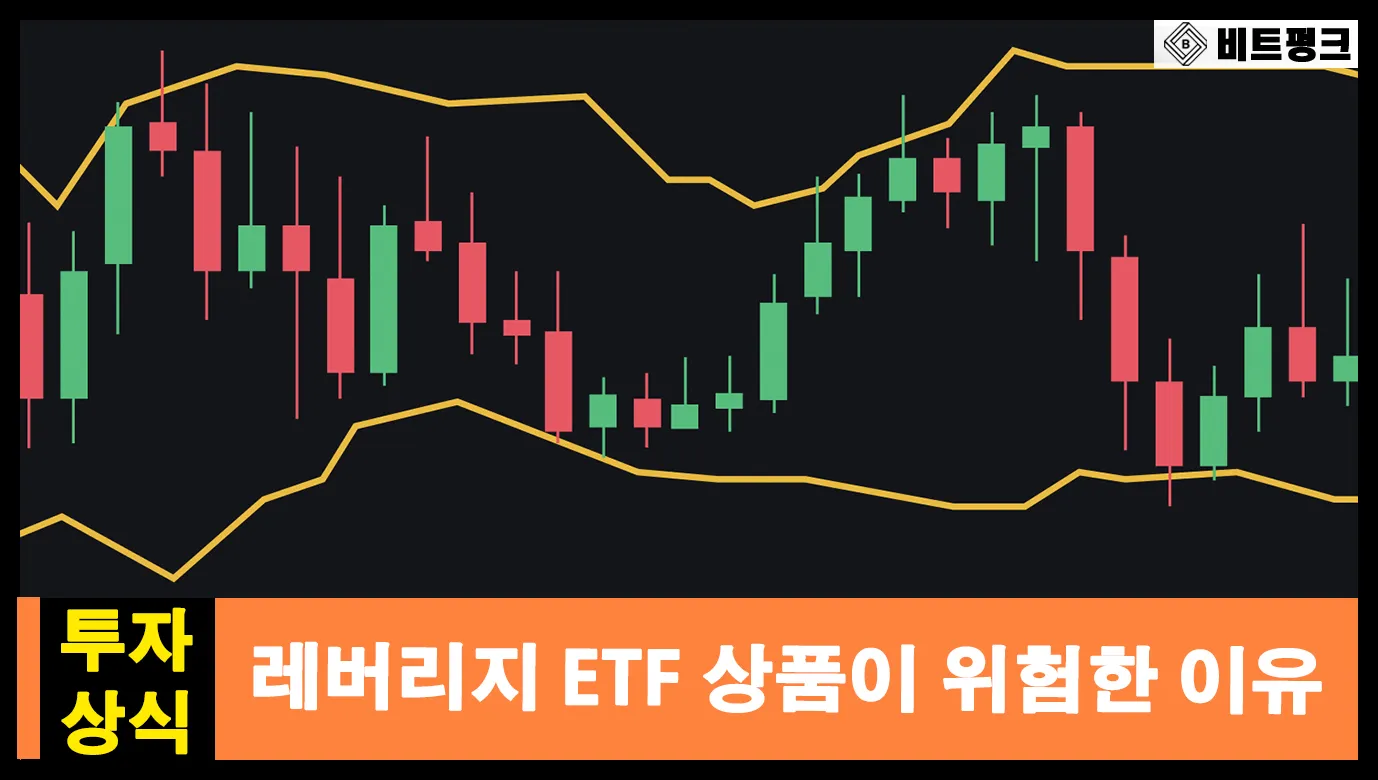
These leveraged ETFs are also widely known as 2x long or 2x short products. On top of that, there are 3x long and short versions, as well as 1.5x long and short versions.
1. Introducing Leveraged ETFs
A leveraged ETF is an ETF that tracks a specific stock or index at n times its movement. For example, a 2x leveraged Nvidia ETF rises 2% when Nvidia's stock rises 1%, and falls 2% when it falls 1%. That doesn't sound so bad at first, but there's a reason you shouldn't hold it as a long-term investment.
2. Why Shouldn't You Invest Long Term?
The reason you shouldn't hold leveraged ETFs long term is rebalancing and the compounding effect of volatility. What does that mean? Let me give you an example to make it easier to understand.
Let's say you invested in a 2x leveraged Nvidia ETF. Right after you buy, Nvidia goes up! Great. The leveraged ETF moved twice as much. But the next day... Nvidia drops 10%. Disappointed, the investor thinks, "Ugh, I'll just get out at breakeven," and checks the price of the leveraged ETF, only to find it has fallen even further than yesterday's level?
At first glance, since the stock went up 10% and then down 10%, it seems like the 2x leveraged ETF price should be back where it started. But in reality, it goes to 1 * 1.2 = 1.2x, then 1.2 * 0.9 = 0.96, so you end up with a -4% loss.
As you can see, a leveraged ETF resets its returns every day and calculates them again. That's why, when the stock price keeps going up and down, losses pile up. In other words, "the stock price keeps moving up and down = gains shrink and losses accumulate."
Does that make more sense now? So imagine holding one of these leveraged ETFs as a long-term investment. You'll witness the magic of your principal gradually converging toward zero.
3. So When Should You Invest?
Leveraged ETFs are suited to short-term trading, which is also called scalping or day trading. They're suitable for holding for a day, or at most about one to two weeks.
As we saw earlier, the longer you hold a leveraged ETF, the more its returns get eroded by volatility. So using these products for long-term swing investing may not be a very good choice.
Of course, in a huge bull or bear market, there may be no better product. For example, if Nvidia's price rises 10% three days in a row, a 2x leveraged product would rise by a whopping 33.1%. This, too, is a positive (+) compounding effect.
Wrapping Up
That covers the concept and risks of leveraged stock ETFs. Leveraged products have the drawback that losses accumulate due to the compounding effect of volatility. Of course, they can be beneficial in a clear bull or bear market, but volatility tends to occur even during those periods, so you need to be careful.
To sum up, it's better to use leveraged ETFs for short-term speculation rather than long-term holding. Also, leveraged ETFs tend to have higher management fees and commissions than other ETFs, so it's a good idea to check those as well before trading.