What a Yield Curve Inversion Means and Why It Happens (feat. Recession)
4 min read · · Korean original
Contents 4
What is a yield curve inversion, and how is it related to a recession? In this post, we'll look at what long-term and short-term interest rates are and take a closer look at what happens when the two invert.
🔍 Long-Term vs. Short-Term Interest Rates?
- 🔗 Long-term rate: the US 10-year Treasury yield
- 🔗 Short-term rate: the US 2-year Treasury yield
Generally, long-term rates are affected by changes in market interest rates, while short-term rates are sensitive to changes in the central bank's benchmark rate. Put simply, long-term rates tend to reflect economic conditions, while short-term rates tend to be shaped by the Fed's or the government's policies.
Bonds and interest rates usually respond to the business cycle in the following ways.
- When an economic boom is expected, investment demand increases, so interest rates rise and bond prices fall ➡️ Rates go up
- When a recession is expected, demand for safe-haven assets increases, so bond prices rise and interest rates fall ➡️ Rates go down
🔄 What Is a Yield Curve Inversion?
So what exactly is a yield curve inversion?
- 🔗 Long-short yield spread: the difference between the long-term rate and the short-term rate
- 🔗 Yield curve inversion: a situation where the short-term rate becomes higher than the long-term rate
For example, if the US 10-year Treasury yield is 5% and the US 2-year Treasury yield is 2%, the long-short spread is 3%. A yield curve inversion refers to the short-term rate rising above the long-term rate. In other words, it's a situation where the 10-year yield is 5% but the 2-year yield rises to 7%, making the spread -2%.
A short-term rate that is higher than the long-term rate means you have to pay more interest even when borrowing for a shorter period. Realistically, that's a situation that doesn't quite make sense. So why does the yield curve invert?
🤔 Why Does the Yield Curve Invert?
There are many causes behind a yield curve inversion, but according to interest rate determination theory, the long-term rate is determined by the sum of expected future short-term rates and the term premium. Recently, factors such as quantitative easing and demand for safe-haven assets have emerged as determinants of the term premium. A yield curve inversion is an important indicator for predicting recessions, but its causes have not been clearly identified.
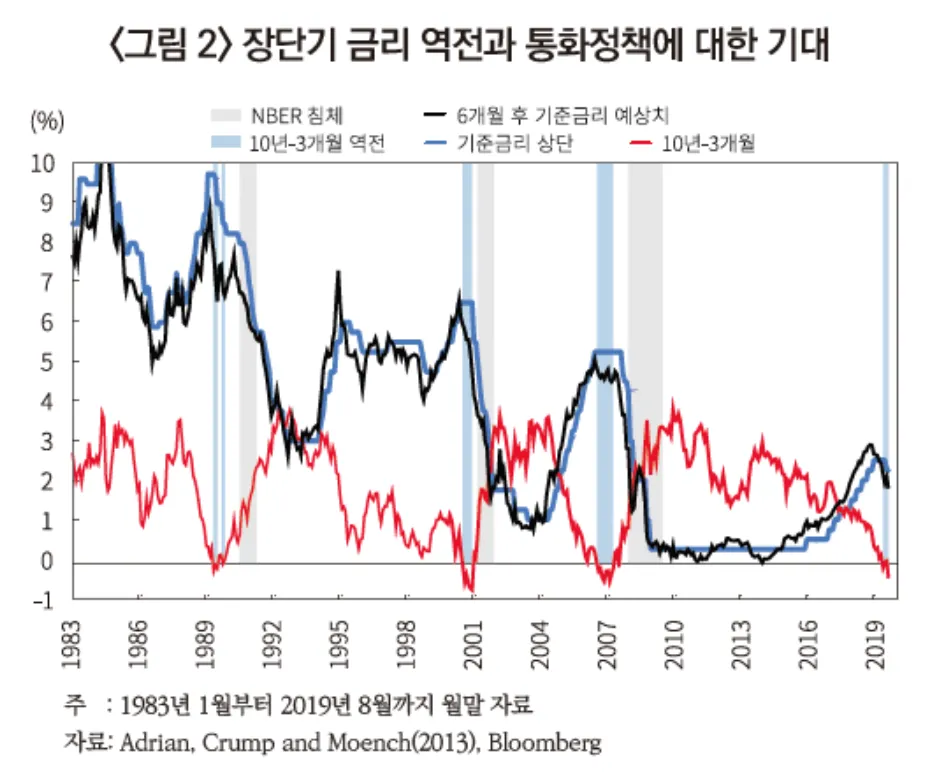
Even so, the reasons a yield curve inversion occurs in the market can be estimated as the following three.
1. Rising inflation and slowing economic growth: When the economy is booming, long-term rates tend to rise along with it. However, high inflation or declining economic growth can push long-term rates down, causing an inversion. In other words, it's a situation where the Fed changes its rate policy, but the market expects the economy to perform poorly over the long run.
2. Changes in investment demand and supply: Rates tend to rise when investment demand is high and fall when supply increases. When demand for short-term investment funds shifts from risky assets to safe-haven assets, long-term and short-term rates can temporarily invert.
3. Bond selling pressure: If the Fed, after buying bonds to supply liquidity, starts selling short-term bonds, bond prices can fall and rates can rise.
📉 The Link Between Yield Curve Inversions and Recessions
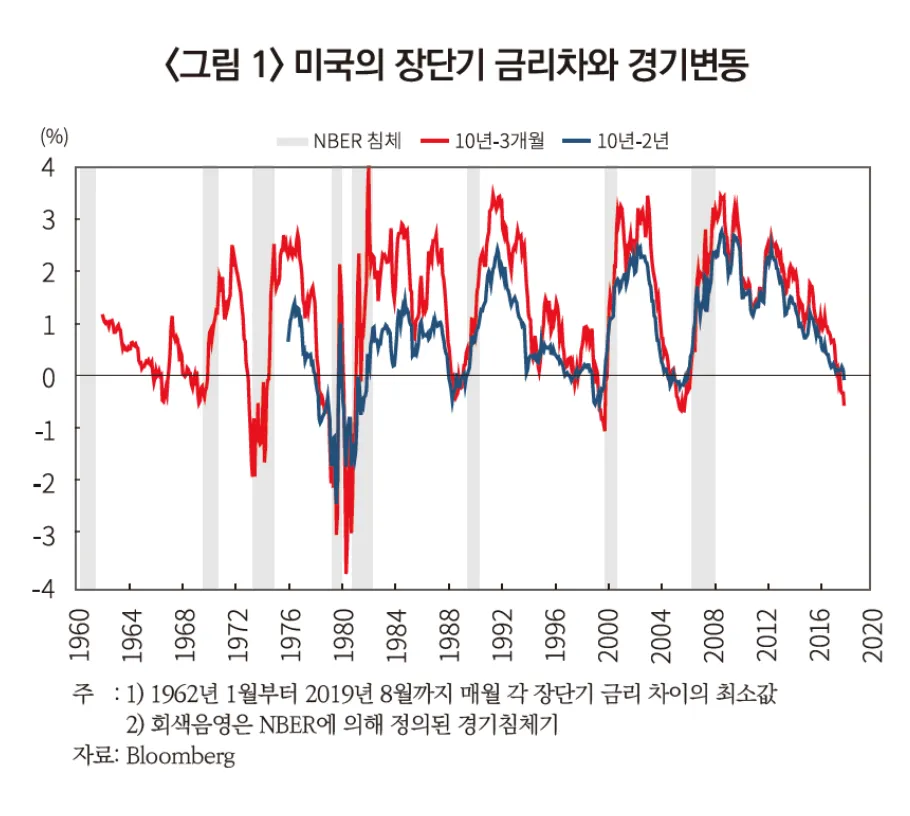
Looking at the spread between the US 10-year rate and the 3-month and 2-year rates in the chart below, you can see that yield curve inversions are related to the business cycle. In the US, the last several recessions all occurred after a yield curve inversion. The yield curve inversion is known as one of the most accurate indicators for predicting recessions.
Wrapping Up
The US yield curve inversion is one of the key indicators for predicting a recession. The current inversion is linked to the US-China trade dispute and reflects the market's concerns about the possibility of a recession.