A Guide to Financial Income Tax (How to Save on Interest and Dividend Taxes)
4 min read · · Korean original
Before investing in any financial product, you should always calculate the taxes you'll owe first. That's because taxes differ depending on the financial product and the type of return. A difference of just tens of thousands of won could mean paying close to 10–20% more in tax, so you need a tax-saving strategy.
- Learn how financial income tax on interest and dividends is calculated and how to save on it.
- The key is making use of the KRW 20 million threshold for comprehensive taxation.

Understanding Financial Income
Financial income means the total of interest and dividend income from products covered by the Income Tax Act, such as deposits, installment savings, investments and dividends. Put simply, financial income = interest income + dividend income.
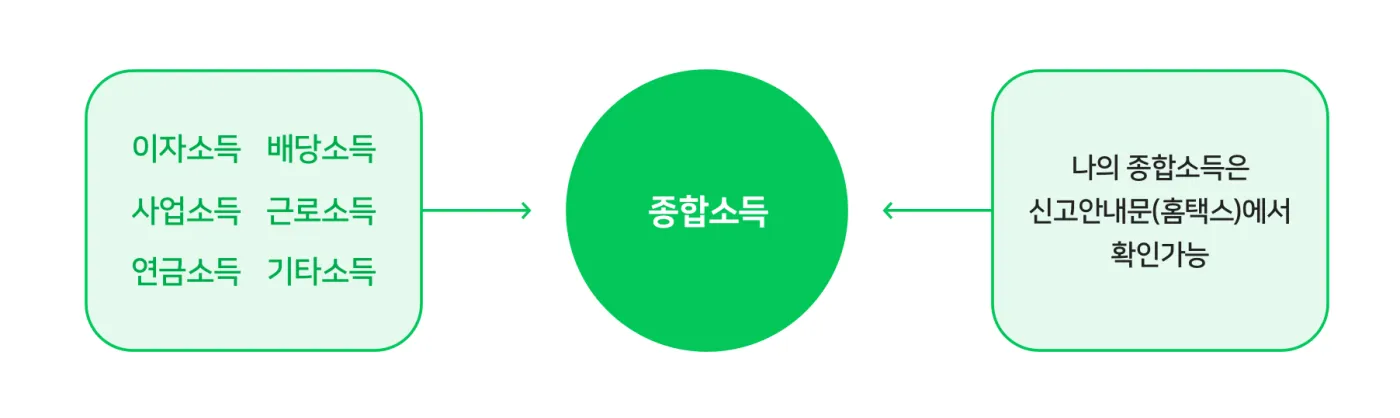
This financial income is added to the earned income, business income, pension income and other income you made over the year and becomes part of comprehensive income tax. Comprehensive income tax has to be calculated and filed every May. In other words, even though it's financial income, the tax you actually pay is calculated together with your total income.
How Much Do You Have to Pay?
Financial income is included in comprehensive taxation. As we covered earlier, comprehensive taxation means combining all of your income into a single income and taxing it according to the amount.
For example, there's a huge difference between a salaried worker earning KRW 100 million a year who receives KRW 30 million in interest income, and a person with no job who receives KRW 30 million in interest income a year.
There's one fact here you absolutely need to know. Financial income below KRW 20 million is not included in comprehensive taxation. In other words, even if you earn KRW 30 million in financial income, the amount actually included in comprehensive income is 30 million - 20 million = KRW 10 million.
To sum up, in the case above, the salaried worker has to pay tax on KRW 110 million, while the person with no job only has to pay tax on KRW 10 million.
Below are the tax rates by comprehensive income.
| Tax base | Tax rate | Progressive deduction |
|---|---|---|
| KRW 12,000,000 or less | 6% | - |
| Over KRW 12,000,000 up to KRW 46,000,000 | 15% | KRW 1,080,000 |
| Over KRW 46,000,000 up to KRW 88,000,000 | 24% | KRW 5,220,000 |
| Over KRW 88,000,000 up to KRW 150,000,000 | 35% | KRW 14,900,000 |
| Over KRW 150,000,000 up to KRW 300,000,000 | 38% | KRW 19,400,000 |
| Over KRW 300,000,000 up to KRW 500,000,000 | 40% | KRW 25,400,000 |
| Over KRW 500,000,000 up to KRW 1,000,000,000 | 42% | KRW 35,400,000 |
| Over KRW 1,000,000,000 | 45% | KRW 65,400,000 |
Looking at the table above, the salaried worker falls into the 35% bracket, while the person with no job falls into the 6% bracket.
So, shall we calculate the tax actually paid?
Calculating the tax with the comprehensive income tax formula gives the following.
Comprehensive income tax = comprehensive income * tax rate - progressive deduction
- Salaried worker: 110 million * 0.35 - KRW 14.9 million = KRW 23.6 million
- Person with no job: 10 million * 0.06 = KRW 600,000
How to Save on Taxes
The way to save on financial income tax is to figure out your own income bracket and prepare a strategy that fits it.
The key is to take advantage of the fact that if your annual financial income is KRW 20 million, no further tax is added beyond the 15% withheld at source.
For the salaried worker above, it would be best to keep annual financial income at KRW 20 million or less. That way, they only pay the 15% tax on their financial returns and don't have to include those returns in their comprehensive income tax filing.
On the other hand, for the person with no job, if financial returns are KRW 12 million or less, they actually get back 9%, which is the 15% withheld minus 6%. Income of KRW 20 million or less doesn't have to be reported, but since they paid more tax than necessary, they can file and get the tax refunded. On top of that, if they have no other source of income, they can plan a strategy of increasing their financial income up to KRW 46 million a year, where the rate is the same as the 15% withheld at source.
Wrapping Up
That covers how comprehensive income tax is calculated on interest, dividends and other returns from financial products.
To save on taxes from financial income, you need a strategy that adjusts your financial income to your own income bracket, using the KRW 20 million point at which that income gets included in comprehensive taxation as the baseline. If you look at the table above and run the numbers on a calculator, you should be able to find your tax-saving range without much difficulty.
Did you find this helpful? If so, please give it a heart below and share it. Thank you.