What Is Tether (USDT)?
3 min read · · Korean original
Contents 7
Tether (USDT) is the best-known stablecoin in the crypto world. Tether is designed to be pegged 1:1 to the US dollar and can be used on a variety of blockchain networks. Tether's trading volume and liquidity have risen steadily over the past few years.
Like other stablecoins, USDT is a crypto asset that minimizes price volatility like that of Bitcoin (BTC). By holding Tether, you can preserve the value of your assets without converting your crypto into fiat currency.
Introduction
Tether is a core element of the cryptocurrency ecosystem. As of December 2020, Tether ranks 4th by market capitalization, at around $20 billion. This is the largest market cap after Bitcoin, Ethereum, and Ripple. And by trading volume, it records an even higher daily trading volume than Bitcoin. So what is Tether, and how can you use it?
Tether (USDT) Explained
Tether is the stablecoin (a coin that replicates the value of a fiat currency) with the largest market capitalization in the world. Tether is known to have been first created and launched in 2014 under the name Realcoin by Bitcoin investor Brock Pierece, entrepreneur Reeve Collins, and developer Craig Sellers.
USDT was originally launched on top of the Bitcoin protocol via the Omni Layer, but today it has been integrated into and is used on other blockchains as well. Most of its supply exists on Ethereum in ERC-20 form. A significant amount has also been issued on the Tron, EOS, Algorand, Solana, and OMG networks.
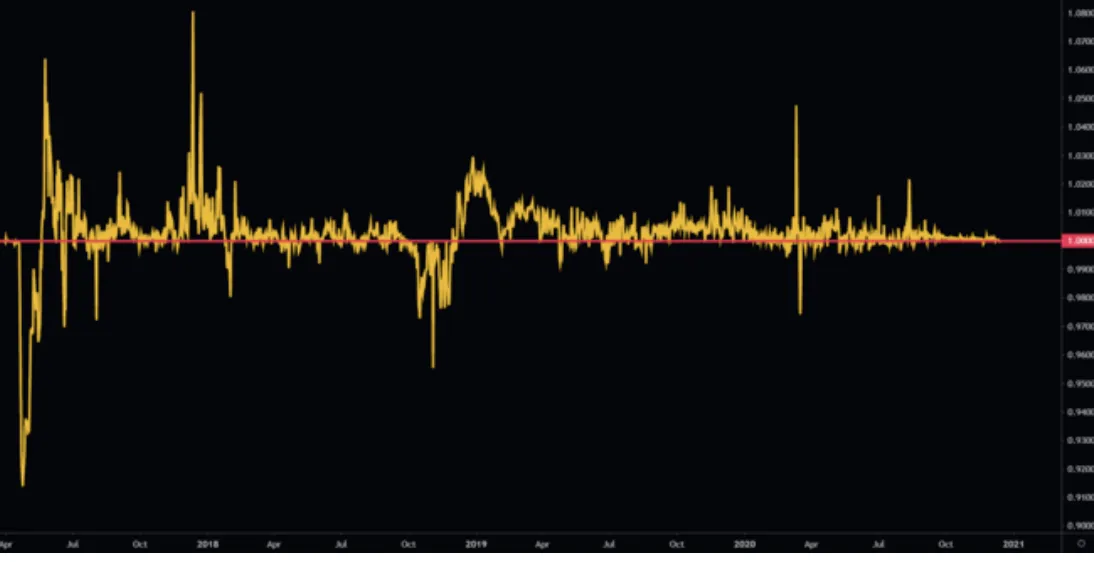
Historically, Tether's price has shown some volatility, at one point reaching $1.2, but since early 2019 it has been remarkably stable. For this reason, it shows significant trading volume and liquidity in most crypto markets.
How Tether Works
The purpose of a stablecoin is value stability. This makes it fundamentally different in nature from other crypto assets, which tend to be highly volatile. As a stablecoin, Tether is pegged 1:1 to the fiat currency USD.
Although it is pegged to the fiat currency USD, Tether's reserves consist of cash equivalents, other assets, bonds, and so on.
Below is the USDT/USD chart. It is generally stable, but there have been times when large swings in crypto assets such as Bitcoin were accompanied by price volatility in Tether as well.
Why Tether Matters
Tether serves as a bridge between crypto assets and fiat currency. It lets investors and traders hold an asset pegged to USD, preserving the value of their holdings against the volatility of other crypto assets.
- Pegged 1:1 to USD
- Stable, on the premise that USD is stable
- Usable on different blockchains
- Uses that differ from conventional crypto assets
Examples of Using Tether
- Protection from price volatility
When the price of a crypto asset such as Bitcoin drops sharply, you can quickly convert it to USDT.
- Moving funds to another exchange
With Tether, you can move funds between different exchanges quickly and reliably.
- Trading without fiat currency
Some exchanges may not support fiat deposits and withdrawals. In that case, you can trade using USDT.
- Forex trading
Because USDT is pegged to USD, you can use it to trade against currencies other than the US dollar.
How to Store Tether
You can store Tether not only on exchanges like Binance but also in a variety of wallets. Because USDT is issued on many different blockchains, it is important to check that you are using the correct network when sending it.
On the Binance withdrawal page, you can see withdrawal options for Binance Chain (BEP2), Binance Smart Chain (BEP20), Ethereum (ERC20), Tron (TRC20), and Tether (OMNI), as shown below.
Conclusion
Stablecoins are extremely useful assets in the crypto world, letting traders and investors protect their holdings without converting their crypto into fiat currency every time. Besides USDT, stablecoins include BUSD, USDC, TUSD, PAX, and others.