Crypto Pyramid and Ponzi Schemes: How to "Prevent and Report" Them (f. Upbit Exchange)
3 min read · · Korean original
Contents 5
In the crypto world, anyone can issue and send coins, so there are quite a lot of "Ponzi schemes" that deceive honest investors and steal their funds. In Korea, Ponzi schemes are also widely known as "dadangye" (multi-level/pyramid schemes).

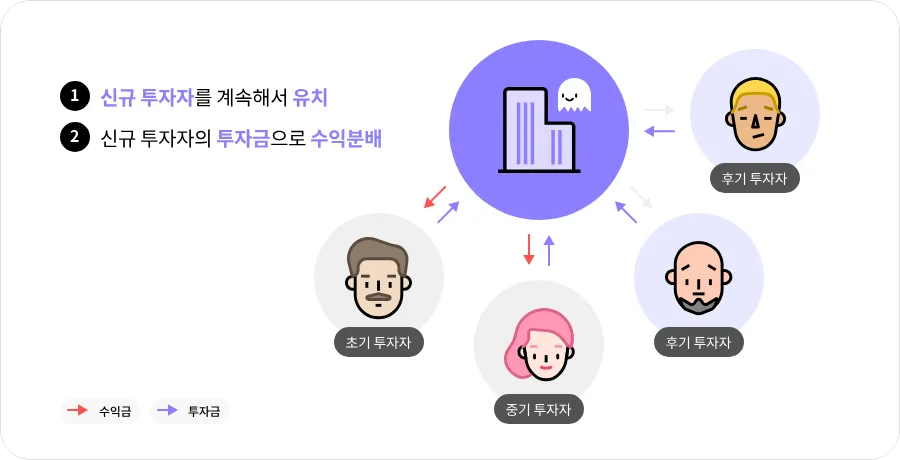
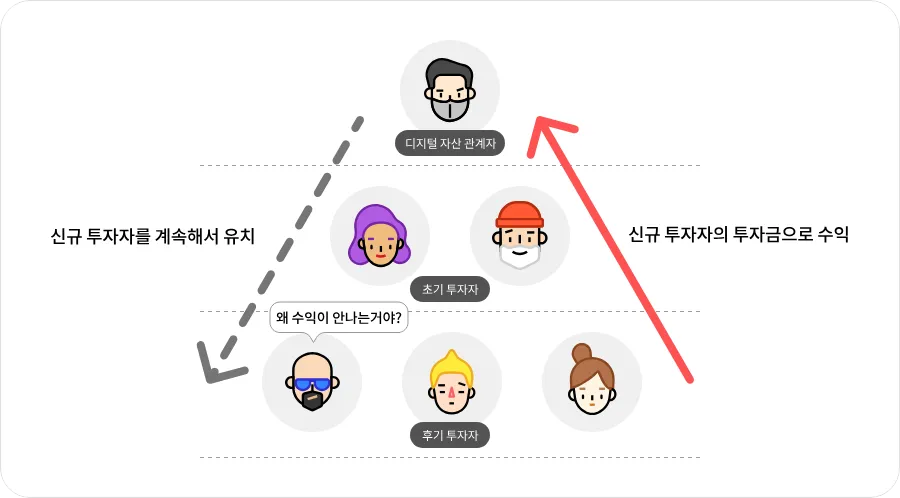
Simply put, a Ponzi scheme is "when early investors earn returns from the money of later investors, without any real business structure." If a product promises returns that seem too good, be suspicious first.
What Is a Ponzi Scheme?
A Ponzi scheme is a fraud method that keeps recruiting new investors and uses their money to pay returns to early investors. Ponzi schemes often operate without a proper business structure, and even if there is a business being run, latecomers are often required to "put in more money and buy goods or services themselves."
The First Ponzi Scheme, the Origin of Pyramid Fraud
The Ponzi scheme began in the early 1920s with a man from Italy named Charles Ponzi. He promised many investors big returns using a method that supposedly profited from price differences in International Reply Coupons (IRC). In reality, however, there was no revenue model at all; it was a classic "pyramid scheme" that paid existing investors with money from latecomers.
In the end, Ponzi's fraud, which kept growing in size until it could no longer pay out, came to an end, and this method came to be called a "Ponzi Scheme" after his name.
Fraud by Overseas Bitcoin Exchanges and Mining Companies
Unfortunately, the crypto scene also has many Ponzi schemes, such as "fake exchanges" or "mining companies." They lure investors by claiming not only to guarantee their principal but also to pay out daily returns worth several times their investment.

Then they tell you to buy a specific asset (= a coin issued by the Ponzi gang) or sign up, and send USDT or Ethereum. On top of that, they may run a referral program that pays you a fee for bringing in new members.
At first, they will probably pay you as promised. But before long, they will start delaying payments for various reasons. Eventually, the Ponzi scheme comes to an end, and the huge sums of money from those who joined later all become worthless.
How to Prevent Ponzi Schemes
The best way to prevent Ponzi schemes is to "be suspicious." If the returns look too good, always question them first. A product that guarantees both high returns and your principal is, realistically, impossible.
Also, if any of the items below apply, you should suspect a Ponzi scheme. When signing up for investment or financial products, make it a habit to contact the Financial Supervisory Service's Financial Consumer Call Center at 1332 to check whether the company has been licensed or authorized under the relevant laws.
- It guarantees both your principal and high returns
- It takes investments in digital assets
- It receives investment money into a personal account, such as the referrer's, rather than a corporate account
- The website does not properly list the company's address or contact information
What to Do If You've Fallen Victim to a Ponzi Scheme
If you realize you've been caught in a Ponzi scheme, immediately request the return of your investment and report it to the Financial Supervisory Service. You can report the fraud by calling the FSS call center at "1332" or through the "Illegal Private Finance Report Center" on its website.
You can also visit the Korean National Police Agency's Police Civil Complaint Portal and click the "Cybercrime Report/Consultation" menu to file a cybercrime report. If you act quickly after falling victim to a Ponzi scheme, you may be able to recover part of your investment.