How to Handle a Bear Market (feat. Controlling Your Emotions)
5 min read · · Korean original
Contents 4
Hello, this is Bitpunk. Today I'd like to talk about how to handle a bear market. The truth is, crypto markets like Bitcoin trade 24 hours a day, and their volatility is considerably higher than that of traditional stock markets. In this environment, once a long bear market with no end in sight begins, most investors and traders end up dropping out sooner or later.
But there is a way to survive even in a bear market like this. Asset allocation? Risk management? Stop losses? All of these are good. But what really matters is properly understanding and controlling your own emotions. What do I mean by that?
Market Cycles and Emotions
Markets move in cycles. Simply put, they don't just keep going up forever, and they don't just keep going down forever either. Pull up a chart and switch it to the weekly timeframe. You'll be able to see long rises and long declines repeating over and over.
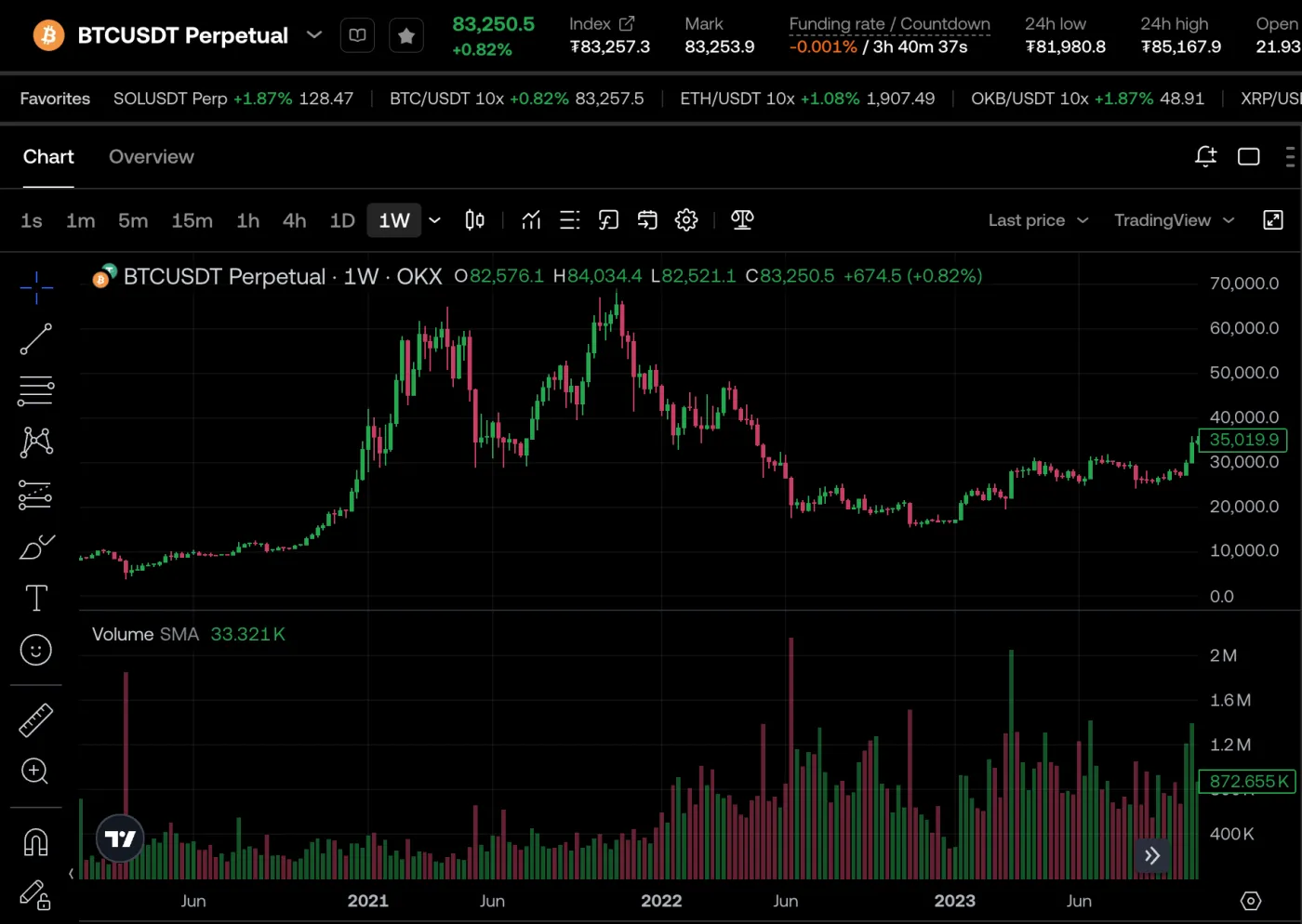
And here's the really important part: the emotions we feel through these cycles repeat as well. Put simply, a bull market feels good, right? You want it to keep going higher, and honestly, that greed has no limit. Then, when everyone is caught up in euphoria, most of you probably know that a correction isn't far off.
On the other hand, in a bear market you feel frustrated. At first you think it's just a mild correction, but once the price falls -30%, -40% or more from the peak, fear slowly creeps in. Then, when squeezes and stop hunts kick in and the price drops sharply, most investors and traders are gripped by panic. That's how people end up making the mistake of selling at a loss right at the bottom.
Are you starting to get the picture? Market cycles and emotions are closely connected. In a bull market you need to watch out for 'euphoria,' and in a bear market you need to watch out for 'fear.' Just learning to control these two well can be enough to survive in the market.
Understanding the Emotions Traders Feel
The emotions felt by traders and investors in the market can be summed up in roughly four categories. First, there's 'FOMO.' If you jump in when people everywhere are shouting "Bitcoin is going to KRW 1 billion," that may be exactly the top. Be careful when success stories are pouring out of social media and the news. Don't blindly follow the crowd out of haste.
The next emotion is 'loss aversion.' This is the reluctance to lock in a loss even when a trade has gone wrong or an asset's price has fallen much more than expected. You've probably seen cases where someone keeps saying, 'Let's just wait a little longer... a little more...' until their assets are cut in half and they finally sell at the very bottom. It's a common problem among beginner traders who have hardly ever cut a loss. To survive in the market, you also need to practice setting criteria and cutting your losses.
'Overconfidence' is another emotion to watch out for. This is something intermediate traders who have just moved past the beginner stage often feel. When trades go better than expected and you feel like you've made some money, you naturally start thinking, 'Wow, this is so easy. Everything's going so well.' That's exactly when you need to be careful. Accept the fact that no one can predict the market perfectly, and stay humble.
Finally, there's the 'anxiety of being different.' These days, there's a huge amount of information scattered everywhere, on Telegram, YouTube and elsewhere. The people running these channels may be more skilled than average, but they're human too. Don't let the opinions of influencers or experts sway you too much. Just because many people agree with something doesn't mean you have to agree with it. Practice developing your own perspective.
The 'Secret' to Surviving a Bear Market
So what should you do? Is there a secret to surviving a bear market? There is. First and foremost, make a plan. Surprisingly, most investors and traders enter the market without any plan at all. They hit the buy button first and think later. But you should think ahead about where you'll 'take profits' or where you'll set your 'stop loss.' Even if the plan isn't perfect.
Next, you need to manage risk. You need to understand exactly what risk you're taking on and have a response strategy that fits it. Before you start trading or investing, make sure you understand the appropriate amount of leverage, position size, Sharpe ratio and so on, and prepare suitable safeguards.
Lastly, you need to block out the noise and keep a long-term perspective. Why did you start investing in that asset in the first place? Was it simply speculative greed? Or was it to build a portfolio over the long term? Most investors without a plan give up and leave when a long bear market arrives. But a true investor can see it as a great buying opportunity instead and use it as a chance to complete their own portfolio.
Wrapping Up
That covers the relationship between market cycles and emotions. Just as the market goes through cycle after cycle, investors' emotions repeat along with those cycles. To succeed as an investor or trader, you need to develop the ability to recognize these emotions and handle them properly.
It's also important to set your own standards and principles and stick to them. But don't be too stubborn. Stay reasonably flexible, and work on building the 'ability' to boldly lock in a loss when the market moves differently from what you expected.
Above all, rational judgment is key to succeeding in investing. Study a lot, and research a lot. Gain plenty of experience, and think things through. It's okay to be a little slow. Think carefully, and act decisively. To survive a long bear market, you need to truly understand your own emotions and know how to keep them in check.