Ultra Sound Money and Ethereum
3 min read · · Korean original
Contents 4
After Ethereum's Merge upgrade, Ethereum entered a deflationary state. The Ethereum community started calling ether "ultra sound money." So what is ultra sound money?

To understand the concept of Ultra Sound Money, you need to understand the events that led to Ethereum being called ultra sound money: 1) the Merge upgrade and 2) sound money.
The Merge and Ethereum Deflation
Since its launch, Ethereum used proof of work, and at that time a significant amount of new ETH was issued every day. However, after the Merge update, Ethereum switched to proof of stake, and miner block rewards are no longer issued.
Before the Merge update, miner rewards came to about 14,500 ETH, but after the update, new daily issuance dropped sharply to around 1,500 ETH.
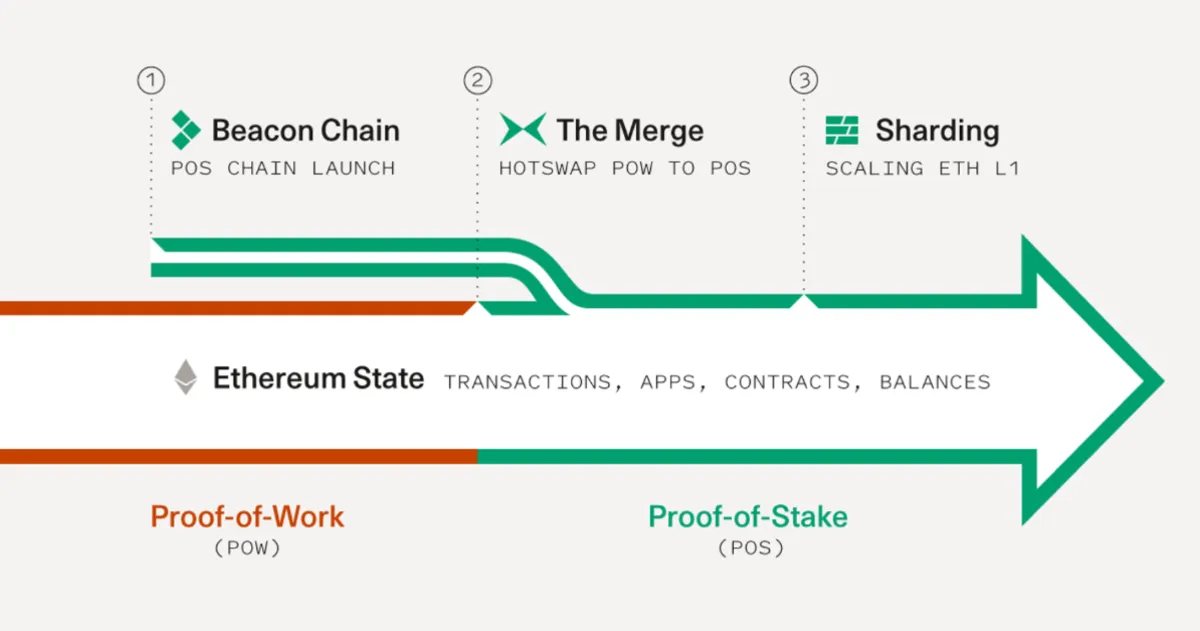
Here is a table summarizing Ethereum's reward structures under proof of work and proof of stake:
| Consensus mechanism | Components of new ETH supply |
|---|---|
| Proof of Work (PoW) | (1) Miner block rewards + (2) Rewards for proof-of-stake stakers - (3) ETH burned under EIP-1559 |
| Proof of Stake (PoS) | (2) Rewards for proof-of-stake stakers - (3) ETH burned under EIP-1559 |
On top of that, as the Ethereum network became the center of the crypto ecosystem, the number of network users and transactions grew, and the amount of ETH being burned began to exceed the amount of ETH paid out as staking rewards. As a result, Ethereum entered a deflationary state in which its total supply decreases.
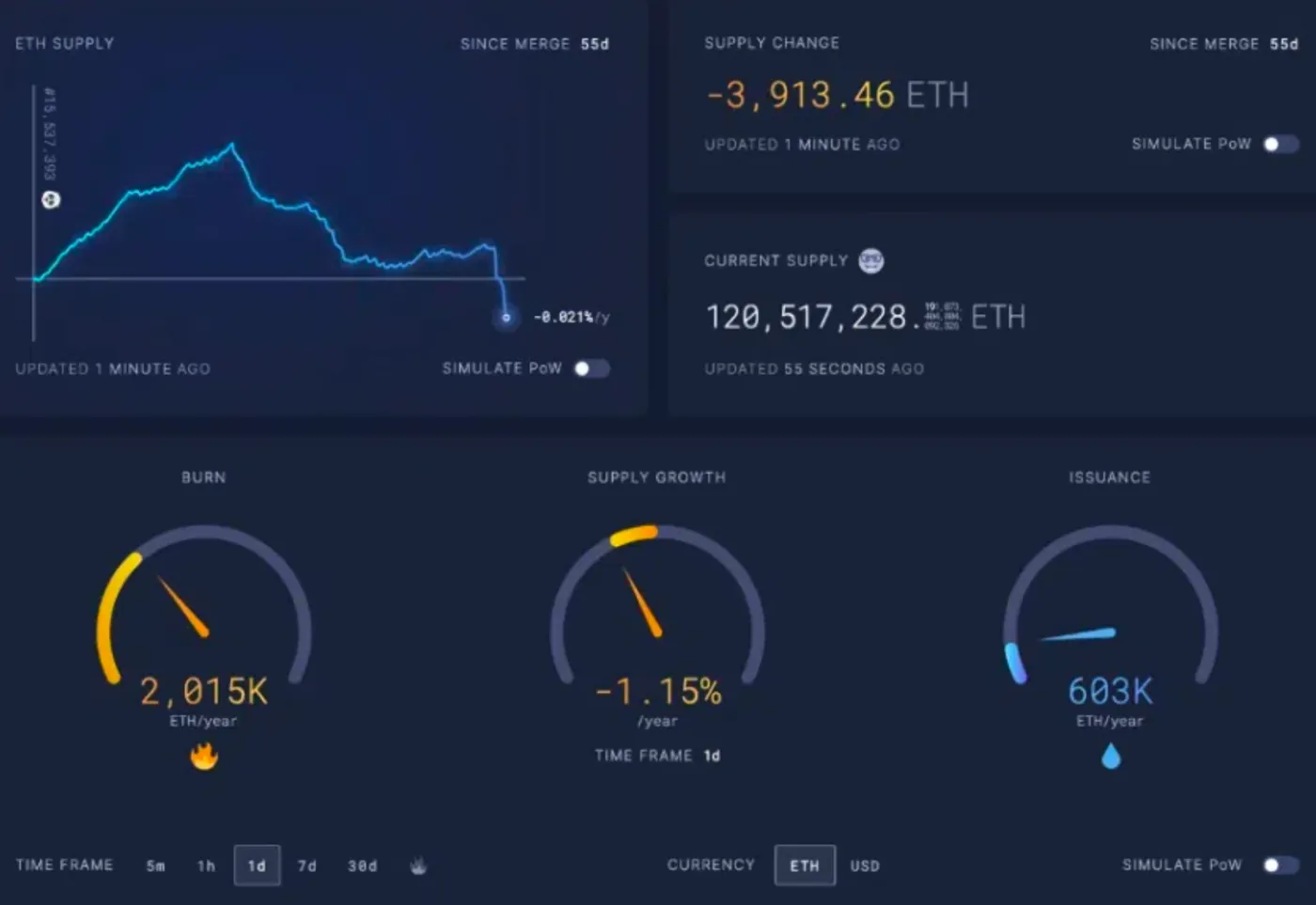
In the end, Ethereum came to be called ultra sound money, whose value and purchasing power rise over time.
What Is Ultra Sound Money?
Sound money refers to a currency whose purchasing power stays stable over time. Gold and Bitcoin are typical examples of sound money, and on the opposite side are fiat currencies like the US dollar and the Korean won, whose purchasing power declines due to inflation.
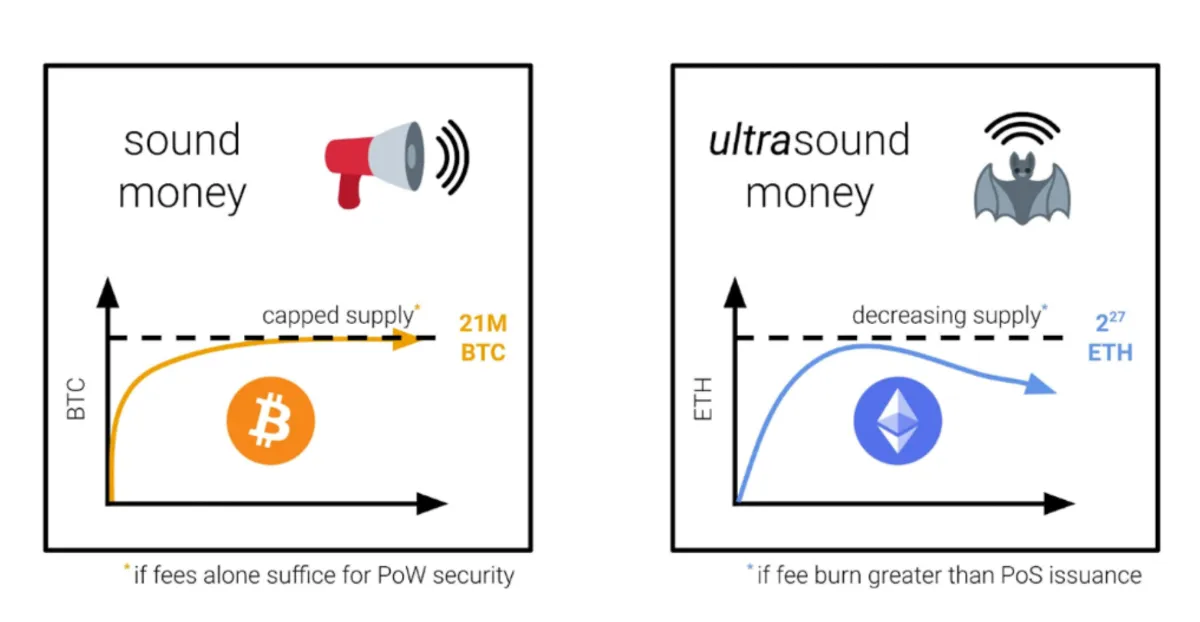
So what is ultra sound money? Ultra sound money refers to a deflationary currency whose purchasing power stays stable while its value rises at the same time.
As we saw earlier, after the Merge changed Ethereum's consensus mechanism from proof of work to proof of stake, Ethereum entered a deflationary state in which its total supply decreases. In addition, as Ethereum's use cases grew, its value and purchasing power grew even further.
Because of this, community members began calling ether ultra sound money, a currency that maintains its purchasing power while rising in value.
BNB and Ultra Sound Money
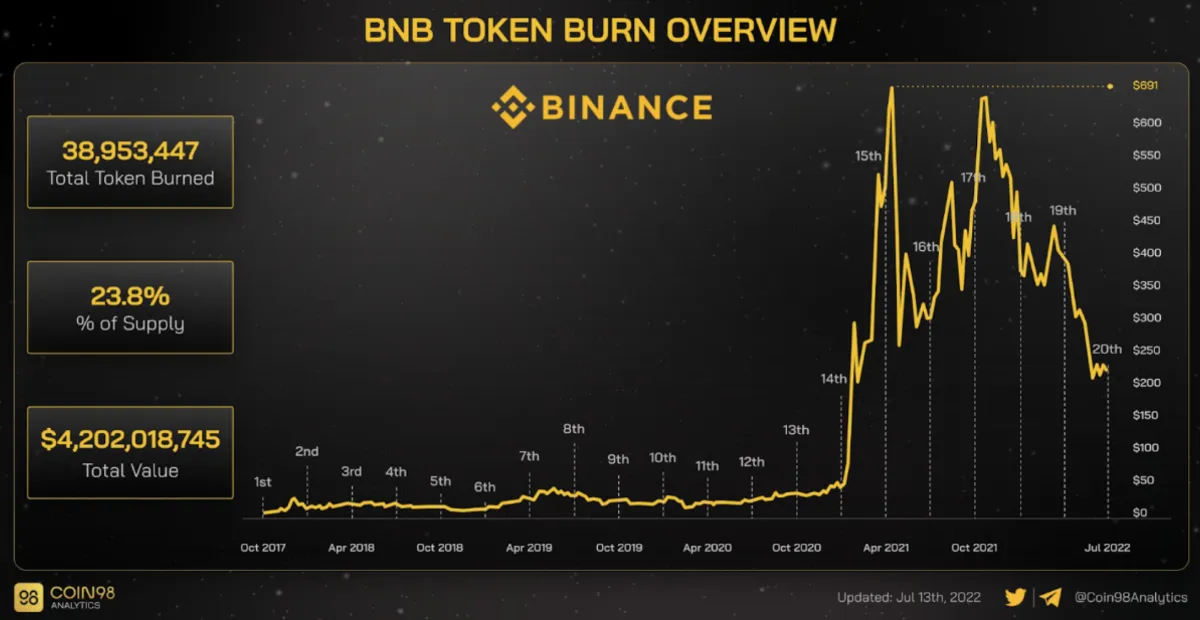
Many people call not only Ethereum but also Binance's BNB coin ultra sound money. This is because BNB's total supply is capped, and at the same time, the circulating supply of BNB keeps steadily decreasing through its delegated proof of stake and transaction burn system.
Wrapping Up
After successfully completing its transition from proof of work to proof of stake, Ethereum became deflationary ultra sound money. Ethereum sits at the center of the crypto ecosystem, and as more ETH is used and burned, there is a possibility that Ethereum's value will rise even further.