What Is CoW Protocol and What Is Its Outlook
5 min read · · Korean original
Contents 8
Hello, this is Bitpunk. Today we'll look at what CoW Protocol is and why it's getting attention on exchanges in Korea and abroad.
We'll also go over the pros and cons of CoW Swap, and how to actually trade on CoW Swap "safely and without gas fees."

What Is CoW Protocol?
CoW Protocol is a DeFi protocol that optimizes crypto trading in a way that sets it apart from existing decentralized exchanges. Existing DEXs such as Uniswap and SushiSwap use an automated market maker (AMM) model and process trades in specific liquidity pools. However, this approach has the following problems.
- MEV attacks: block validators executing certain transactions first or manipulating their order to take a profit
- High slippage: when large trades are made, a lack of liquidity can cause them to fill at a worse price than expected
- Gas fee burden: users have to pay gas fees themselves, and if a transaction fails, the gas fee is simply wasted
To overcome these limitations, CoW Protocol introduced a batch auction model and a Solver system. This lets users avoid MEV attacks and trade at the best possible price.
What Is CoW Protocol's Solver System?
A solver is "someone who solves problems." CoW Protocol's solvers are a kind of "algorithmic trader." When a transaction order comes in, a solver's job is to compare liquidity and slippage across multiple DEXs and choose the best route. In other words, they're "algorithmic traders who solve the user's problem."
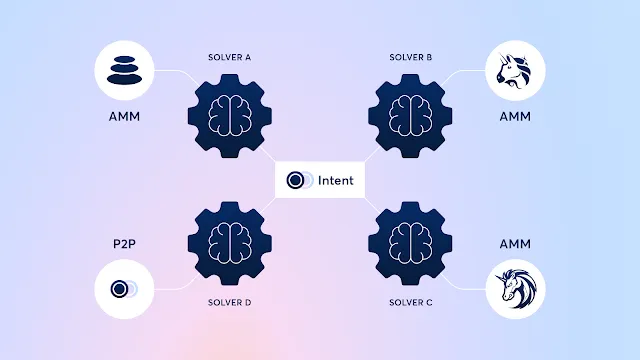
In short, all the user has to do is submit a trade order, and CoW Protocol's solvers work hard comparing information from all over before completing the order. The biggest advantage of CoW Protocol's solvers is that there are no gas fees, and they can also prevent MEV attacks.
So What Exactly Is an MEV Attack?
On DeFi platforms like Uniswap, MEV sandwich attacks happen from time to time. What is it? It's when "I place a trade order, and someone comes along and snatches it."
If your slippage is set high, the attacker sweeps up all the liquidity, and you end up swapping in a completely drained pool. As a result, you swap at an absurd rate and can suffer losses like -90%. (This actually happens.)
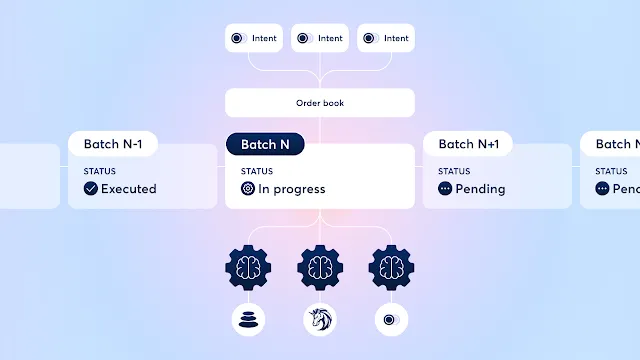
One of the biggest reasons CoW Protocol is getting attention is that it protects users from these MEV attacks. To do this, CoW Protocol uses a "batch auction" ordering method, collecting orders over a set period of time and processing them off-chain.
What Are Batch Auction-Based Orders?
Existing DEXs process orders the moment they come in, but CoW Protocol collects multiple orders and processes them together. This may take a little more time, but it has the advantage of saving gas fees and reducing slippage.
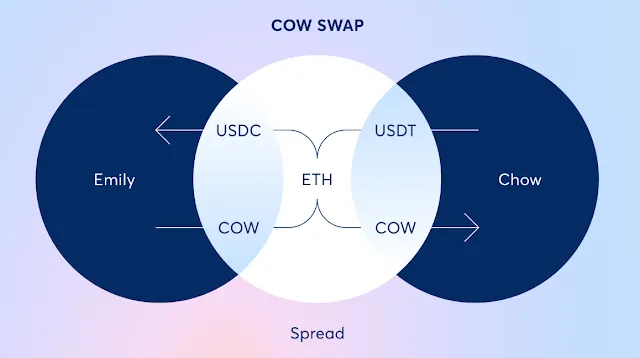
To process these batch auction-based group orders, CoW Protocol compares liquidity across various DEXs. Then it decides, "This is the best place to do it," and processes users' orders together.
Because this process uses an off-chain order book, orders are not made public on the blockchain. In other words, malicious attackers have no way to carry out MEV attacks. On top of that, it has a double security system in which solvers analyze MEV risk once more before a trade is executed.
So, It's Better Than Uniswap?
Uniswap is a first-generation DEX known for its deep liquidity, but liquidity and slippage issues can arise when executing large trades. You also have to pay frontend interface fees and gas fees.
CoW Protocol, however, can process large trades with minimal slippage, and has the advantage of free gas. On top of that, because it uses a batch off-chain auction through solvers, it's also safe from MEV attacks.
How to Use CoW Swap
CoW Swap is the official DeFi protocol built on CoW Protocol. To use CoW Swap, go to the link below and connect a wallet such as MetaMask or OKX Wallet.
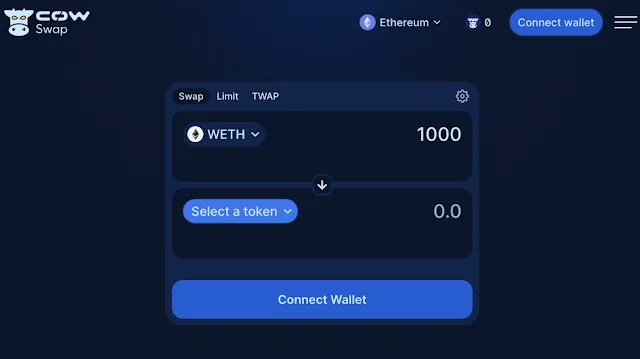
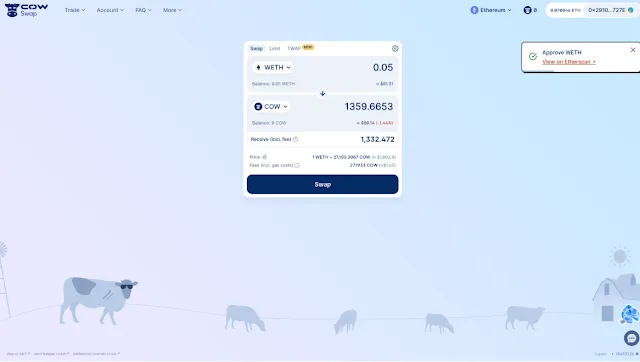
When you use CoW Swap for the first time, you need to approve the off-chain contract, and by default an unlimited approval is requested. This is due to the nature of CoW Swap's off-chain trading, but if it makes you uneasy, using a separate burner wallet is one option.
Is CoW Protocol Safe?
CoW Protocol has gone through multiple audits and is so far known to be safe. However, there are a few risks. First is the question of how trustworthy the solver system is. What if the solvers, our saviors, stab us in the back? Honestly, there's nothing you could do about it. That said, it's unlikely, because acting honestly is more profitable for solvers in the long run.
Also, if you trade a token with very low liquidity, your order may not be executed. Due to the nature of CoW Swap's batch auction orders, some orders can take quite a while to be filled.
Finally, I said it protects users from MEV attacks, but it isn't 100% safe. As we saw earlier, if the solvers themselves carry out MEV attacks, that would be a real disaster. In addition, though unlikely, an MEV attack could also happen while an off-chain trade is being recorded on-chain after it's executed.
COW Coin Info and Outlook
COW coin is the core governance token of CoW Protocol. It is currently listed on Korean exchanges such as Upbit and Bithumb, as well as on Binance, Bitget, and others.
As CoW Protocol expands to Layer 2 and multiple chains in the future, demand for COW coin may grow along with it. However, the protocol's growth does not necessarily mean the coin's price will rise, so caution is needed when investing.