Zero-Knowledge Proofs: Why Are They Getting So Much Attention? Key Concepts, Features, and Use Cases
6 min read · · Korean original
Contents 5
A zero-knowledge proof (ZK) is a cryptographic technique that proves a fact without revealing the underlying information. With zero-knowledge proofs, users can protect their privacy and still prove that a specific fact is true.
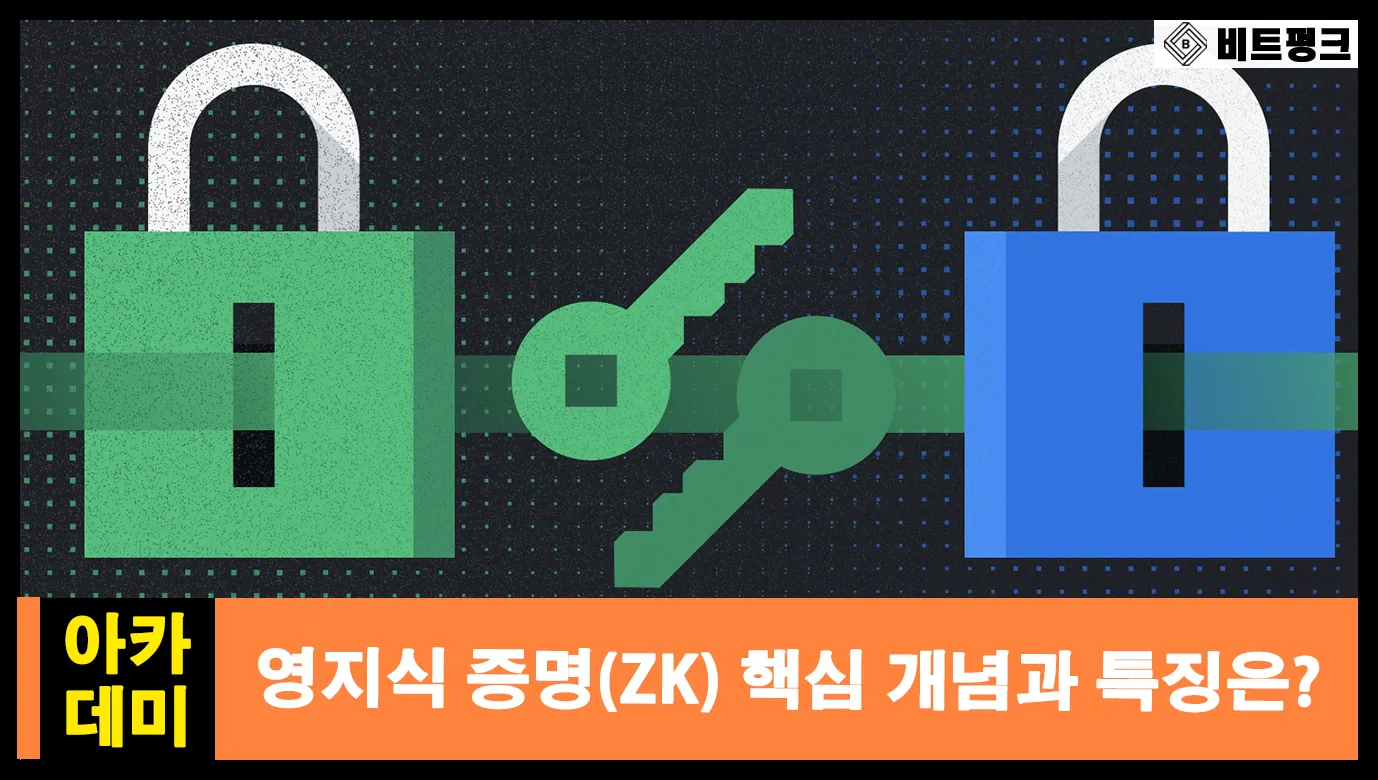
In this post, we'll look at what zero-knowledge proofs are and their core technical features. We'll also explore why zero-knowledge proofs are getting so much attention, along with a variety of real-world use cases.
1. What Is a Zero-Knowledge Proof?
A zero-knowledge proof (Zero-Knowledge Proof, ZK) is a cryptographic technique that proves a statement is "true" without sharing any of its details with the other party.
For example, imagine you need to prove to someone that "I have more than KRW 1,000,000 in my account." With the traditional approach, you would have to look up your account history and show it to them.
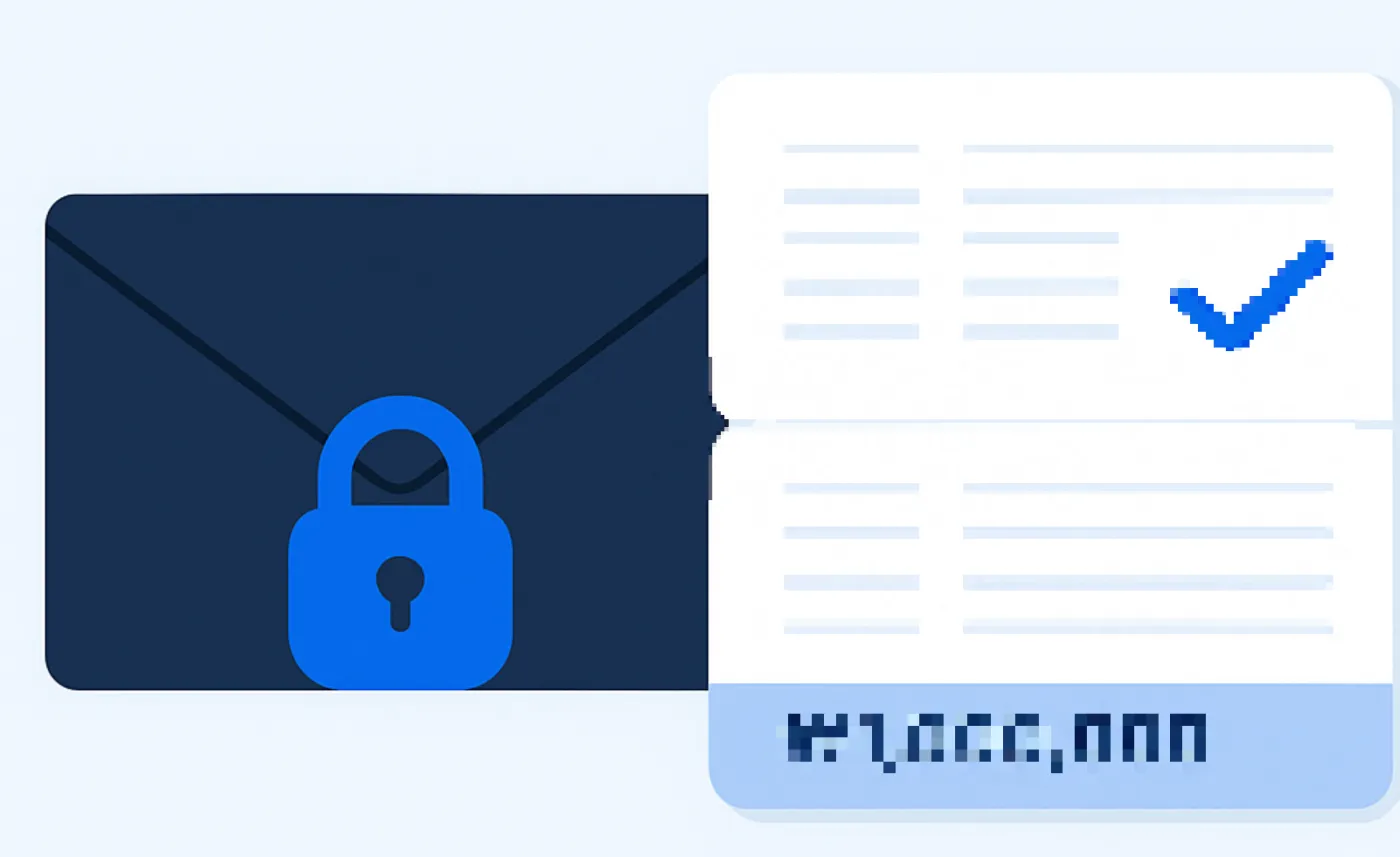
With a zero-knowledge proof, however, you can 'prove to others' only 'the fact that your account holds KRW 1,000,000.' For example, it would be like 'submitting an official document stating that your KB Kookmin Bank account holds more than KRW 1,000,000.'
As a result, a zero-knowledge proof lets you "prove that you have more than KRW 1,000,000" without revealing your exact account balance at all. Pretty fascinating, isn't it?

2. What Are the Technical Features of Zero-Knowledge Proofs?
The core idea of a zero-knowledge proof is 'establishing trust while protecting information.' To do this, zero-knowledge proof technology must satisfy the following three conditions at the same time.
| Condition | Description |
|---|---|
| Completeness | If the statement is true, the verifier must be able to accept it |
| Soundness | If the statement is false, the verifier must be able to reject it with high probability |
| Zero-knowledge | The verifier must learn nothing beyond the fact itself |
3. Why Are Zero-Knowledge Proofs Getting So Much Attention?
Zero-knowledge proofs aren't drawing attention today simply because they're a new cryptographic technology. They address technical constraints that have long been taken for granted in existing digital systems.
In particular, they fundamentally redefine the structural trade-off that 'to gain one value, you have to give up another.'
For example, most technical systems are designed on the assumption of trade-offs like the ones below. To take the simplest example, speeding things up usually came with higher costs or weaker security.
| Desired Value | Constraint Paid in Return (Improvement) | Reason and Explanation |
|---|---|---|
| Stronger security | Slower speed or user inconvenience | More security steps can degrade the UX |
| Better performance | More security vulnerabilities or higher operating costs | Faster processing or higher performance consumes more resources |
| Decentralization | Slower processing or a complex consensus structure | The more nodes there are, the longer consensus takes |
| Privacy protection | Less transparent verification or difficulty complying with regulations | Hiding data makes it hard for verifiers to make judgments |
Among these, the hardest problem to solve was the conflict between privacy and verifiability. In other words, the default structure was that verifying any piece of information ultimately meant revealing its contents.
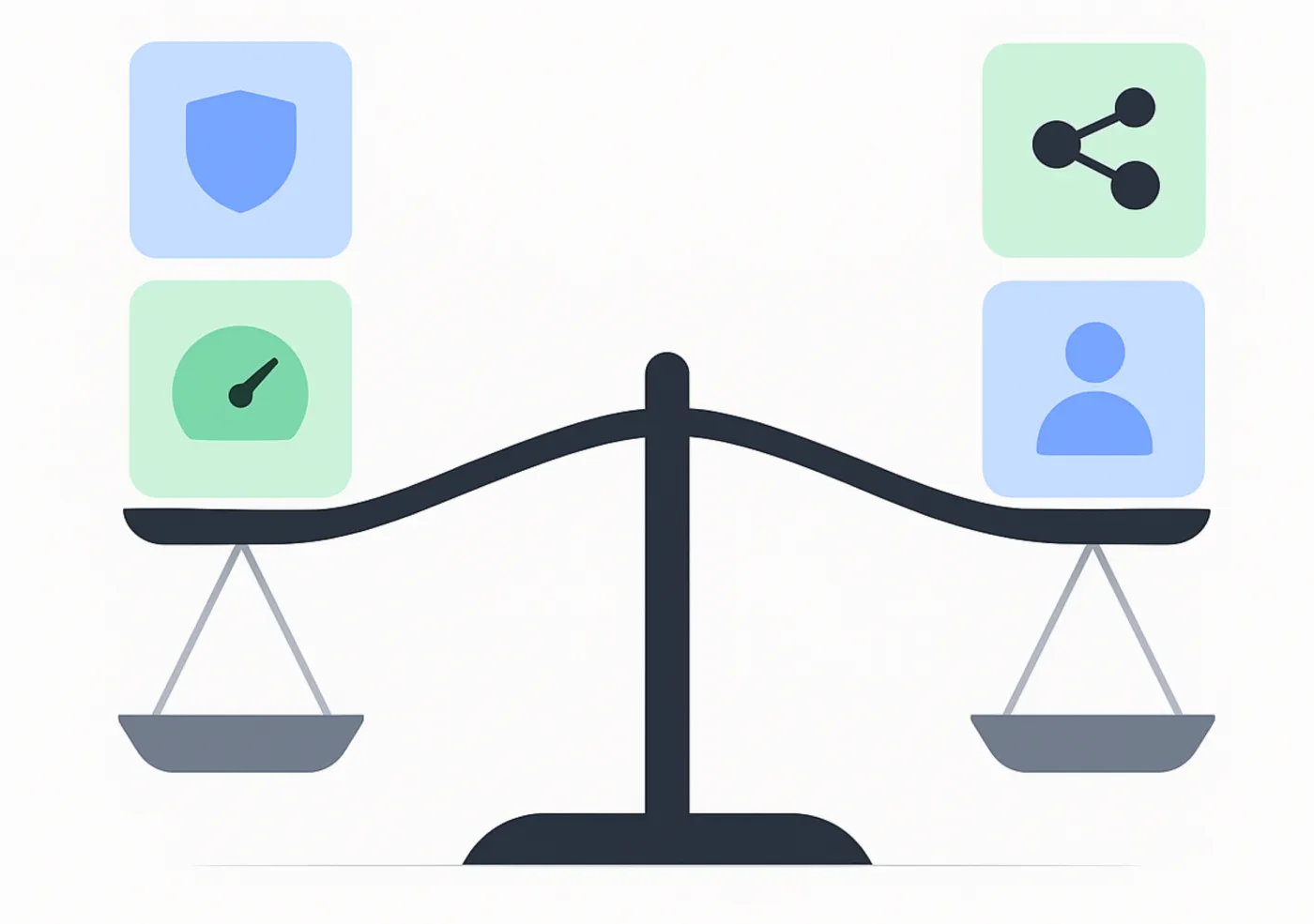
Zero-knowledge proofs, however, have fundamentally changed this structure. With such a proof, you can prove only that a piece of information meets certain conditions, without revealing the information at all.
In other words, a zero-knowledge proof gives the verifier only the conclusion that "this fact is true," and exposes nothing about how that fact was derived or any of its details.
Thanks to this structure, zero-knowledge proofs are drawing attention as more than just a cryptographic technique: they're a solution that can deliver two opposing values at once, privacy protection and trust-based verification.
4. Various Use Cases of Zero-Knowledge Proofs
Zero-knowledge proof technology is neutral in itself. However, depending on how it's designed and used, it can lead to completely different outcomes.
(1) Tornado Cash and Worldcoin
The clearest examples of this are Tornado Cash and Worldcoin.
| Item | Tornado Cash | Worldcoin |
|---|---|---|
| Goal | Ensure transaction anonymity and protect user privacy | Build a personal identification system to prevent duplicate sign-ups |
| Implementation | Designed to be untraceable by removing the link between deposits and withdrawals | Creates a unique digital ID based on biometric data via iris scans |
| Result | Transaction parties and history cannot be traced (full anonymity) | Each user can hold only one identity (one account per person guaranteed) |
Tornado Cash uses zero-knowledge proofs to protect users' anonymity and privacy. In particular, by breaking the link between deposits and withdrawals, it makes the source of the funds impossible to determine.
Worldcoin, on the other hand, uses zero-knowledge proofs to clearly identify individuals. This makes identity verification based on biometric data possible. So although both projects use zero-knowledge proofs, they arrive at different outcomes: stronger privacy on one side, identity verification on the other.
(2) Designing Condition-Based Programs
Zero-knowledge proofs let you move beyond traditional procedural programming toward a new kind of condition-based programming. For example, if you were building a money transfer service, the typical code flow would look like this:
1. Deduct KRW 100 from A's balance
2. Add KRW 100 to B's balance
But because a zero-knowledge proof hides the process and verifies only the result, you can use conditions like these instead:
1. The total combined balance of A and B must stay the same
2. No balance may be negative
In this way, zero-knowledge proofs call for condition-centered thinking: "What state must always be true?" We call these conditions invariants. Invariants can be applied like this:
| Application | Example Invariant |
|---|---|
| Money transfer system | The total balance across all accounts must be the same before and after a transaction |
| Voting system | The final vote count must match the actual number of voters |
| Inventory management system | Current stock = cumulative units received − cumulative units shipped |
| AI model evaluation | The model's bias metrics must be at or below predefined acceptable thresholds |
This condition-based approach has the following advantages:
- Even if something fails midway, the result is invalidated, so consistency is maintained.
- Since there's no instruction order, it's well suited to parallel processing.
- The system's core properties can be clearly defined early in the design phase.
5. Final Thoughts
Zero-knowledge proofs are an innovative technology that can 'hide information while still proving a fact is true.' They make it possible to verify whether something is true while preserving users' privacy and security.
But zero-knowledge proofs aren't just a technology; they're also a structural philosophy for system design.
- Why does certain information need to be verified?
- Why should information be protected even when it can be verified?
- Does the technology become centralized, or decentralized?
As this shows, zero-knowledge proofs deliver the most value when you think about their direction and purpose, not just their functionality. Depending on how they're designed, zero-knowledge proofs can protect privacy, or they can become a tool for rigorous verification and surveillance.
Zero-knowledge proofs are expanding rapidly, and a range of technologies such as zk-rollups, zkEVM, and ZKML have already entered real-world use. Going forward, zero-knowledge proofs are expected to be used even more widely across many fields, including privacy protection, digital identity verification, and AI verification.