3 Common Misconceptions About Liquidation in Binance Futures Trading
5 min read · · Korean original
Contents 4
Hello, this is Bitpunk. In this post, we'll talk about liquidation, which can happen when trading futures on the Binance exchange. In particular, we'll go over 3 common misconceptions about liquidation.
This post will help you better understand how Binance's futures liquidation system works. If you trade futures on Binance, be sure to read this post to the end.

1. Is the liquidation price based on Binance's price?
The first misconception is that liquidation is triggered by the price on the Binance exchange. This isn't entirely wrong, but it isn't accurate either. Here's why.
Binance futures trading uses 2 prices: 'Last Price' and 'Mark Price'. 'Last Price' refers to the current price, which is the price at which the asset is currently trading on Binance.
'Mark Price', on the other hand, refers to the market average price. It is the average price (fair price) of the asset traded not only on Binance but across various exchanges such as Bybit and Bitget.
On Binance futures, liquidation is carried out based on the market average price. This minimizes the impact of sudden price spikes or crashes that happen on just one exchange, and allows the liquidation process to be handled more fairly.
So the claim that liquidation is based on Binance's own trading price isn't true. The liquidation price is calculated using the market average price from multiple exchanges and oracles, and the process is designed to be as fair to users as possible.
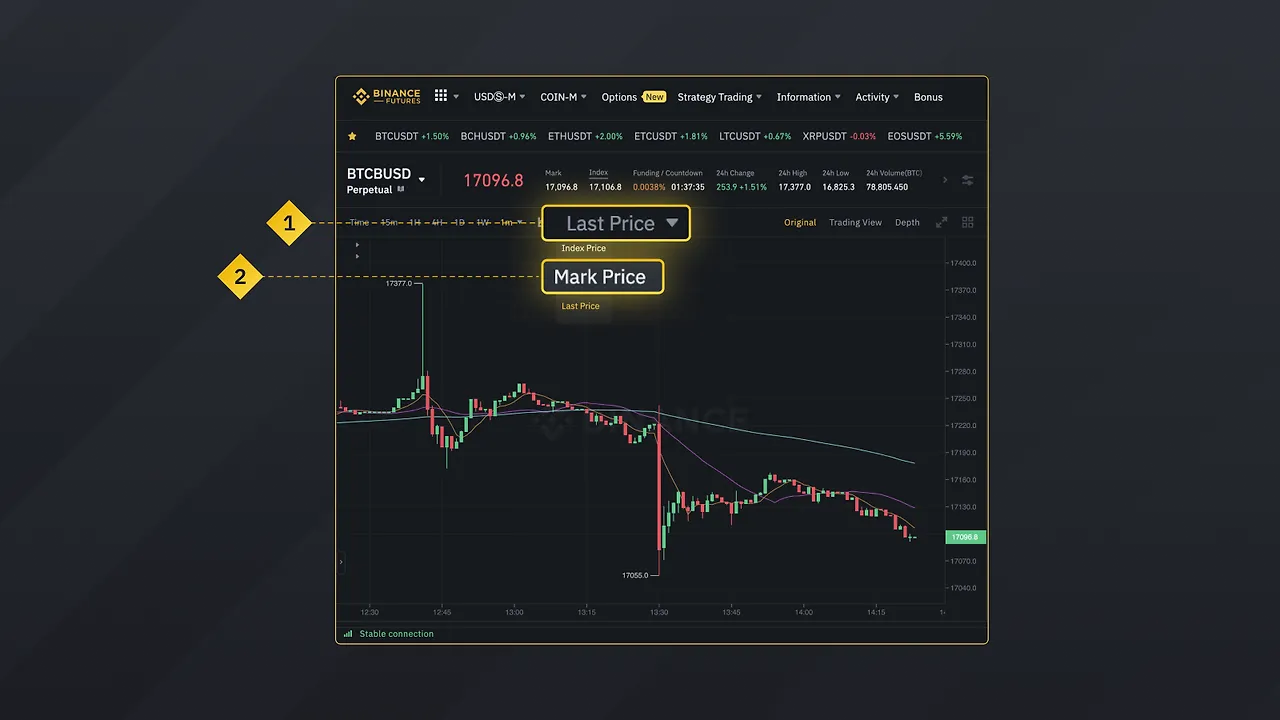
On the Binance exchange, you can switch between the two price displays in the chart settings. As shown above, you can select 'Last Price' or 'Mark Price' to change the type of price shown on the chart.
2. Does the liquidation price never change?
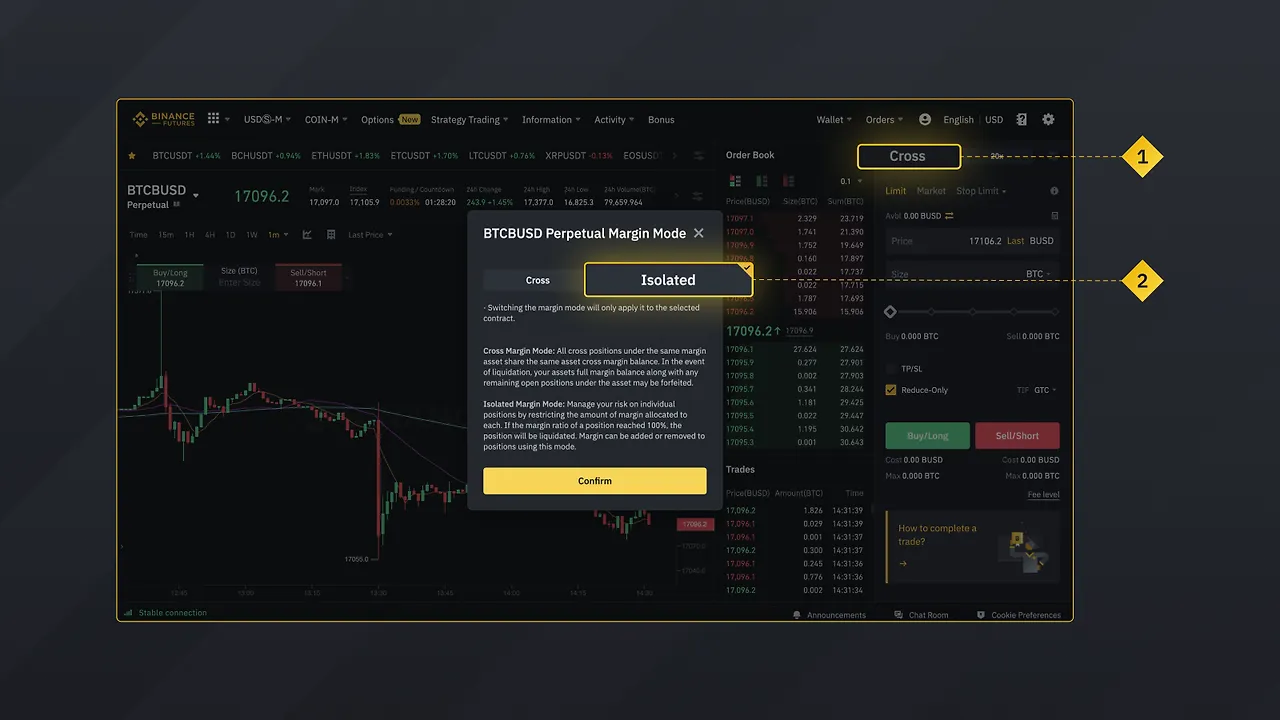
Basically, it's true that the liquidation price doesn't change. However, if you trade using cross mode or adjust your isolated margin, the liquidation price can change.
Why is that? It's because in cross margin mode, all positions share the account's entire balance. For example, if you hold two or more positions, a profit or loss on one side will affect the liquidation price of the other positions.
Meanwhile, in isolated margin mode, the liquidation price is basically fixed. However, if you adjust the margin allocated to an individual position, the liquidation price can move up or down.
Cross mode can maximize capital efficiency, but if you fail at risk management, your entire account balance can be liquidated, so you need to be especially careful.
Binance futures makes it easy to switch between Cross and Isolated modes, as shown below. Note that to change the mode, you must not have any open positions in your futures account.
Funding fees can also affect the liquidation price. Depending on the position you hold, you may have to pay funding fees. Since these funding fees are paid from your margin balance, your liquidation price can change.
3. Is there no extra cost to liquidation?
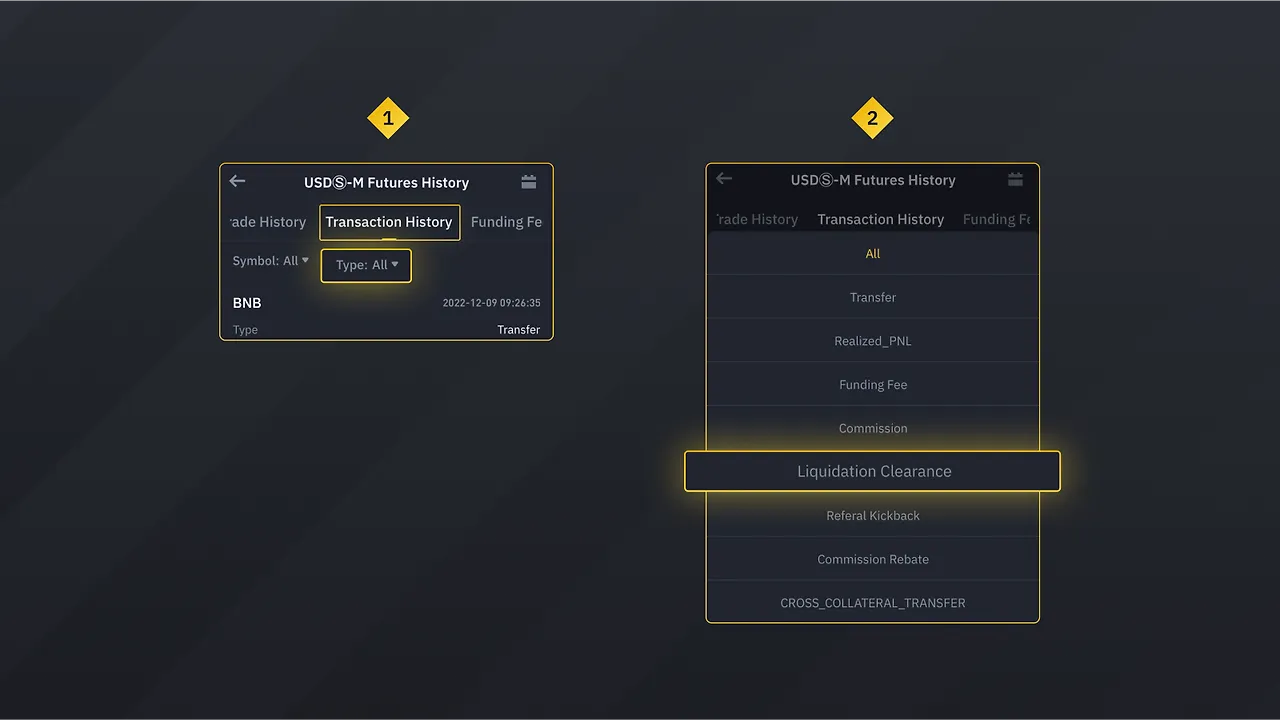
Binance futures trading charges a separate fee for liquidation. That's why you need to be especially careful not to get liquidated. On top of the standard trading fee, an additional insurance clearance fee of around 1.5%-2% may be charged. Because of this, your balance may even go temporarily negative when you're liquidated.
When liquidation occurs, a predetermined liquidation fee rate is applied to the notional value of the position. For example, if you hold a $10,000 position and it gets liquidated, an additional fee of about $150-200 may be charged.
In short, an additional fee is charged upon liquidation. So it isn't true that your position simply closes with no extra cost. Therefore, unless there's a special reason, closing your position yourself with a stop loss instead of getting liquidated can be more advantageous in terms of fees.
You can check your insurance clearance fee history in your futures trade history, as shown below. The fees collected this way go into the Binance Insurance Fund, which is later used to cover users' negative balances and reduce ADL.
Wrapping Up
That covers the 3 common misconceptions about liquidation in Binance futures trading. To summarize:
- The liquidation price is calculated based on the market average price, which reflects the average across multiple exchanges, not Binance's real-time trading price. This mechanism is designed to prevent unfair liquidations caused by deliberate price spikes or crashes.
- The liquidation price can change depending on the situation. In cross margin mode in particular, your entire account balance comes into play, so the profit/loss of one position can affect the liquidation price of other positions.
- Liquidation comes with a separate fee. It's not just that your position gets closed: an insurance clearance fee of up to 2% may be charged, which can put an additional burden on your account balance.
Liquidation is one of the unavoidable risks of futures trading, but you can prepare for it in advance by understanding how it works. In particular, setting your margin mode, checking funding fees, and managing your positions' maintenance margin are essential parts of futures trading.
If you use Binance often, I hope this post has helped you accurately understand how liquidation works and trade more strategically. Thank you.