What Are Ethena and the USDe Stablecoin?
7 min read · · Korean original
Contents 9
Ethena is a decentralized stablecoin protocol built on Ethereum. Its main goal is to minimize Ethereum's price volatility and to issue and manage the USDe stablecoin using a delta-neutral hedging strategy.
In this post, we'll take a closer look at what the Ethena protocol is and how it works, along with how to earn yield with USDe, what to watch out for, and its future outlook.
What Is Ethena and How Does It Work?
Ethena is a decentralized stablecoin protocol that runs on the Ethereum network. When a user deposits Ethereum on the platform, the Ethena protocol opens a short Ethereum position through derivatives.
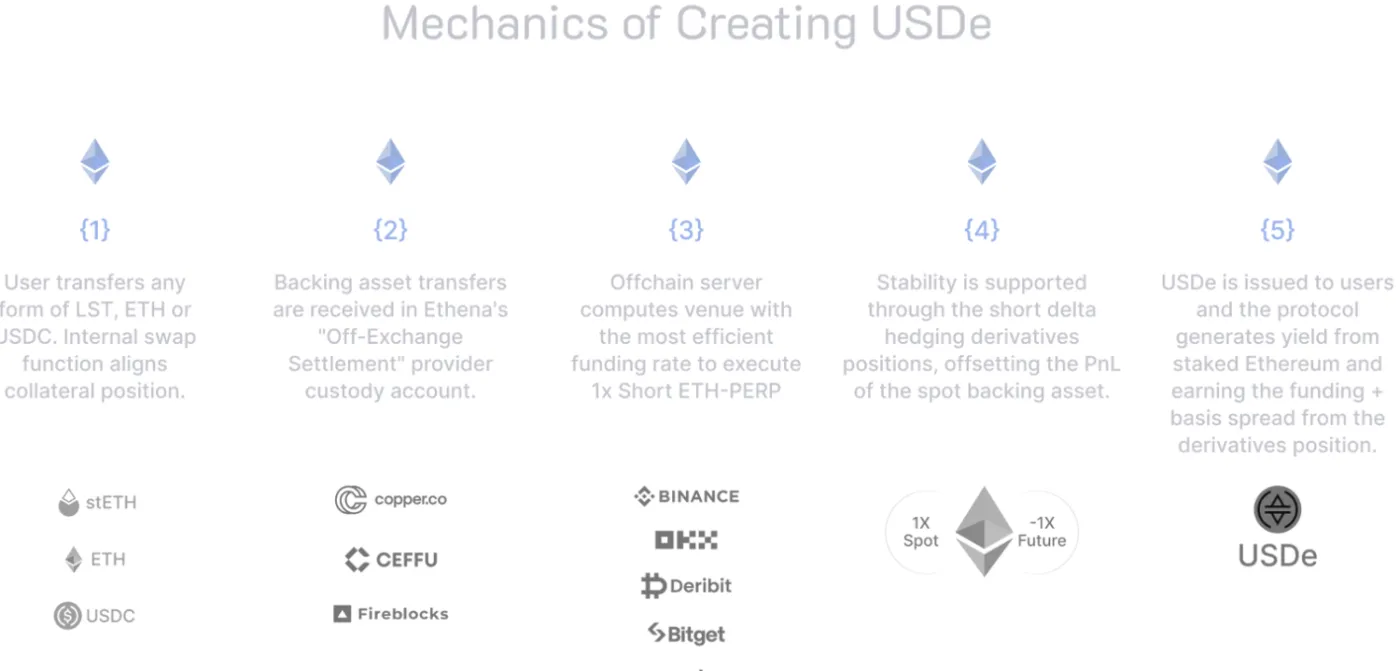
As a result, it reaches a Delta-Neutral state in which Ethereum's price risk is offset, making it possible to issue an equal value of USDe.
- When a user deposits ETH (Ethereum) as collateral, a corresponding amount of the USDe stablecoin is issued.
- Ethena uses a hedging strategy to offset the price volatility of the deposited ETH.
- As a result, whether the price of Ethereum goes up or down, the value of the collateral can be maintained.
- Based on this, Ethena issues USDe of equal value.
Besides ETH, Ethena also supports minting USDe with USDT and USDC. Users can deposit Ethereum, or deposit other stablecoins they hold into Ethena, and receive USDe.
Why Is It Getting So Much Attention?
Existing stablecoin systems such as Tether and USDC have mainly relied on centralized collateral management. Ethena, however, is different
Ethena operates on the decentralization and transparency of blockchain, and every process is automated through smart contracts. In other words, it supports smart money that runs entirely on code.
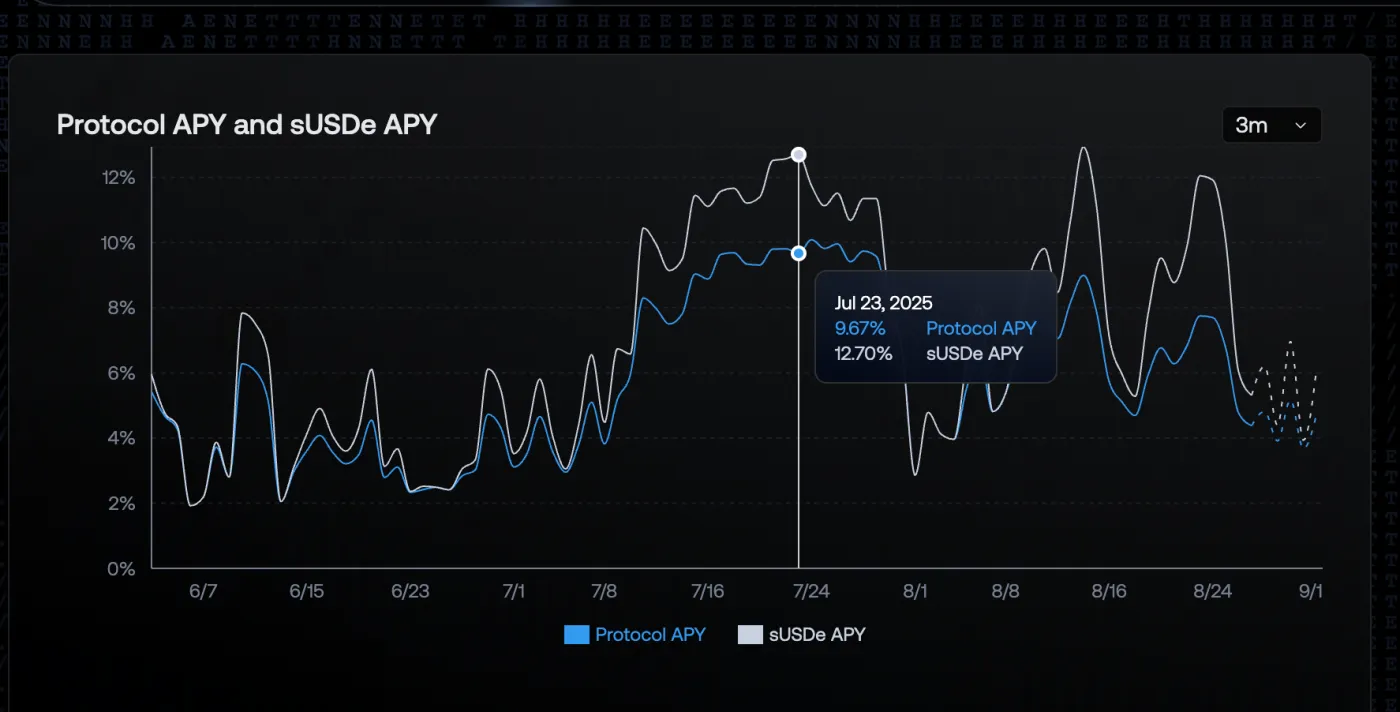
Another reason USDe is drawing so much attention is its high annual interest rate. Simply by holding Ethena's USDe, you can earn annual interest of 9–15%.
How Does Ethena Generate Yield?
1. Funding Rate Arbitrage
Ethena opens short positions in the futures market against its ETH collateral. If the funding rate in the derivatives market is positive during this process, those short positions earn interest. This income is reflected in the protocol's overall revenue, and the average yield is around 9% per year.
2. Restaking Rewards
The ETH deposited as collateral isn't simply held; it generates additional yield through restaking platforms such as Lido. This secures liquidity while also generating 2–4% per year.
3. Yield from Tokenized Treasuries
Ethena also holds assets similar to short-term U.S. Treasuries (e.g., USTB) as part of its reserves, running a structure that earns yield from them and distributes it to sUSDe participants.
4. Flexible Asset Management
Ethena aims for flexible asset management, for example by raising the share of crypto collateral such as Ethereum and Bitcoin to a certain level in bull markets and lowering it in bear markets.
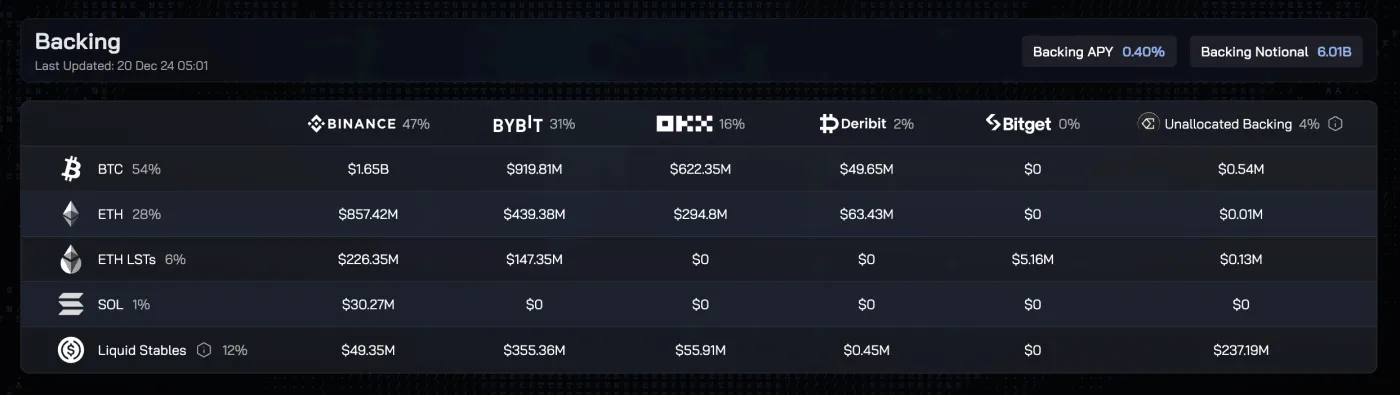
Ethena currently secures additional collateral through a reserve fund of about $46 million, which it uses to provide yield during periods of negative funding rates.
Although Ethena's revenue structure is multi-layered, each source of yield can vary greatly depending on market conditions, and none of them guarantees a sustainable fixed return.
How Do You Stake USDe and Earn Yield?
There are two main ways to get Ethena's USDe. The first is to buy USDe on a centralized exchange such as Bybit.
If you hold USDe on the Bybit exchange, interest is paid automatically. This way, you can easily buy and hold USDe and receive stablecoin interest.
The other way is to use the Ethena platform directly. After visiting the Ethena protocol, you connect a personal wallet such as MetaMask or OKX Wallet, and then mint and stake USDe yourself.
EthenaEnabling Internet Moneyethena.fi ↗How Do You Redeem USDe?
Ethena's USDe can be redeemed at any time. The most basic way to withdraw USDe is to submit a redemption request on the Ethena platform. During this process, the unlock waiting period can take 7–14 days.
If you're familiar with decentralized exchanges (DEXs), you can also swap USDe on platforms such as Uniswap. And if you use the Bybit exchange, you can instantly trade USDe for USDT or USDC on the spot market.
Is USDe Safe? What Are the Risks?
Ethena is drawing attention as an innovative decentralized stablecoin system, but it carries several potential risks. That's why it's important to understand them well and prepare for anything that might go wrong.
1. Collateral Management
Ethena's system runs on users' collateral (such as Ethereum), but if large-scale redemption requests occur, problems could arise from a lack of liquidity.
To mitigate this, Ethena raises the share of crypto collateral in bull markets and uses stable collateral such as Treasuries in bear markets. However, market volatility still exists, and in extreme situations these adjustments may not be enough.
2. Regulatory Risk
The stablecoin market is highly sensitive to regulatory changes in each country. In particular, if major countries restrict the use and trading of stablecoins or tighten regulations, it could directly affect Ethena's system operations and the circulating supply of USDe.
For example, if stablecoin trading is restricted in a certain country, it could lead to a shrinking user base and mass redemptions. This kind of regulatory risk could become a major barrier to Ethena's growth in the global market.
3. Sustainability of Yields
Ethena's delta-neutral strategy generates yield based on market stability, but it has some limitations. Because of this, questions have been raised about whether the current high yields can be sustained over the long term.
- If negative funding rates persist, the strategy becomes less effective and profitability may decline.
- If the derivatives market lacks liquidity, the existing strategy may not work as intended.
In conclusion, Ethena involves several risk factors, including collateral management, regulatory changes, and maintaining yields, so you should consider them carefully before deciding whether to participate.
What Is Ethena's $ENA Coin?
ENA is the governance and incentive token of the Ethena protocol. It was first released to the market along with an airdrop in the first half of 2024, and has since been used within the Ethena ecosystem for governance participation, staking boosts, and more.
The total supply of ENA is 1.5 billion coins, and it can currently be traded not only on overseas exchanges such as Binance, Bybit, and OKX, but also on most major exchanges, including Bithumb and Upbit.
What Is Ethena's Future Outlook?
Stablecoins are core infrastructure for both the crypto ecosystem and the global financial system. The current circulating supply of stablecoins is over $170 billion, with an average daily trading volume of more than $30 billion.
Ethena has a strong chance of establishing itself as an innovative leader in this fast-growing stablecoin market. The main factors supporting this are as follows.
1. Integration with More dApps
Ethena has the potential to expand its ecosystem through partnerships with various dApps. As more DeFi solutions such as Pendle integrate with the Ethena protocol, the use cases and trading volume of USDe and ENA will grow. This will be an opportunity for the Ethena platform to play an even more important role across the DeFi ecosystem.
2. Additional Yield Opportunities
Beyond its existing yield strategies (the basis funding rate strategy, staking rewards, and Treasury-based yield), Ethena may discover new strategies to encourage user participation.
For example, it could introduce new ways of managing collateral assets, or develop and launch a variety of financial products through connections with major global financial institutions such as BlackRock.
3. Stronger Decentralization and Transparency
Ethena earns user trust by automating all transactions with smart contracts and recording them transparently on the blockchain. With this approach, anyone can directly assess Ethena's collateral assets and stability.
Final Thoughts
The Ethena protocol is an innovative project that aims to maintain stable value and offer yield through the USDe stablecoin. If the stablecoin market continues to grow, Ethena's importance will grow along with it.
However, even with high growth potential, you need to keep in mind risks such as collateral management capability, liquidity and market volatility, and regulatory changes. So when participating in or investing in a project like Ethena, it's important to consider these factors carefully and make a cautious decision.