Why LayerZero? The Core of Omnichain and How to Use the Stargate Bridge
4 min read · · Korean original
Contents 7
As more and more blockchain layers emerge, efficient connections between different blockchains (bridge technology) are becoming increasingly important. LayerZero is an omnichain protocol built to connect these independent blockchains, and it aims to unify multiple chains as if they were a single network.
What is LayerZero?
LayerZero is a decentralized communication protocol designed to let different blockchains exchange messages and assets directly. With the LayerZero protocol, you can transfer assets between chains at a native level, without having to create wrapped tokens the way traditional bridges do.
Who created LayerZero?
LayerZero was developed by CEO Bryan Pellegrino, CTO Ryan Zarick, and co-founder Caleb Banister. They launched LayerZero in 2021 with the goal of solving the interoperability problem between blockchains.
LayerZero is currently valued at around USD 3 billion and has raised funding from major investors such as Uniswap, PayPal, and Sequoia Capital.
How does LayerZero work?
For blockchains to connect with each other, they need more than a simple "transfer" — they need an accurate and reliable way to exchange information. To achieve this, LayerZero works with the following components.
This video cannot be played because the video service has been discontinued.
1. Endpoints: Gateways between chains
LayerZero deploys a smart contract called an "Endpoint" on each blockchain. These endpoints are responsible for sending and receiving messages between chains, functioning like a "gateway" installed on each chain.
2. Ultra Light Node (ULN): Processing only the information needed, quickly
An ULN (Ultra Light Node) is a technology that can verify transactions using only the minimum information required, without storing all of the data. Since it doesn't require heavy nodes like traditional blockchains do, it enables fast and efficient message delivery.
3. Oracle: Secure intermediation and delivery
The oracle delivers transaction information from one chain to another chain. For example, it helps chain B learn about a transaction that took place on chain A. LayerZero uses Chainlink and Band Protocol as its official oracles.
4. Relayer: Verifying and executing the information
The relayer verifies whether the information sent by the oracle is accurate, and once verification is complete, it actually executes the message. In other words, it makes the asset transfer or exchange actually happen.
What makes LayerZero special?
Most traditional bridge systems were run in a centralized way, so if a single validator was hacked, the entire system could be put at risk. LayerZero, however, separates the oracle and the relayer and runs them independently. This further improves security and reliability, and allows it to maintain a decentralized structure that does not depend on any single node.
| Category | Traditional bridges | LayerZero |
|---|---|---|
| Verification structure | Centralized (multisig, etc.) | Decentralized structure (DVN + Executor) |
| Transfer method | Wrapping/unwrapping required | Native transfer |
| Chain compatibility | EVM-focused | Supports both EVM and non-EVM |
| User experience | Step-by-step approval stages | Simple processing in a single transaction |
What is Stargate, LayerZero's flagship bridge?
Stargate (Stargate Finance) is the flagship dApp and the first to adopt LayerZero's technology. With Stargate, you can do cross-chain bridging that lets you transfer assets to another chain in a single click, without wrapping.
- Real-time asset transfers between various chains such as Ethereum, BNB, and Avalanche
- Supports major assets such as ETH, USDT, and USDC
- Offers opportunities to join liquidity pools and earn fee income
How do you bridge with Stargate?
(1) Connect your wallet
Go to the official Stargate website, then connect a Web3 wallet such as MetaMask or OKX Wallet.
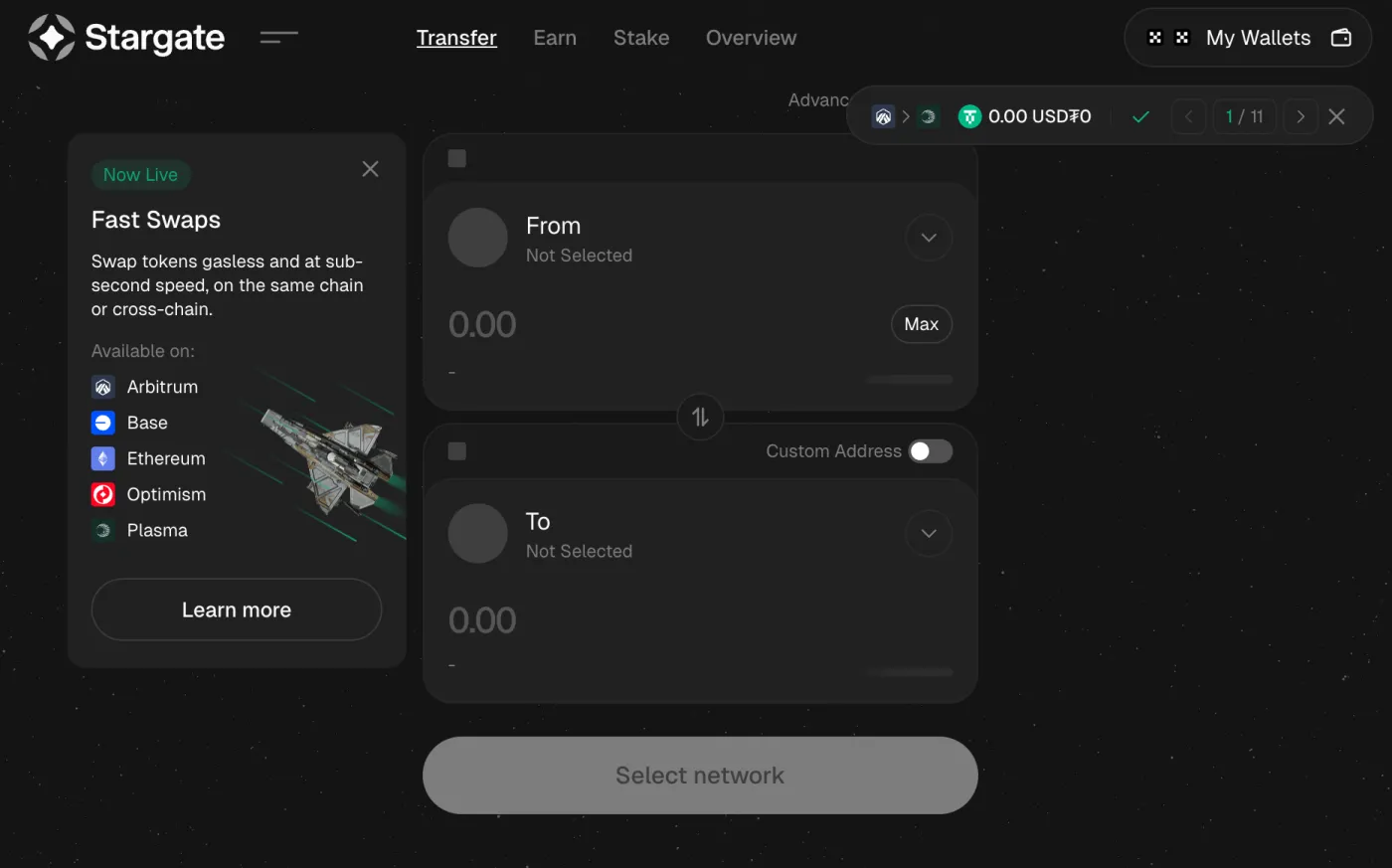
(2) Select the asset and chains for the transfer
Select the chain and token where you currently hold your assets. For example, you can select USDT on the Ethereum network. Next, select the destination chain you want to send it to. For example, you can select the Avalanche chain.
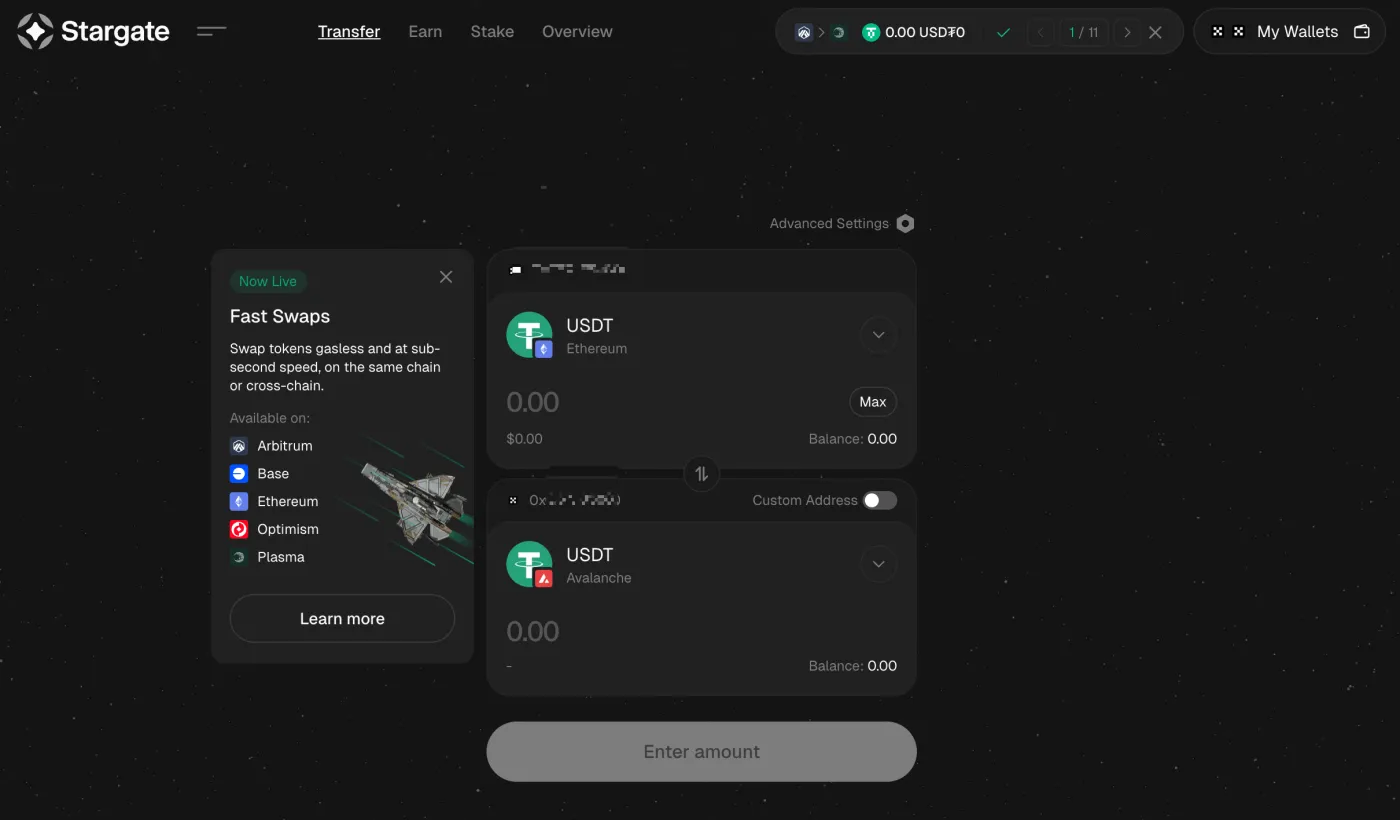
(3) Review and approve the transfer
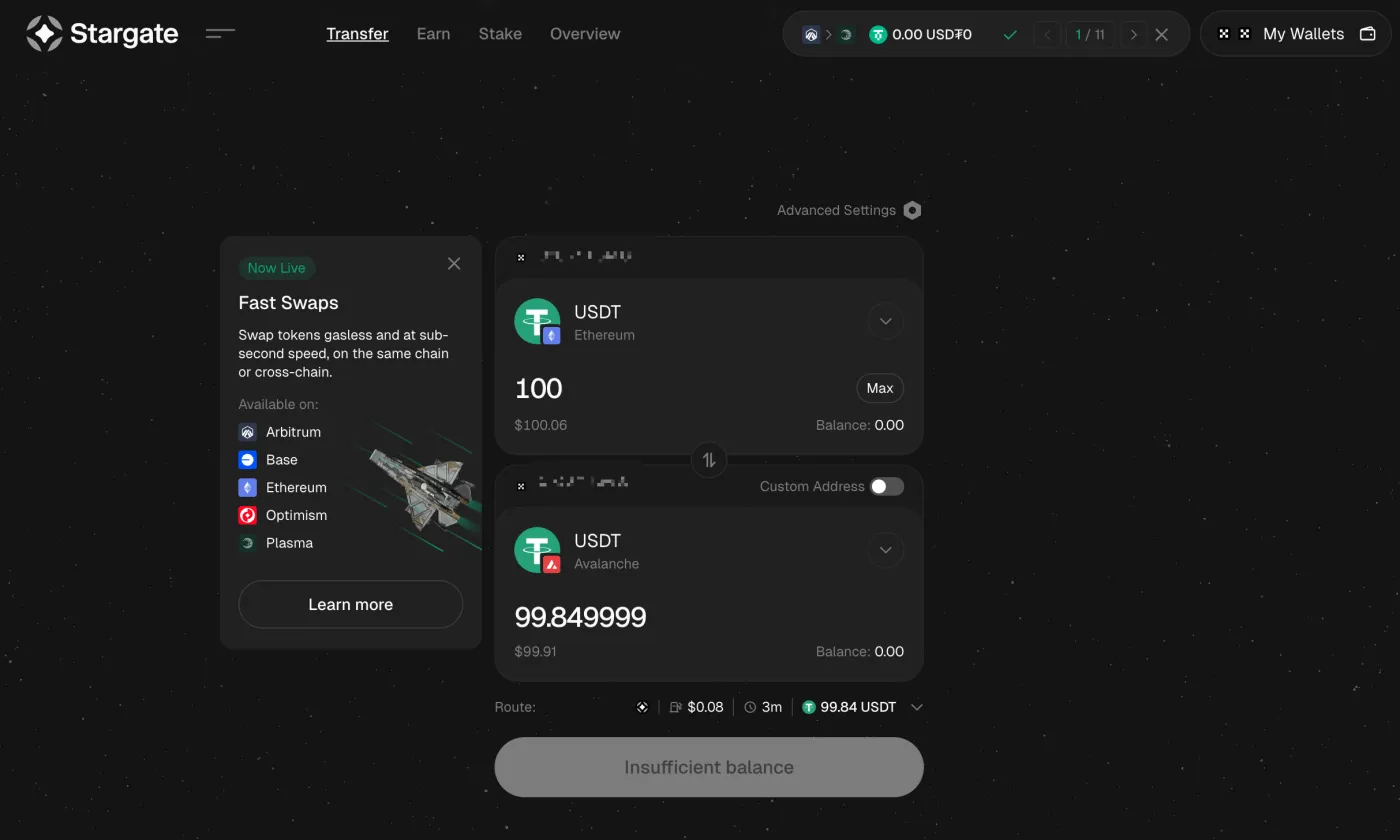
Enter the amount you want to transfer, then check the estimated fees and slippage. Click the "Transfer" button and approve the transaction in your wallet.
In addition to cross-chain gas fees, a small protocol fee may apply. Fees vary depending on the asset and chain, and this information is displayed before the transfer.
(4) Confirm on the destination chain
Assets usually arrive within about 1–3 minutes. After a short while, check your wallet on the destination chain to make sure the assets arrived safely.
With LayerZero Scan, you can check the status of bridges currently in progress. Visit LayerZero Scan to see real-time information such as the status of the source and destination chains, dApp messages, and transaction tracking.
Wrapping up
LayerZero goes beyond a simple cross-chain bridge — it is a true omnichain platform that connects multiple blockchain ecosystems into one. Through flagship dApps like Stargate, users can easily transfer assets without wrapping.