Bitcoin Futures Basics: What Liquidation Means and How to Protect Your Capital
5 min read · · Korean original
Contents 5
Crypto derivatives have grown hugely popular over the past several years and have drawn traders from around the world to Binance Futures. Given the high volatility of the crypto market, these financial products let traders use leverage to earn larger profits in a short time.
However, we must not forget that leveraged trading also carries significant risks. One of the main ways to succeed in futures trading is to plan each trade carefully and understand how much of your capital you are putting at risk.
Key takeaways:
- Leveraged positions are prone to large swings with price movements, which can lead to heavy losses of your assets.
- The liquidation mechanism prevents a trader's account balance from going negative.
- To avoid liquidation, you can use various strategies such as monitoring your margin, using stop-losses, or adjusting your leverage.
When you trade futures, where leverage is easy to access, knowing how much capital and leverage go into each trade helps you understand your overall risk. That's because, at times, you may get liquidated in the middle of a trade.
What is liquidation in crypto futures trading?
The basic definition of liquidation is "converting an asset into cash." In futures trading, however, liquidation is one of the things you must avoid at all costs.
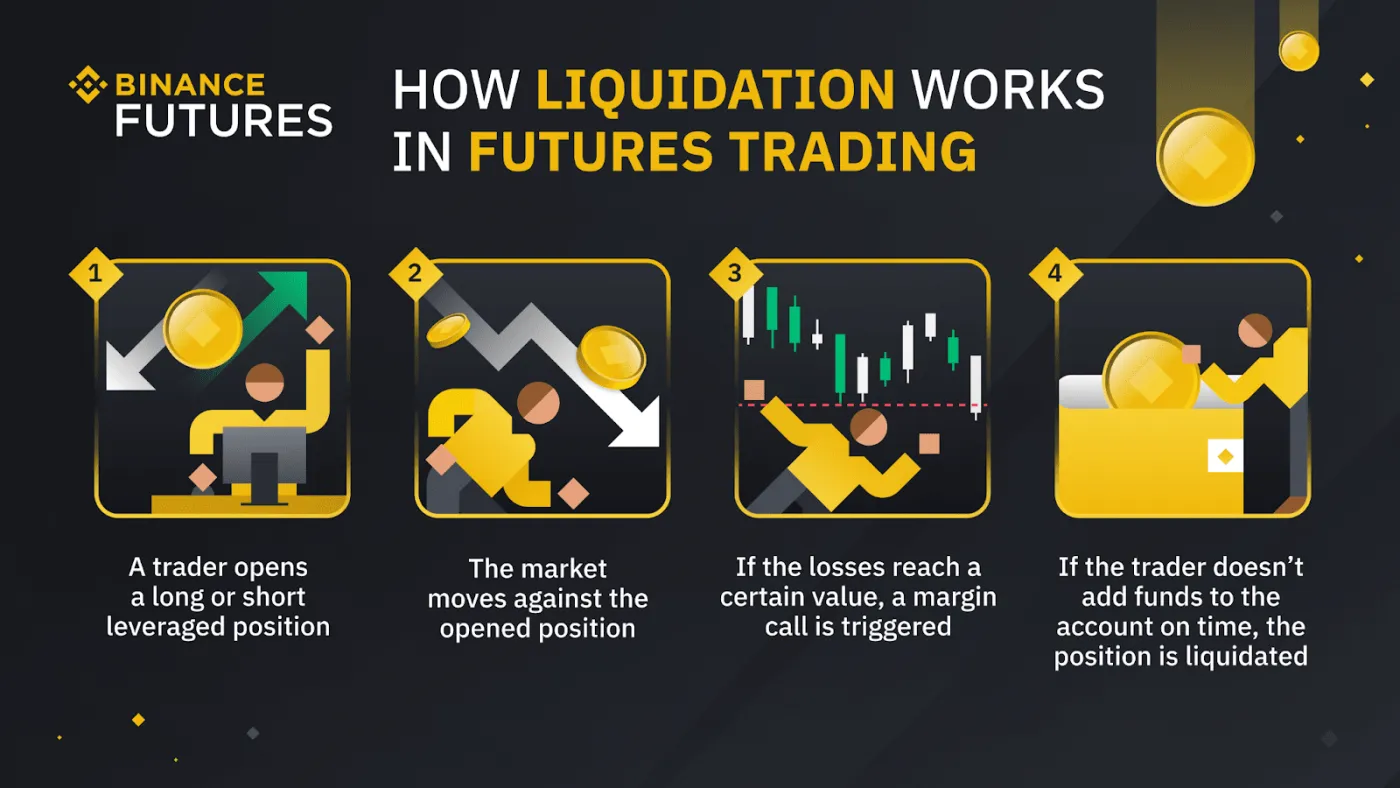
Leveraged positions are prone to large swings with price movements, which can even push a trader's balance into the negative. In such cases, losses can grow larger than the maintenance margin, which can trigger liquidation. This process happens automatically.
Liquidation can happen slowly or quickly, depending on the leverage used in the trade.
For example, with low leverage, a small market correction won't immediately trigger liquidation. With high leverage, however, even a slight move can wipe out a trader's initial capital.
When does liquidation happen?
Forced liquidation happens when a trader can no longer meet the margin requirements of a leveraged position.
Let's say you open a leveraged BTC/BUSD long position with an account balance of $100. Using 20x leverage, you open a trade worth $2,000.
If the BTC price drops by 5%, your account balance will be wiped out because you can no longer meet the margin call requirements to keep the trade open. This is what's called liquidation in futures trading.
This is a basic example. To understand how much leverage you should use, you need to know your own limits and how much loss you are willing to bear.
Binance Futures applies leverage limits to new accounts to protect users from the risks and unintended consequences of using high leverage. Make sure you fully understand how leverage works and the situations in which losses can occur.
Learn more about risk management methods that reduce your chances of liquidation.
How to avoid liquidation
Before opening a trade, traders should calculate their risk-reward ratio and make a trading plan that includes the entry price, stop-loss price, and target price.
There are many strategies you can use to avoid risk, but to prevent liquidation, you should consider the following.
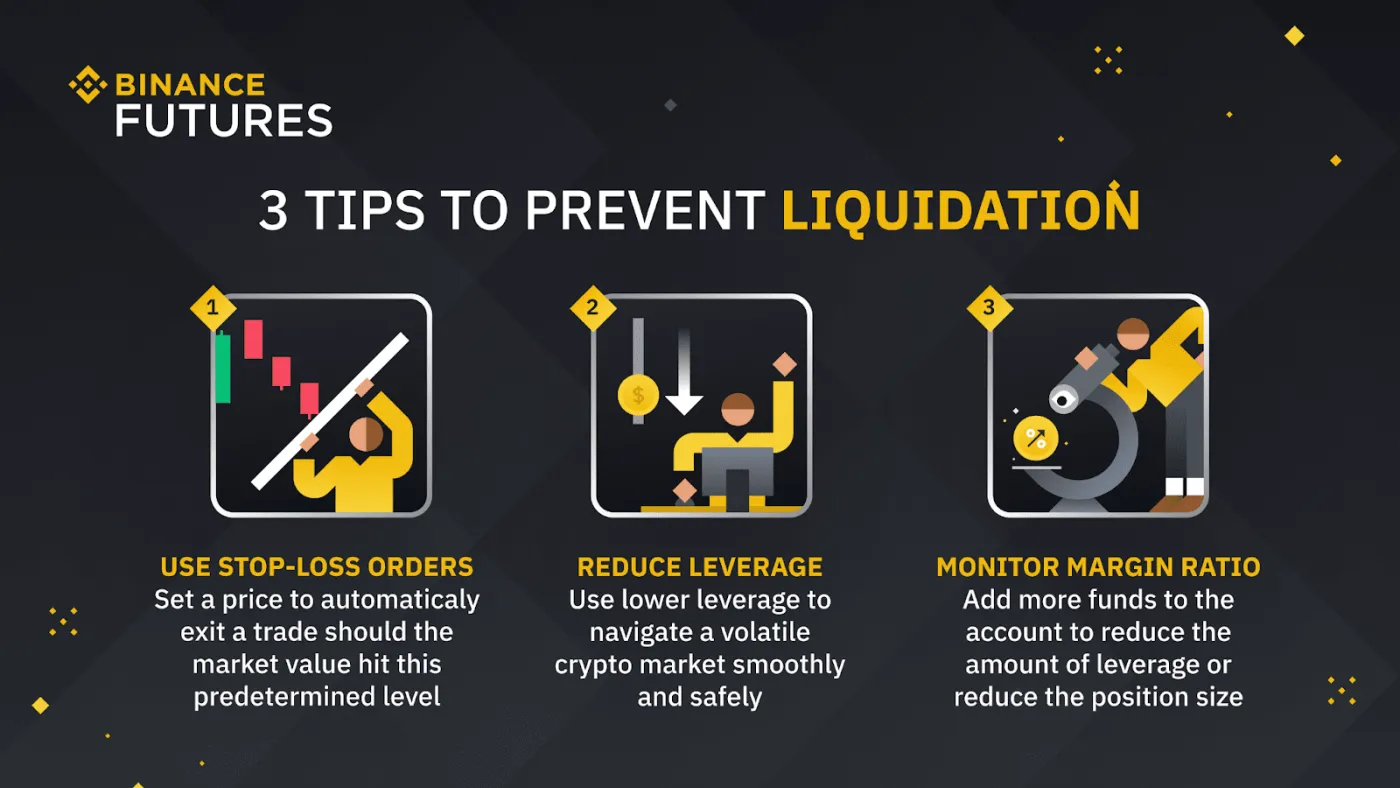
1. Use stop-loss orders
The surest way to avoid liquidation is to use a stop-loss. A stop-loss is a trading tool available on Binance Futures that automatically closes your trade (cuts your loss) when the asset price reaches a level you set in advance.
Using a stop-loss together with a liquidation calculator can help you prevent significant losses and avoid getting liquidated.
You may still lose some funds, but with a stop-loss you won't lose everything, and you won't have to pay a liquidation fee. Losing money and paying fees on top of it would be a real shame. Using a stop-loss helps you avoid that situation.
2. Lower your leverage
Leverage has a major impact on how long a trade can last. High leverage may be tempting, but it can also magnify your losses.
As the earlier example shows, high leverage can hurt traders even when the price moves only slightly. That's why using low leverage helps you survive in the highly volatile crypto market.
3. Monitor your margin ratio
Traders can monitor their margin ratio. When the margin ratio reaches 100%, the position is liquidated. To prevent liquidation, traders can add more margin to the position to cover the margin required for their leverage, or reduce the position. This approach can apply when you want to hold a position while the market price moves against you.
Adding more margin or reducing leverage has the effect of lowering the leverage you use. The difference is that maintaining a certain margin ratio is an active solution you can carry out over a longer period of time.
Final summary
Liquidation is something every trader would rather never experience. The good news is that traders can use a number of tools and trading strategies to avoid getting liquidated. From stop-losses to margin ratio monitoring, traders have methods available to prevent liquidation.
If you'd like to learn more about trading, take a look at how to trade Binance Futures. The Binance platform offers traders highly competitive fee discounts and financial products, so be sure to check that you entered the correct referral code when you signed up.