What Is a Sidechain?
4 min read · · Korean original
Contents 6
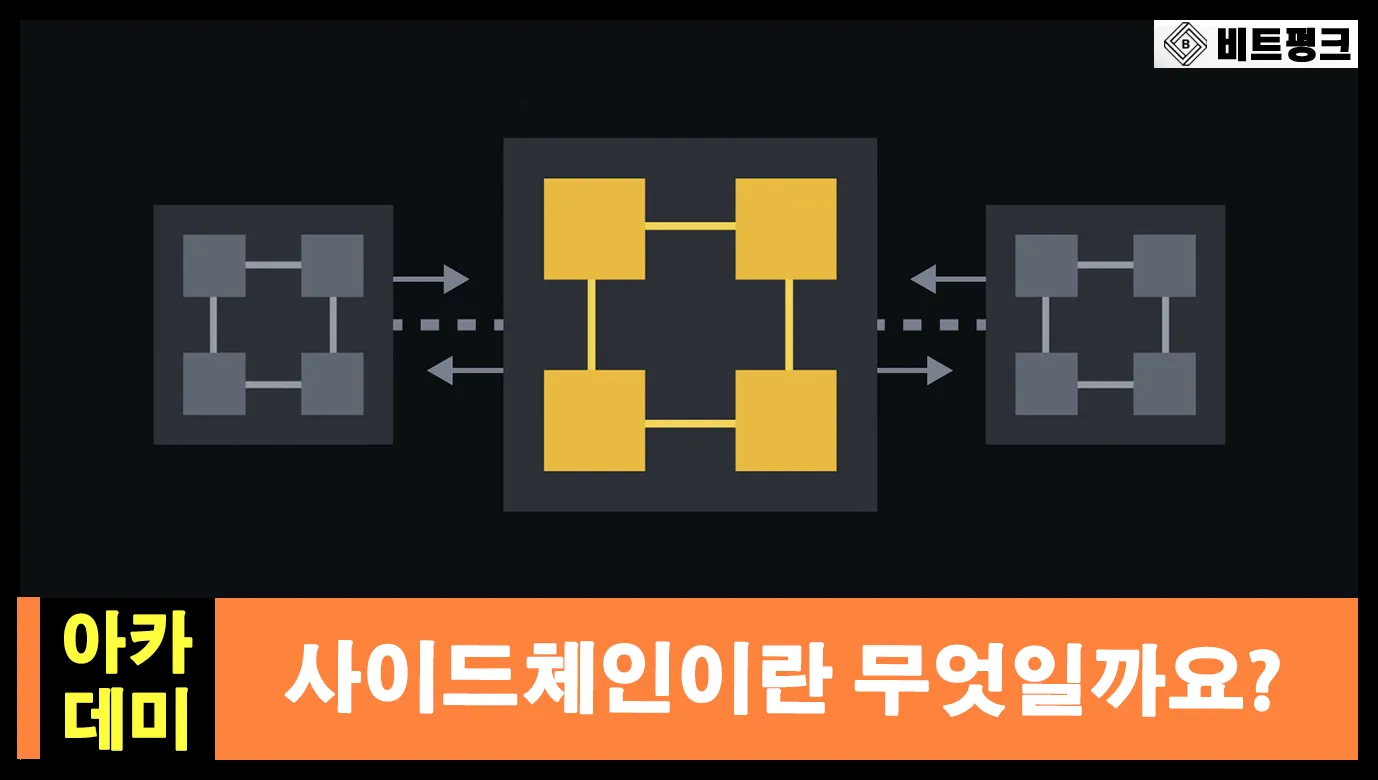
A sidechain is an independent blockchain that runs in parallel alongside a main blockchain. Sidechains can use their own consensus mechanisms, which gives them the advantage of processing transactions more efficiently.
In addition, with bridge technologies such as Multichain Bridge, you can transfer assets between a sidechain and the main blockchain. Sidechains offer advantages in scalability, flexibility, and compatibility, but they also have drawbacks such as centralization and security risks.
In this post, we'll look at what sidechains are, their key features, their pros and cons, and four well-known sidechain projects.
Why Sidechains Emerged
Main blockchains like Ethereum have the advantage of strong security and stability, but they have the drawbacks of slow transaction speeds and expensive gas fees. Sidechains emerged as an innovative solution to these scalability and efficiency problems of main blockchains.
What Is a Sidechain?
A sidechain is a parallel blockchain that is connected to a main blockchain but operates independently. For example, the Polygon sidechain uses the framework of the Ethereum main chain to enable faster and more efficient transaction processing. The Polygon network validates and produces blocks on its own, then aggregates them and sends only the final results to the Ethereum network. The Polygon network is connected to the Ethereum network through a two-way bridge, allowing assets and tokens to be transferred to each blockchain.
Features of Sidechains
Although sidechains are connected to a main blockchain, they have their own consensus algorithms and mechanisms. Generally speaking, among consensus algorithms, Proof of Stake is faster than Proof of Work, and Delegated Proof of Stake is faster than Proof of Stake.
By adopting different consensus algorithms, sidechains make the way transactions are validated and blocks are produced more efficient. This allows users to process transactions faster and with lower gas costs.
Sidechains may also use block parameters that differ from the main blockchain. Block parameters can be thought of as the rules for blocks. By adjusting these parameters, a single block can hold more data or processing time can be shortened, increasing the blockchain's scalability. However, increasing scalability this way requires reducing the number of nodes, which has the downside of weakening the blockchain's decentralization and security.
Pros and Cons of Sidechains
Sidechains are an innovative technology focused on improving the scalability and efficiency of main blockchains. Sidechains have the following pros and cons.
Pros of Sidechains
- Scalability: Sidechains process transactions separately from the main chain, reducing congestion and providing a faster, cheaper scaling solution.
- Flexibility: Sidechains allow the implementation of various consensus mechanisms and changes to parameters, making it possible to offer more customized chain services.
- Compatibility: Sidechains that are compatible with the Ethereum main chain let Ethereum smart contracts run on the sidechain. This is called EVM compatibility.
Some sidechains offer compatibility with the Ethereum Virtual Machine (EVM). This means decentralized applications (DApps) on Ethereum can run on the sidechain in the same way. From a development perspective, it means that smart contracts written in Solidity, Ethereum's programming language, can run on the sidechain just the same.
Cons of Sidechains
- Centralization: To achieve high throughput and speed, sidechains often have to give up some decentralization. In other words, power can become concentrated in a small number of validator nodes.
- Security issues: Because sidechains are allowed more autonomy than the main chain, they can be vulnerable to security issues and large-scale cyberattacks. Even if a sidechain runs into problems, it doesn't directly affect the main chain, but an independent sidechain must take responsibility for its own security, separately from the main chain.
- Complexity: Implementing and maintaining a sidechain reliably can be more complex than you might think. Building and using a sidechain in its early stages can require more time and resources than expected.
4 Examples of Sidechain Projects
There are a great many main chains and sidechains in the blockchain ecosystem. In this post, we'll look at four of the best-known sidechain projects that are compatible with Ethereum.
1. Polygon (POLYGON): Polygon is an Ethereum sidechain that uses the Ethereum Plasma framework. It emerged to solve Ethereum's scalability problems and offers fast, low-cost transaction processing.
2. SKALE (SKALE): SKALE aims to provide a platform for high-performance, scalable decentralized applications using an elastic sidechain system.
3. Gnosis (GNOSIS): Gnosis Chain uses the xDai sidechain to enable fast and stable transactions. Gnosis offers a solution for applications that need fast, low-cost transactions.
4. Loom Network (Loom Network): Loom Network specializes in building scalable games and social applications. It uses a Delegated Proof of Stake consensus mechanism to achieve high transaction throughput.
Wrapping Up
A sidechain is an independent chain connected to a main blockchain. It emerged as a solution to the scalability problems of main blockchains and enables faster, cheaper transaction processing.
Using a bridge, assets can be transferred between the main chain and a sidechain, and sidechains that offer Ethereum Virtual Machine compatibility allow the same smart contracts to run on different chains.
Sidechains offer advantages such as scalability, flexibility, and compatibility, but they also have drawbacks such as centralization, security issues, and complexity. That wraps up our look at the concept and features of sidechains.